

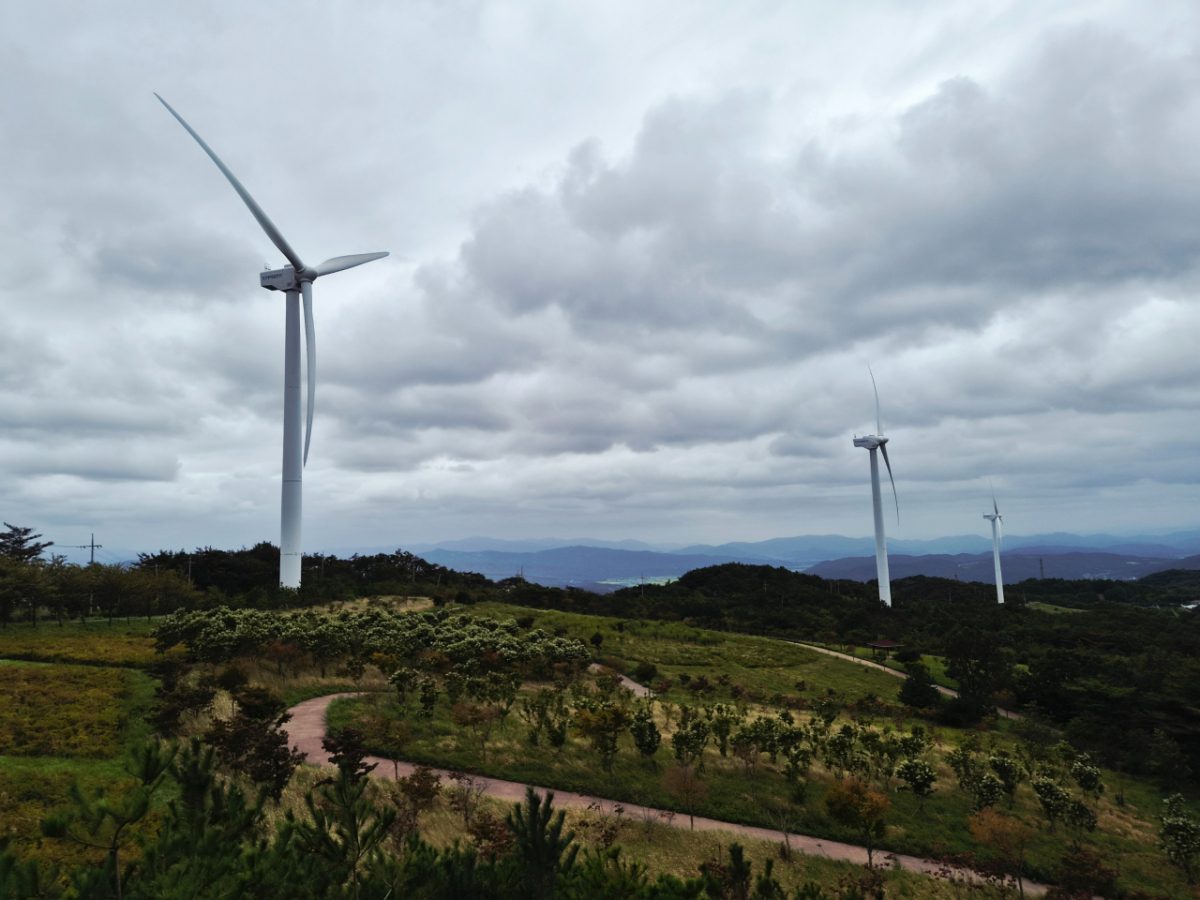
At the foothills of Toham Mountain in Gyeongju, North Gyeongsang Province, where Bulguksa Temple and Seokguram Grotto are located, driving along the winding Bulgu-ro from near Bulguksa for about 15 minutes leads past a signpost for 'Gyeongju Wind Power Generation Wind Road,' soon revealing towering white structures filling the view. This is Gyeongju Wind Power's No. 1 Power Plant, situated on the ridge of Johangsan Mountain (approximately 596 meters above sea level), an adjacent peak to Toham Mountain—also known as 'Hill of Winds.'
Upon arriving at 'Hill of Winds,' seven wind turbines come into view. From ground level to the hub of the blades, each stands 80 meters tall; the diameter of the circle traced by their rotating three-blade rotors reaches nearly 95 meters—comparable to the length of a soccer field. Here, the wind turbines function not only as facilities for electricity generation but also as popular backdrops for travelers' photographs.
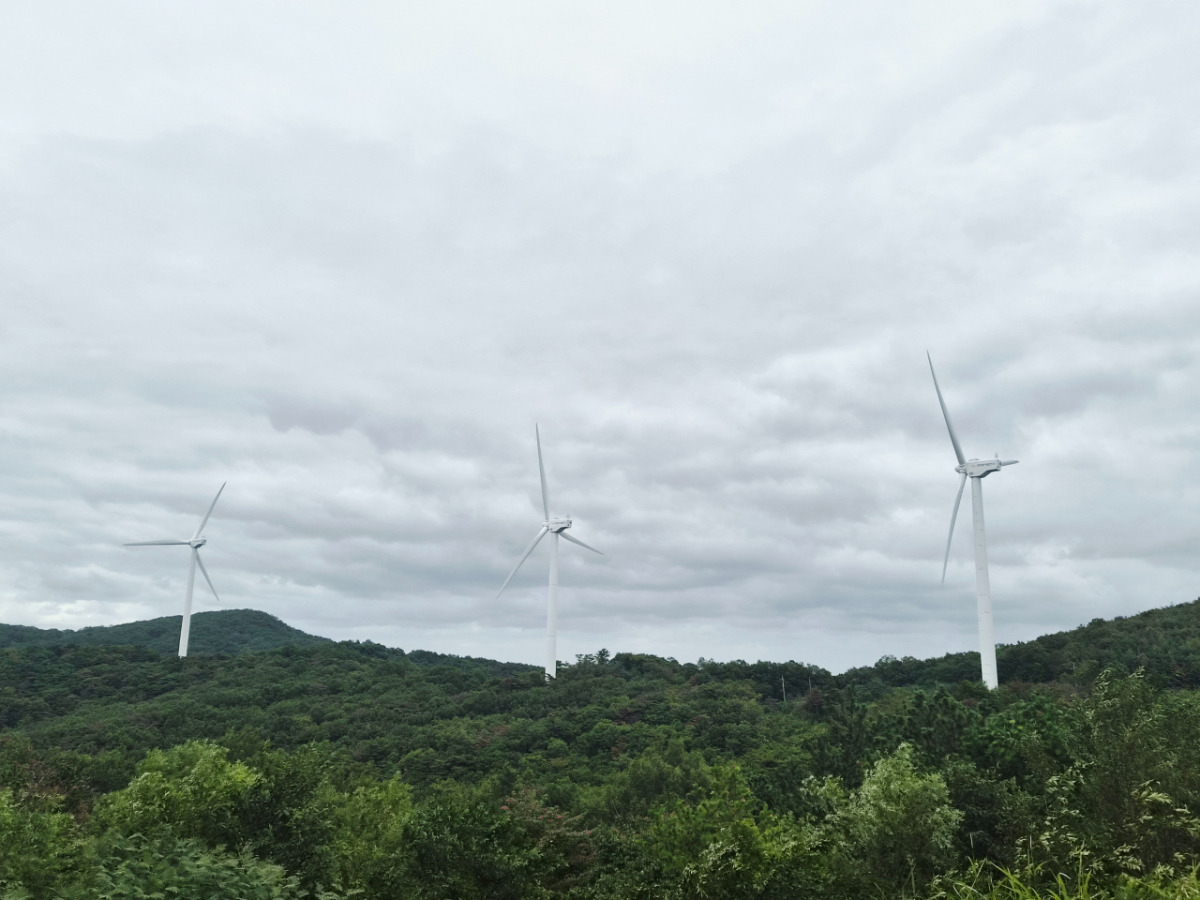
Even on the cloudy day of September 9, when chilly gusts occasionally swept through, about five or six vehicles were parked in the power plant's lot. Visitors pulled out their smartphones to capture the powerful sight of turbine blades slicing through the air. Some groups even posed for group photos with the wind turbines as a backdrop. Choi Hye-gyo (28), who traveled from Daegu, said, "I came here as the next stop after Hwangryeondan-gil," adding, "I remembered how beautiful the scenery was during my last visit, so I returned."
Gyeongju Wind Power is operated by Korea Western Power Co. and Dongguk S&C. Its No. 1 Power Plant, which began commercial operations in October 2012 with a capacity of 16.8 megawatts (MW) comprising seven 2.4-MW units, combined with the No. 2 Power Plant in Yangnam-myeon, totals an installed capacity of 37.5 MW. In 2017, a 9MWh energy storage system (ESS) was also installed.
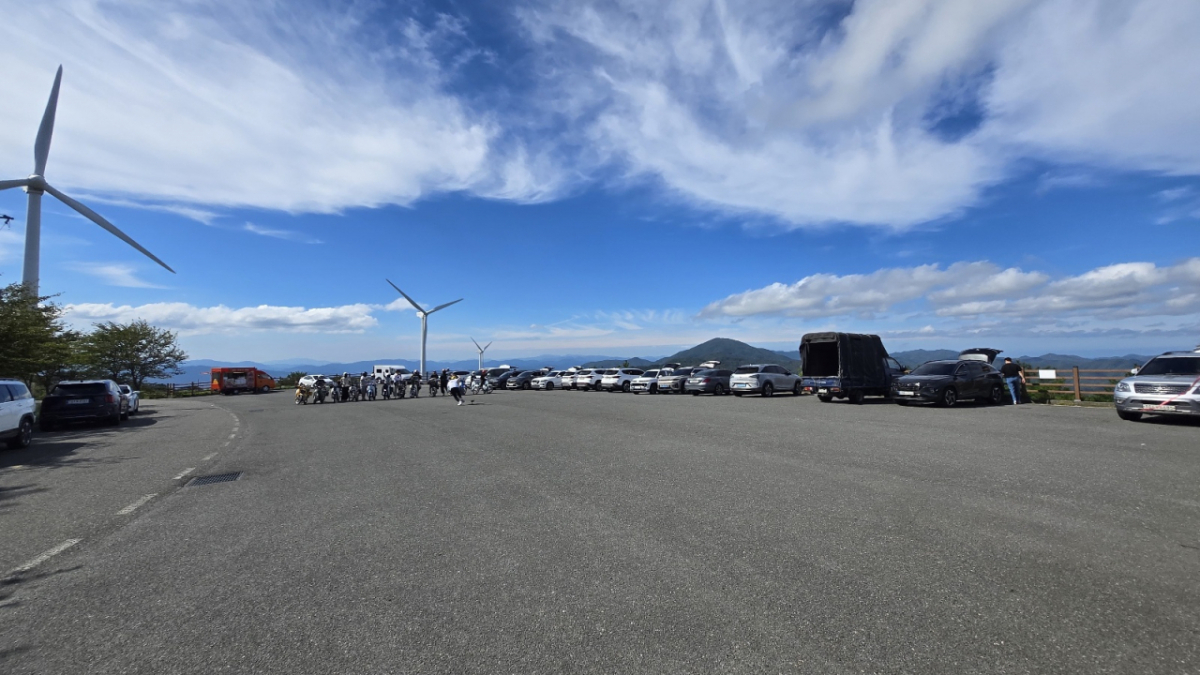
While serving as industrial infrastructure dedicated to its primary function, the space has transformed after Gyeongju City developed a park adjacent to the No. 1 Power Plant. In 2019, Gyeongju City launched the 'Toham Mountain Arboretum Landscape Forest' project near the power plant, initiating efforts to expand leisure spaces linked with surrounding tourist attractions. The area around the No. 1 Power Plant now features an observation pavilion named Gyeongpung-ro, walking paths, and picnic areas to welcome visitors.
On weekends during spring and autumn, dozens of vehicles carrying tourists and mountain biking enthusiasts fill the winding roads. According to power plant officials, up to 40–50 cars may be parked in the lot during peak crowds. Crowds swell especially around cherry blossom season, and even in hot summer months, the area attracts more visitors due to its temperature being approximately 4–5 degrees cooler than downtown Gyeongju. It has also become a route for group tourists from Taiwan and Japan. Choi Byung-hyop, deputy manager of Gyeongju Wind Power who works here, noted, "Some visitors have even held wedding photo shoots here with the wind turbines as a backdrop."
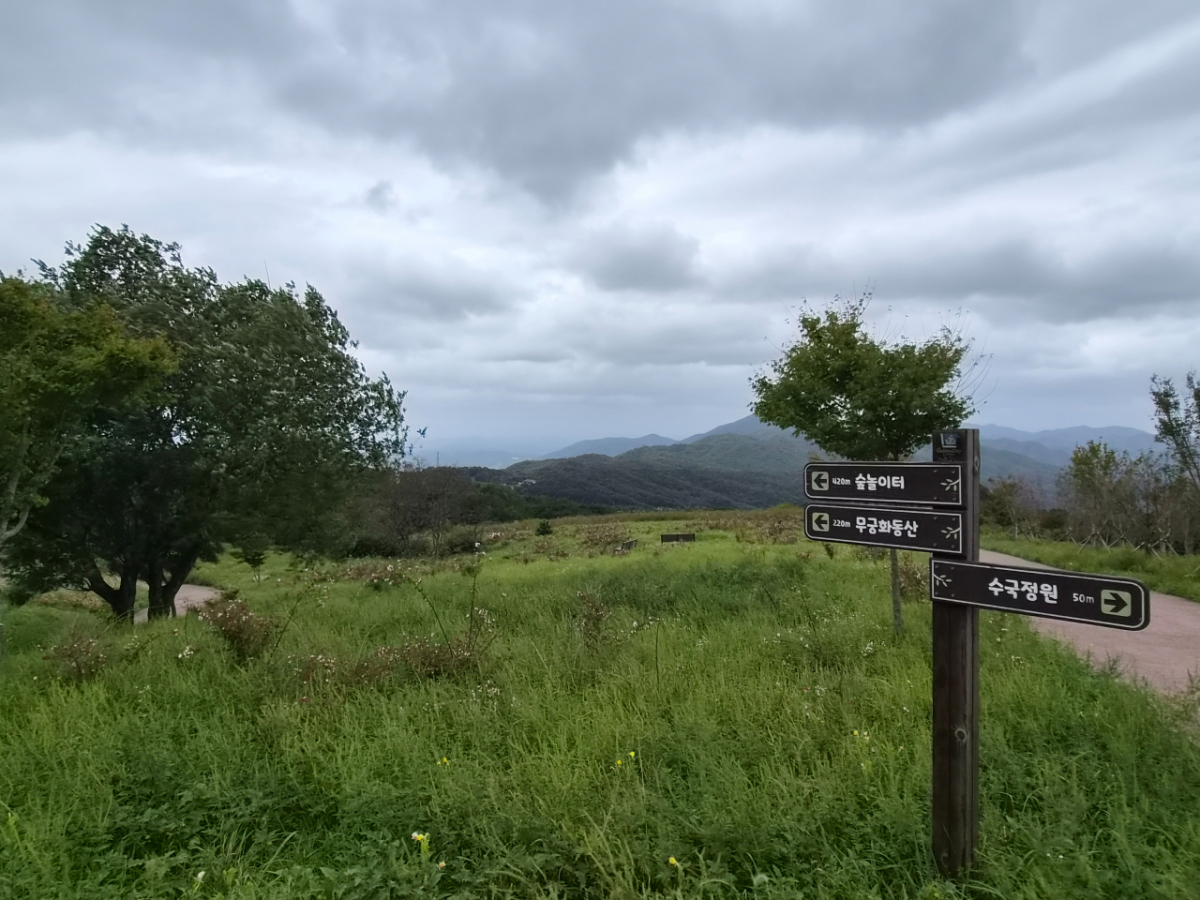
Gyeongju Wind Power's strength lies in its location near cultural heritage sites that consistently draw tourists. While few travelers plan separate trips solely to see wind turbines, the opportunity arises to experience renewable energy alongside other scheduled activities. This ultimately fosters greater familiarity with wind power generation. The site of renewable energy production naturally integrates into the visitor route ending at traditional cultural landmarks like Bulguksa Temple and Seokguram Grotto.
An employee of Korea Western Power working at Gyeongju Wind Power, Jin Dong-gang (Team Lead), stated, "Unlike other onshore wind farms located in remote mountainous areas where linking with nearby tourist spots or local commerce is difficult, this site allows visitors touring Bulguksa and Seokguram to stop by without significantly deviating from their travel routes—that's what sets it apart."
Challenges remain ahead. A representative challenge involves fostering local commerce along the access road and surrounding areas so that 'tourist destination status' translates into 'revenue for local residents.' As spaces generating electricity also assume roles as tourist attractions, it has become increasingly important for the power plant and local government to share responsibilities for managing visitor convenience and safety.
Park Geum-hwa (65), a local resident, said, "The evening sunsets are truly beautiful, so many people come from nearby areas," but added, "However, infrastructure such as restrooms is lacking; I hope these aspects will be better equipped in the future."

 in INDUSTRY


