

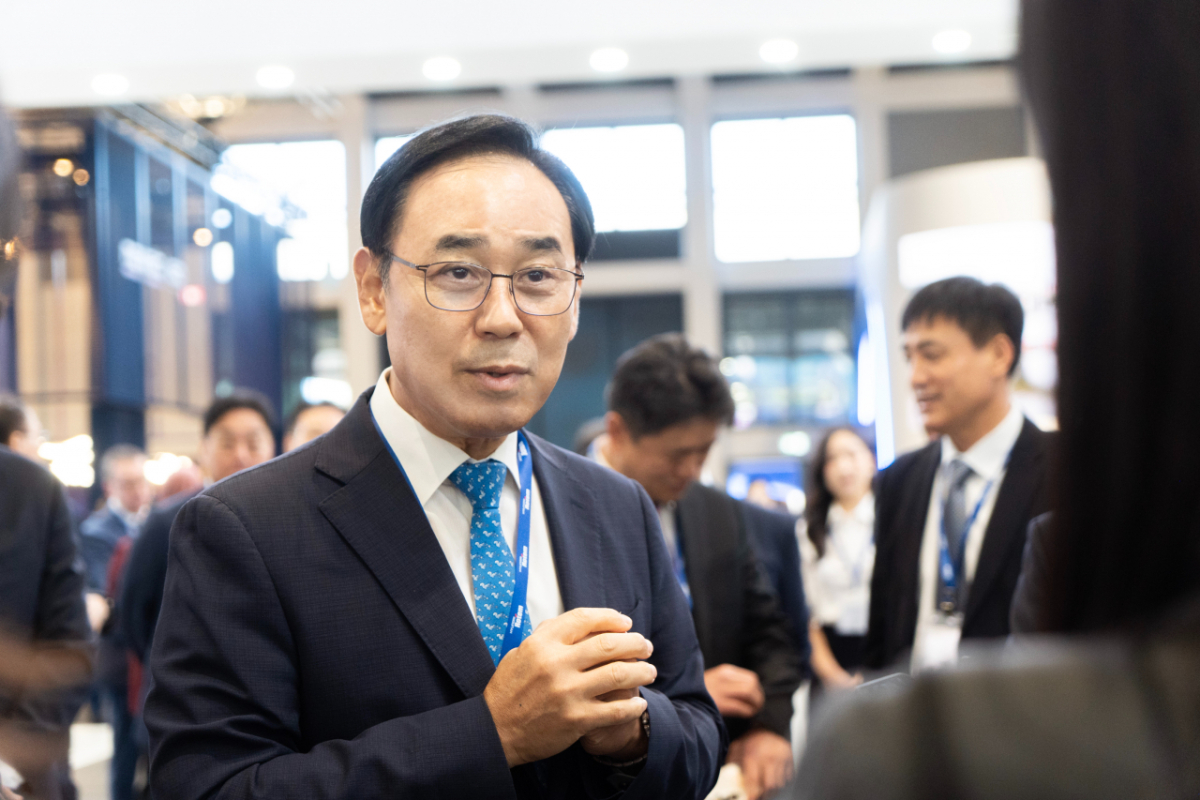
"We have exported high-speed trains and electric multiple units to 40 countries so far, and we will continue expanding our reach."
"Lee Yong-bae, Hyeon Dae-ro-tem (CEO)Lee Sa (President), stated at 'InnoTrans 2026' in Berlin on the 22nd (local time) that he expects good news regarding high-speed rail supply to Uzbekistan by early next year, following the recent signing of a government-to-government 'Memorandum of Understanding for Strengthening Strategic Cooperation.' Uzbekistan is the first country to receive Hyundai Rotem's Korean-style high-speed train, and additional orders are being pursued after 2024.
"InnoTrans," held biennially, is the world's largest railway exhibition, attracting an average of 170,000 visitors from countries around the globe. This year, Hyundai Rotem set up its largest-ever booth to target the global market. Lee (President) emphasized, "We have consistently oriented all concepts and R&D directions toward the global market," adding that "visitors came to this year's booth from various countries including Morocco, Egypt, and Slovakia."
"In fact, Hyundai Rotem is rapidly increasing the share of railway business exports in its total revenue. This comes after securing major projects in countries such as Australia, the United States, and Canada, including high-speed trains and electric multiple units. Notably, the company is also targeting a project worth up to 10 trillion won for replacing electric multiple units in New York Metro.
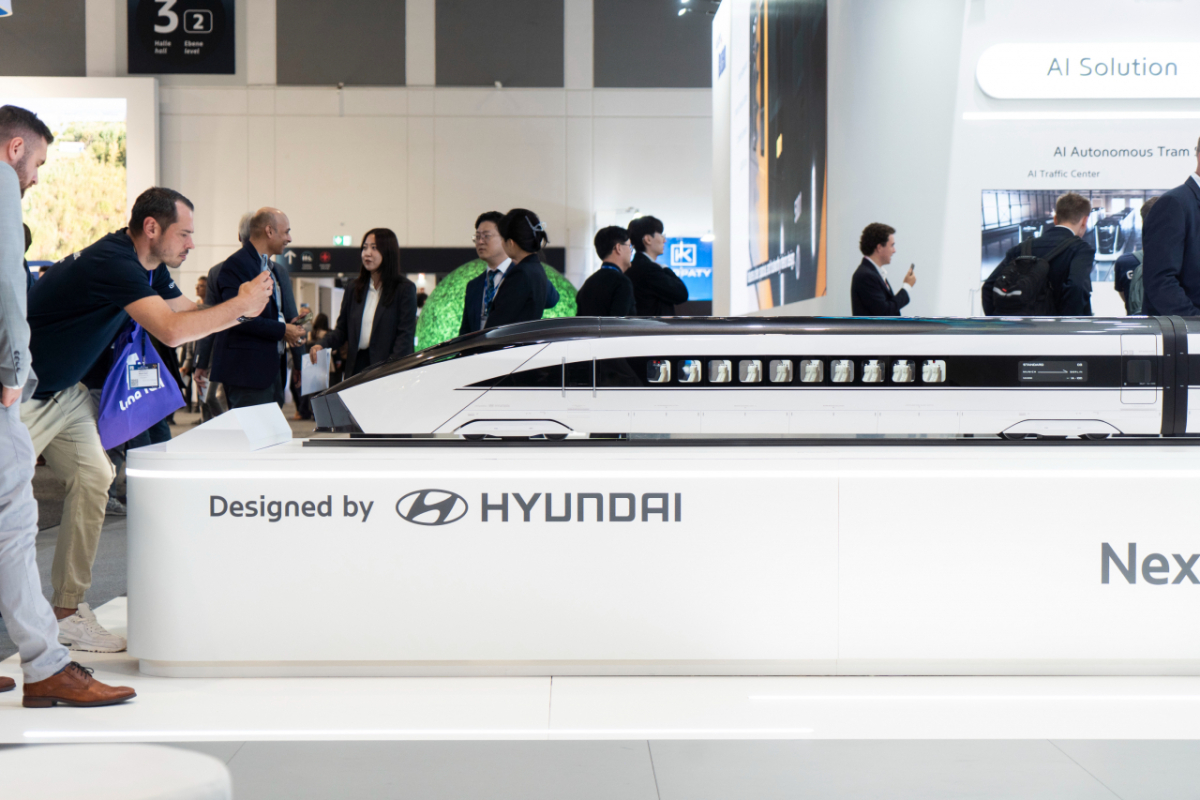
"The next-generation high-speed train unveiled for the first time at this exhibition is also a result of targeting overseas markets. Jo Il-yeon, head of Hyundai Rotem's Railway Systems Division, stated, "In high-speed trains, speed, performance, and power are no longer enough; user experience (UX) and user interface (UI) are becoming increasingly important." He added, "We have created a high-speed train that is friendly to everyone." Notably, designers from Hyundai Motor Group's Namyang Research Institute and Modern Design Center participated in the development, marking the full-scale integration of Hyundai Motor Group's 'Design DNA.'
"Hyundai Rotem focused on achieving top speeds of up to 370 km/h while reducing noise and improving ride comfort. As a result, it successfully lowered the air resistance coefficient by approximately 36% compared to Korea's latest commercial high-speed train, KTX-Cheongryong. Inside, the company widened legroom and overhead racks, enhanced seat comfort, and introduced 'VIP cabins' featuring premium interior materials and differentiated components. Jo stated, "Recently, many foreign passengers have been riding high-speed trains, which can serve as a representative image of South Korea." He also noted that there was an internal request within the group to create a 'world-class' vehicle comparable to Genesis in terms of high-speed rail performance.
"Hyundai Rotem aims to challenge the KTX-1 replacement project scheduled for procurement by Korea Railroad Corporation (Korail), leveraging its next-generation high-speed train. The project, starting with 28 trains next year, has a total budget of approximately 5 trillion won (49 trains, 784 cars). The strategy is to prove performance domestically and use it as a foundation for expanding overseas orders.
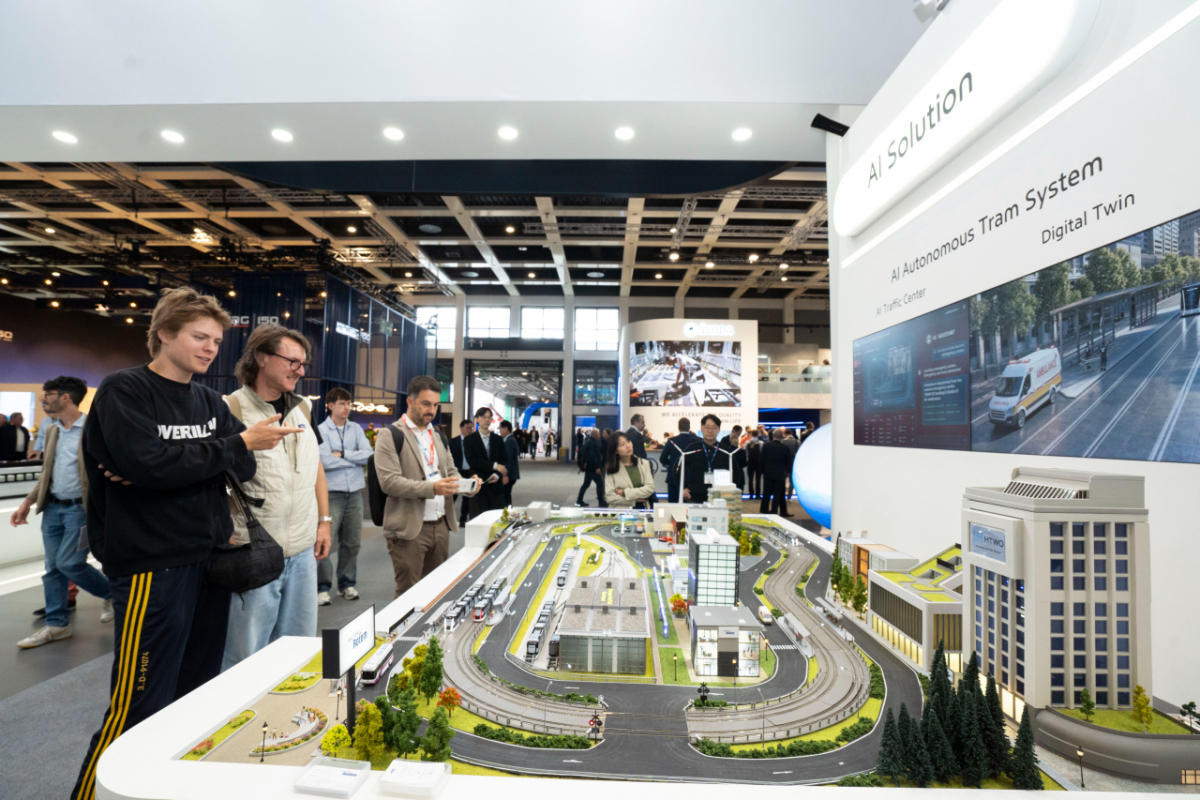
"To secure a leading position in the future railway market, Hyundai Rotem is accelerating development of physical artificial intelligence (AI) and autonomous driving technologies. At this year's InnoTrans, it unveiled a blueprint for a fully autonomous 'Future Hydrogen Electric Tram.' The company completed its own development of an 'Advanced Driver Assistance System (ADAS)' for railway vehicles this year, marking the first step toward commercializing fully autonomous trams. Beyond obstacle detection, the AI distinguishes and recognizes people and structures. Hyundai Rotem has set a goal to develop fully autonomous tram technology by 2031.
"Additionally, the company is differentiating itself by enhancing environmental friendliness using hydrogen as an energy source. Lee Won-sang, Chief Technology Officer (CTO) of Hyundai Rotem, explained, "Global companies such as France's Alstom and Germany's Siemens are also entering the field of physical AI," adding, "Railways will ultimately move toward autonomous driving." Hyundai Rotem expects to gain a competitive edge by leveraging Hyundai Motor Group's accumulated technologies in physical AI and hydrogen fields to secure market share ahead of competitors."

 in INDUSTRY


