

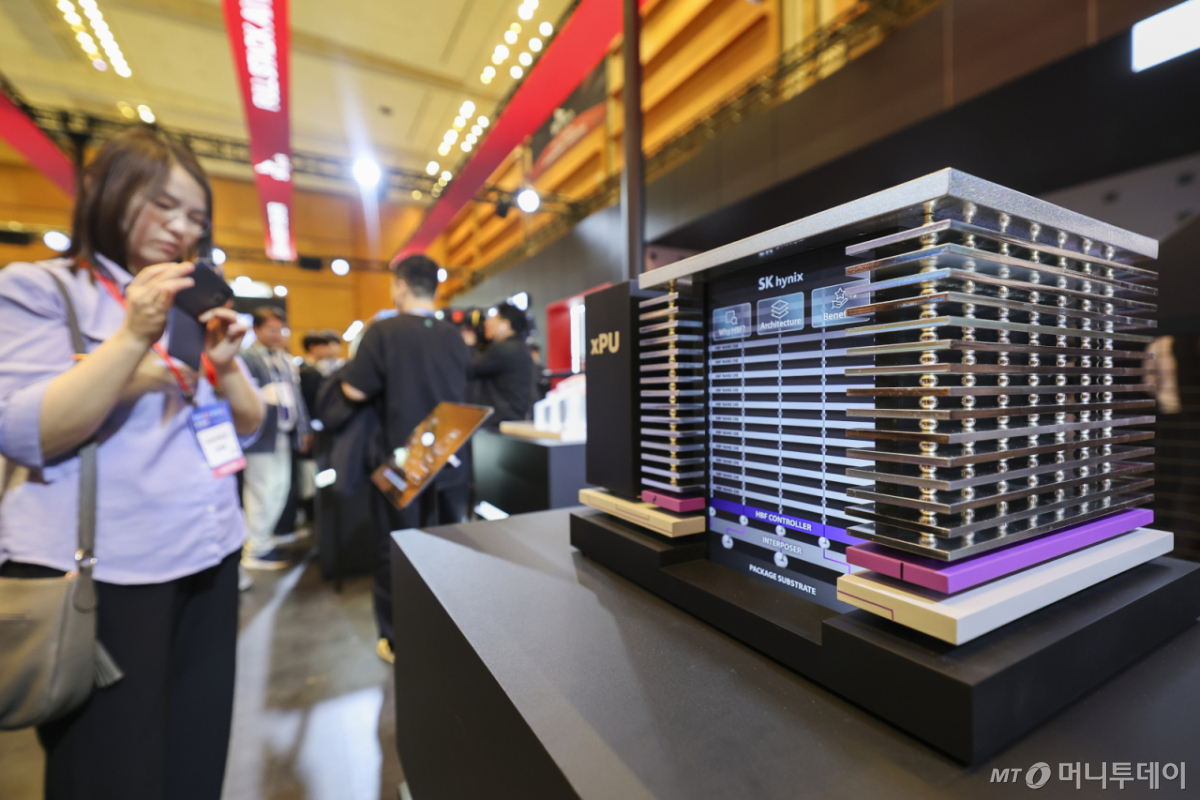
As the shortage of memory semiconductors intensifies, even major global corporations have found it difficult to avoid supply and demand burdens. These companies are assessed to be in a de facto subordinate position, as they must secure the quantities necessary for product production even if prices rise.
Conversely, the price negotiation power of domestic memory manufacturers such as Samsung Electronics and SK Hynix appears to have strengthened significantly.
According to industry sources on the 20th, it is observed that the background behind Tesla CEO Elon Musk recently expressing dissatisfaction with memory prices lies in cost burdens stemming from supply shortages. It is said to be an intention to check the price negotiation power of existing memory manufacturers by highlighting the possibility of increased production in China.
CEO Musk recently stated via X (formerly Twitter) that China's memory supply capacity could expand significantly starting in 2028. He also expressed dissatisfaction with the pricing policies of memory companies other than U.S.-based Micron. Although specific company names were not mentioned, the remarks appear to have been directed at Samsung Electronics and SK Hynix among the "Big Three" memory makers.
It is analyzed that Tesla's decision to reduce the memory capacity of its next-generation AI chip is also unrelated to supply shortages. In early this month, Tesla announced it would cut the RAM (Random Access Memory) capacity of its 'AI5' from the existing 144GB (gigabytes) to 96GB. It also decided to shrink 'AI6' from 216GB to 144GB.
This is a measure to lower the total quantity required for production by reducing the memory load per chip. At the time, CEO Musk explained the reason for downgrading the memory capacity as "the only way to secure sufficient quantities needed for the production of Optimus (a humanoid robot under development by Tesla)."
AI server products, where memory manufacturers are concentrating their production capacity, are also not free from supply shortages. Even with increased production, it is insufficient to keep up with surging demand. Dell CEO Michael Dell recently predicted that "memory supply shortages could persist for the next four years."
He specifically expressed concern that memory supply and demand are acting as a critical bottleneck in AI server production and delivery processes. This means that even if server demand is sufficient, delivery may be hindered if memory cannot be secured.
In fact, according to market research firm TrendForce, the capital expenditure (CAPEX) scale of the world's nine major CSPs (Google, Amazon, Meta, Microsoft, Oracle, ByteDance, Tencent, Alibaba, and Baidu) is projected to reach $1.531 trillion (approximately 2,065.0128 trillion won) next year.
More than 60% of this is expected to be allocated to memory-related expenditures. As competition among CSPs to secure memory intensifies, supply-demand imbalances are likely to continue for the time being despite manufacturers' efforts to expand supply.
The supply shortage for consumer-grade memory is even more severe. As manufacturers focus production on AI server products, even Apple has faced rising memory prices and supply shortages. Apple CEO John Turners recently stated that "constraints in the memory sector are an absolute crisis," hinting at the possibility of adopting Chinese-made memory.
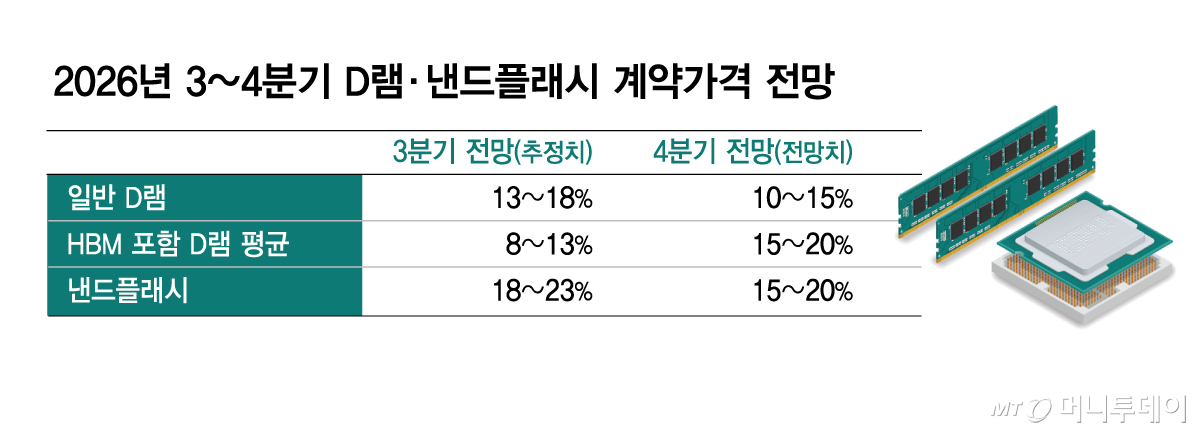
As demand continues to exceed supply, memory prices are also showing an upward trend. TrendForce expects Q4 contract prices for DRAM and NAND flash to rise by 10–15% and 15–20%, respectively, compared to the previous quarter.
An industry official said, "Since existing customers have secured a significant portion of their memory supply, companies with increasing new demand, such as Tesla, may find it more difficult to secure quantities," adding, "Currently, even if prices are high, companies must secure the necessary quantities, giving memory manufacturers the upper hand in negotiations."


 in INDUSTRY


