

"This product embodies HD Hyundai Electric's technological prowess in ultra-high-voltage eco-friendly power equipment."
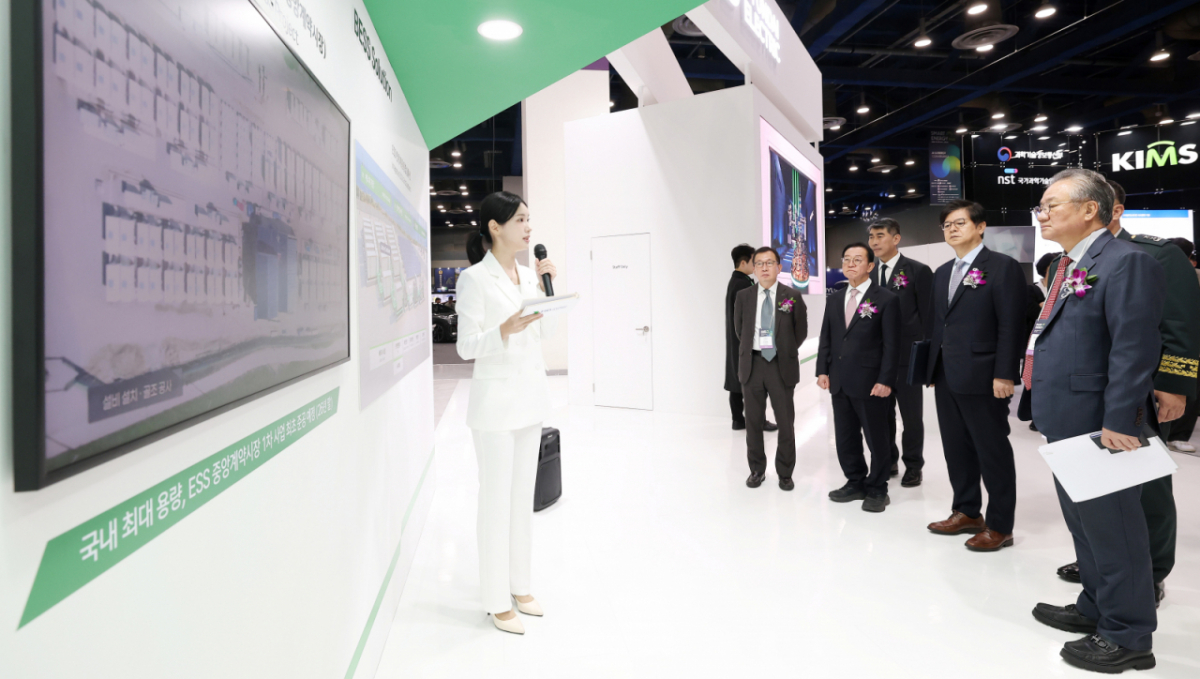
At "Smart Energy Plus (SEP) 2026," held on the 28th at Hall B of COEX in Samsung-dong, Seoul, an official from HD Hyundai Electric said this while introducing a 420kV (kilovolt)-class sulfur hexafluoride (SF6)-free gas-insulated switchgear (GIS), which is the first developed domestically and the third in the world.
On that day, under the theme "Transforming Power, Connecting the Future," HD Hyundai Electric showcased a wide array of technologies targeting next-generation power grids, ranging from eco-friendly ultra-high-voltage power equipment to direct current (DC) distribution and energy storage systems (ESS).
The flagship product was the 420kV-class eco-friendly GIS. Only a handful of companies worldwide have developed this product. According to the company, only Hitachi Energy and GE Vernova had entered the market before HD Hyundai Electric, highlighting the high technological barriers to entry in this field.
The market environment is also favorable. As the decarbonization transition accelerates in the power equipment industry, demand for GIS that does not use SF6 is increasing.
With the European Union (EU) planning to ban the use of SF6 in GIS starting in 2031, the shift toward eco-friendly products is expected to gain momentum. At the exhibition hall that day, it was easy to see visitors pausing to listen to explanations about eco-friendly GIS.
Products designed to enhance the efficiency and safety of power grids were also introduced. Notable examples include phase-shifting transformers (PST), which help operate transmission networks efficiently by regulating power flow, and explosion-proof transformers (DPRS), which have been enhanced for safety against fire and explosion risks.
Shifting focus from ultra-high-voltage power equipment to the distribution sector revealed another change. The key is "DC (direct current)." As data centers that consume massive amounts of power increase due to the spread of artificial intelligence (AI), and DC-based facilities such as solar power and ESS expand, the market for DC distribution, which supplies electricity in direct current, is also growing. Its advantage lies in reducing power loss by minimizing the process of repeatedly converting between direct and alternating current to use electricity.
In line with this, HD Hyundai Electric prominently featured its DC distribution product lineup. The company has established a product range that includes air circuit breakers (ACB) and molded case circuit breakers (MCCB), which cut off current when abnormalities occur in the power system; miniature circuit breakers (MCB); surge protective devices (SPD), which protect facilities from lightning strikes or momentary overvoltage; and digital power meters for checking power status. In essence, it has bundled together DC distribution technologies necessary not just for supplying electricity, but also for "cutting off, protecting, and monitoring."
The forward base for attacking the DC distribution market is the distribution campus in Cheongju, Chungcheongbuk-do, which began operations last year.
At the exhibition, HD Hyundai Electric also introduced the competitiveness of this production hub. The company explained that by applying automated equipment and digital production systems, it has boosted production efficiency while securing supply capacity to meet growing demand for distribution equipment.
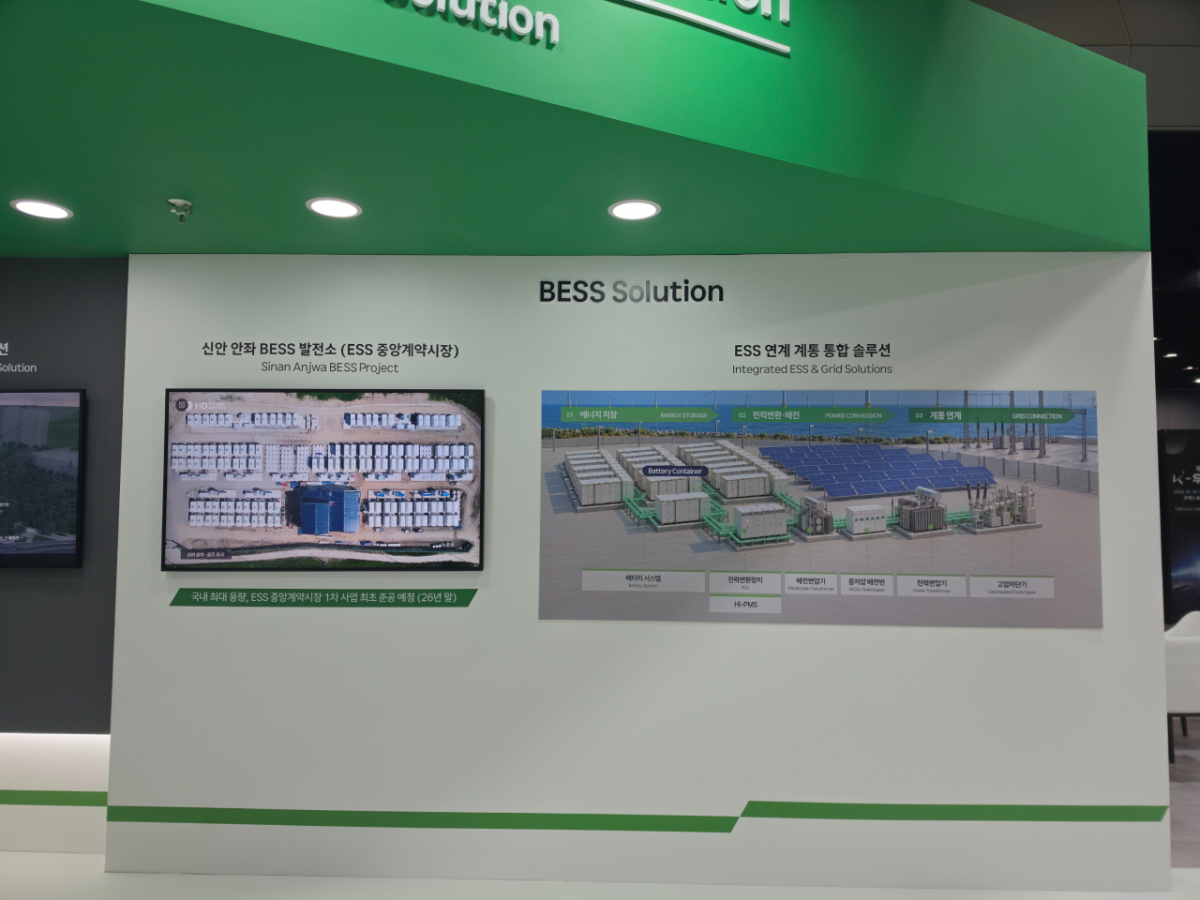
In the ESS sector, the company showcased core facilities such as power conversion systems (PCS), system integration (SI) technology, and project execution know-how. In particular, through the case of the BESS project in Sinan, South Jeonnam Province, it plans to demonstrate its overall capabilities and on-site experience in ESS projects, from design to construction and grid interconnection.
An official from HD Hyundai Electric said, "Based on the technological expertise and business experience accumulated in the transmission and distribution sectors, we will actively respond to power infrastructure demand driven by the expansion of data centers and renewable energy."

 in INDUSTRY

