


As it becomes increasingly certain that the Democratic Party will seize control of both the U.S. Senate and House of Representatives for the first time in four years following the midterm election results, attention is turning to the impact on South Korea's industrial sector from potential changes in tariff and trade policies. While concerns are emerging that the semiconductor industry, which underpins the South Korean economy, could be hit by strengthened regulations related to AI (artificial intelligence), the prevailing view is that the structural trend of the "memory boom" will remain solid.
According to relevant industries on the 4th, major domestic companies are closely monitoring the U.S. midterm election vote-counting results and keeping a close eye on the ripple effects on their core businesses. First, as long as President Donald Trump remains in office, it is believed that the direction of the U.S. administration regarding overall tariff policies will not change abruptly. This is because the requirements are stringent; for instance, to nullify the U.S. president's veto power over bills, the Democratic Party must secure at least 67 seats in the Senate, which constitutes two-thirds of the chamber. The argument is that rather than a sudden shift in course, gradual adjustments, such as applying exceptions under Section 301 of the Trade Act (a representative legal basis for imposing retaliatory tariffs), may occur.
However, with increased oversight from the opposition Democratic Party regarding the execution of investments in the U.S., the burden on South Korean companies could increase. An industry official forecasted, "Regarding the expected effects and conditions of investments in the U.S. promoted by the Trump administration, congressional management and supervision measures, such as hearings, may increase. In this case, there is a possibility that uncertainty for Korean companies will grow."
By sector, in the semiconductor field, the expanded application of Section 232 of the Trade Expansion Act and controls on China are cited as key issues. The industry's general view is that it will be difficult to apply Section 232, which allows for high tariffs if deemed a threat to U.S. "national security," to semiconductors in addition to its current scope, regardless of this election's outcome. This is because the U.S. cannot take measures that burden domestic companies while the supply shortage situation where major U.S. big tech firms are unable to secure semiconductors is intensifying.
Export controls on advanced semiconductor equipment to China are also unlikely to see significant changes, as bipartisan consensus has underpinned both the Republican Party and the Democratic Party's positions. Of course, specific methods may differ. Lee Si-wook, Head of Economic Research (Managing Director) at the Korea Chamber of Commerce and Industry (KCCI), stated, "The Trump administration has approached things in a transactional manner, while the Democratic Party has emphasized technology controls and other issues, prioritizing cooperation among allied nations," adding, "We need to watch more closely to see what impact this will have on our companies," expressing a cautious stance.
Furthermore, if vetoes by Democratic Party governors regarding infrastructure investments such as AI data centers materialize, it could negatively affect South Korea's semiconductor industry. A representative example is the sharp drop in U.S. AI-related stocks on that day after a Democratic Party candidate who pledged to halt data center construction was elected governor of Texas, where nearly 30% of U.S. AI data center construction plans are concentrated.
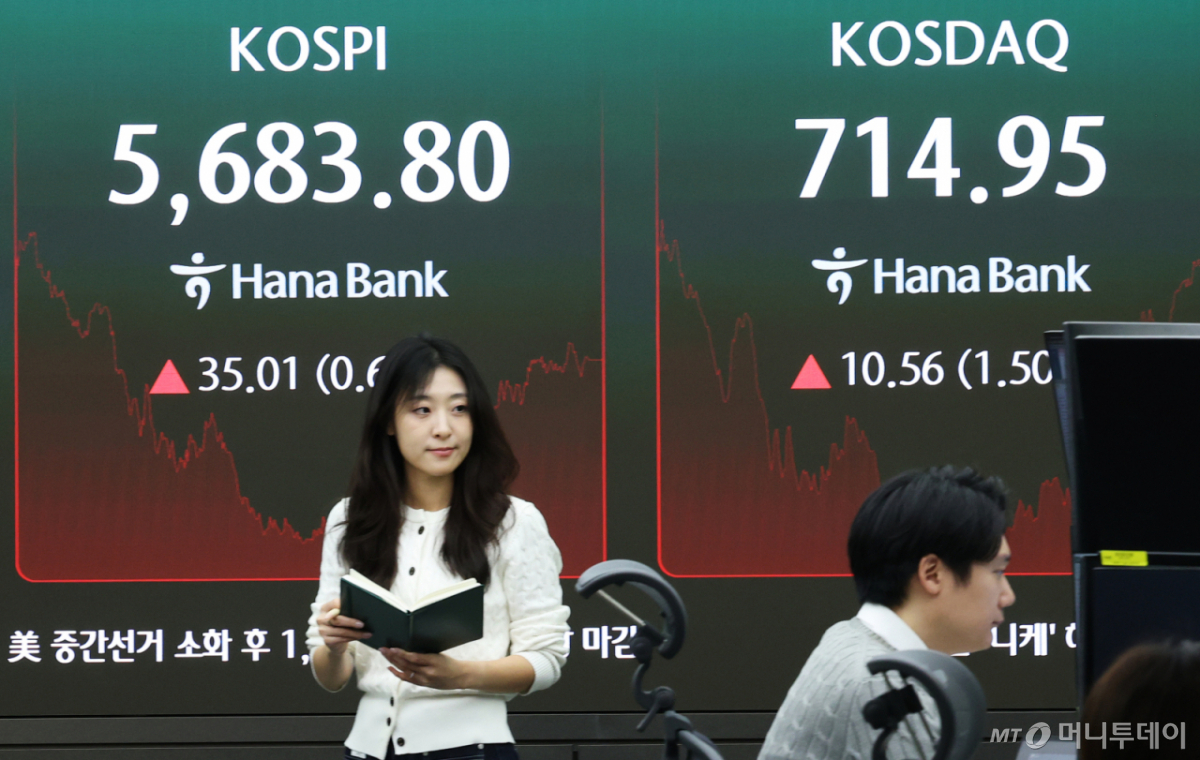
Nevertheless, weight is being given to the analysis that while such a situation may be a short-term variable, it will not hamper the growth momentum of the semiconductor industry itself as a medium- to long-term obstacle. A semiconductor industry official stated, "It could act as a partial variable in the speed of local AI infrastructure development, such as future data center permits and power grid expansion," while adding, "AI industry cultivation and infrastructure expansion are core strategic areas for strengthening U.S. technological leadership and national competitiveness. Since both the Democratic Party and the Republican Party agree on their importance, the trend of bipartisan policy support will continue."
Another official predicted, "If data center investment schedules are adjusted, there may be some impact on the semiconductor industry, but the medium- to long-term growth trend of expanding AI investments by global big tech firms and increasing semiconductor demand will continue."
For automobiles, steel, and other sectors subject to Section 232 of the Trade Expansion Act, support for protecting domestic industries is strong within the Democratic Party as well, centered on labor unions and local constituencies, so no significant variables are visible. The industry expects that, particularly for automobiles, if the U.S.-Korea trade agreement at a 15% level is implemented without issues, the impact of Congress will be relatively small.
In the robotics sector, there are also opinions suggesting that South Korea could benefit reflexively as controls on China strengthen. In the pharmaceutical and bio sectors, which have been mentioned as targets for Section 232 of the Trade Expansion Act application, the possibility of suffering from high tariff additions on generic drugs, which we primarily produce, is currently low. The reason for the Democratic Party's landslide victory in this election is that public opinion, suffering from high inflation, turned its back on the Republican Party.
Hakeem Jeffries, the Democratic Party floor leader who is a strong candidate for the next House Speaker, emphasized price stability as the top priority in his "100-day plan" announced after the election victory. Accordingly, tariff relief and other measures are expected in the consumer goods sector.
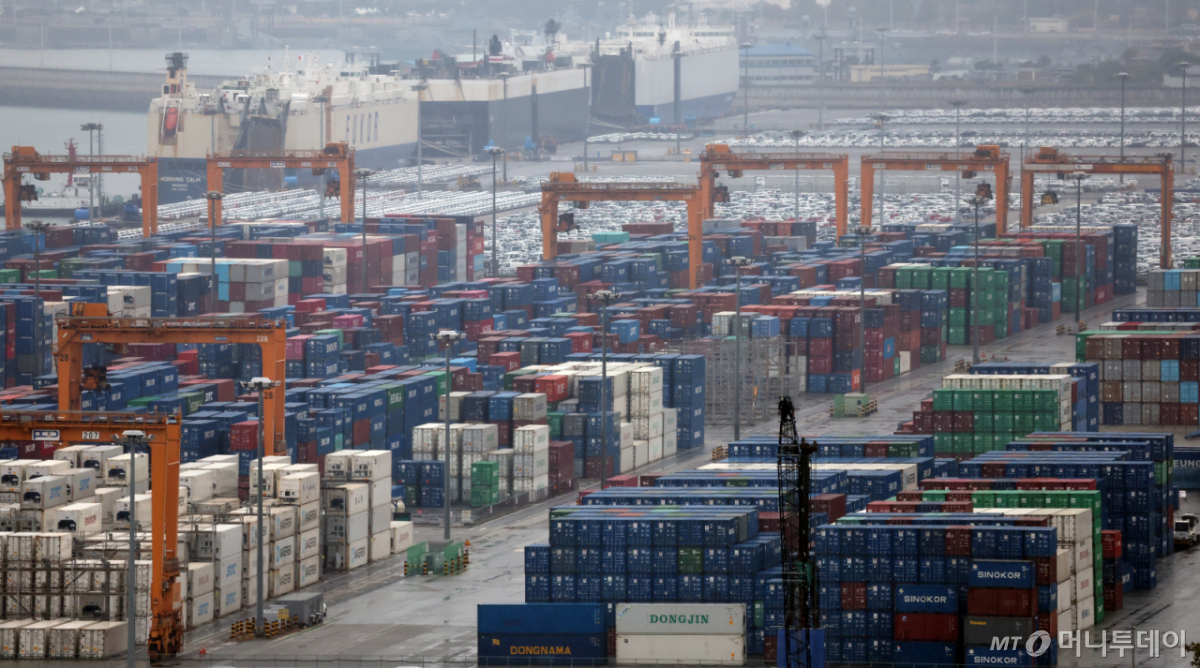
In the defense sector, it is necessary to examine discussions on amendments to the National Defense Authorization Act currently being handled in the U.S. Congress. Depending on how specific conclusions are reached regarding claims that warships must be built within the U.S. and proposals to allow exceptions for some overseas construction of non-combat ships targeting companies that have invested in the U.S., the fortunes of South Korean companies are expected to diverge.
Shin Won-gyu, Head of the Global Economics Team at the Korea Economic Research Institute under the Federation of Korean Industries (FKI), stated, "There is also a possibility that the administration may more actively utilize its executive powers in response to changes in the congressional composition," adding, "Rather than overreacting to policy environment changes (resulting from the election outcome), the industrial sector should work closely with the government and consistently convey to U.S. political and business circles that U.S.-Korea manufacturing cooperation has continued under mutual trust and will remain solid going forward."

 in INDUSTRY


