

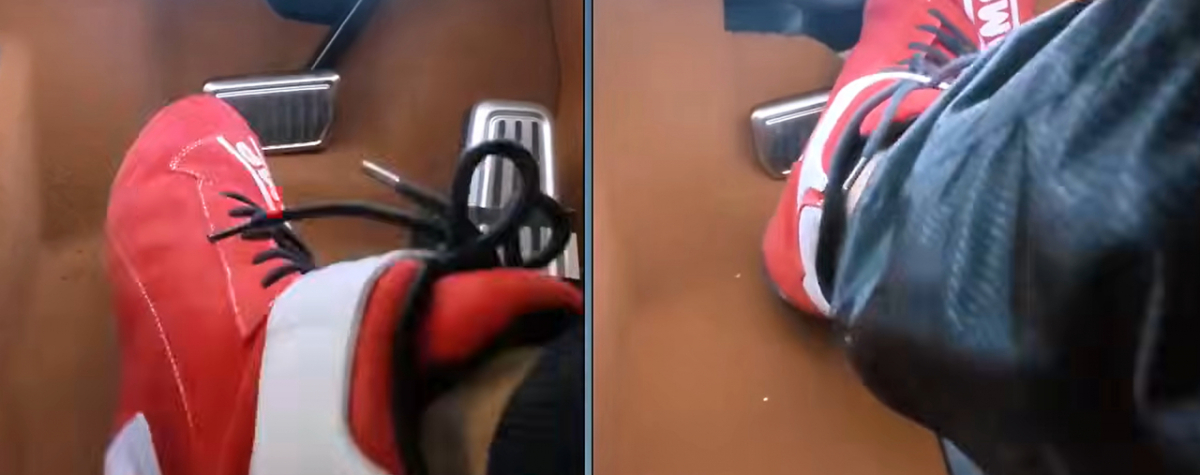
Hyundai Motor Group recently analyzed the cause of a brake pedal failure in a Chinese electric vehicle and consumer reactions to the incident, sharing the findings with its internal employees. The move is interpreted as a strategy to leverage the incident as a lesson, placing greater emphasis on ‘safety’ to secure a competitive advantage over Chinese brands.
According to industry sources on the 8th, Hyundai Motor Group recently distributed materials to its employees detailing an introduction to Huawei’s premium electric vehicle, the ‘Maestro V800,’ the cause of the brake pedal bracket (support) failure in this model, and reactions from netizens.
The Maestro V800, jointly developed by Chinese companies Huawei and JAC Motors, is a high-end electric vehicle with a top-tier model priced at over 2 billion won based on Hanwha standards. Recently, the Chinese automotive platform Dongchedi () released the results of an emergency braking test for this vehicle. In the test video, after the driver accelerated the Maestro V800 to 100 km/h and pressed the brake pedal to perform an emergency stop, the pedal support broke. The test was conducted on a total of three vehicles, and all suffered damage at the same location.
Following the release of the video, the company explained in a statement that the test was conducted under conditions stricter than national and industry standards, and that there had been no instances of failure during actual driving. However, criticisms from consumers subsequently emerged in large numbers. Netizen reactions included in the materials shared internally by Hyundai Motor Group were largely negative, with comments such as “A luxury car cannot even guarantee basic safety” and “Seeing all three break at the same location consecutively indicates a quality issue.”
Hyundai Motor Group analyzed that there are currently no mandatory standards regarding the structural strength of brake pedal supports. It also highlighted a differentiating factor, noting that while the Maestro V800’s pedal support is a plastic injection-molded part (a mixed material of polypropylene and glass fiber), Hyundai Motor Group’s China-developed models utilize metal materials. Hyundai Motor Group analyzed that “consumer demands for vehicle safety and strengthened industry safety standards are expected,” stating, “The use of metal materials for brake pedal supports in Hyundai Motor Group’s Chinese models must be maintained, and it is necessary to ensure safety quality.”
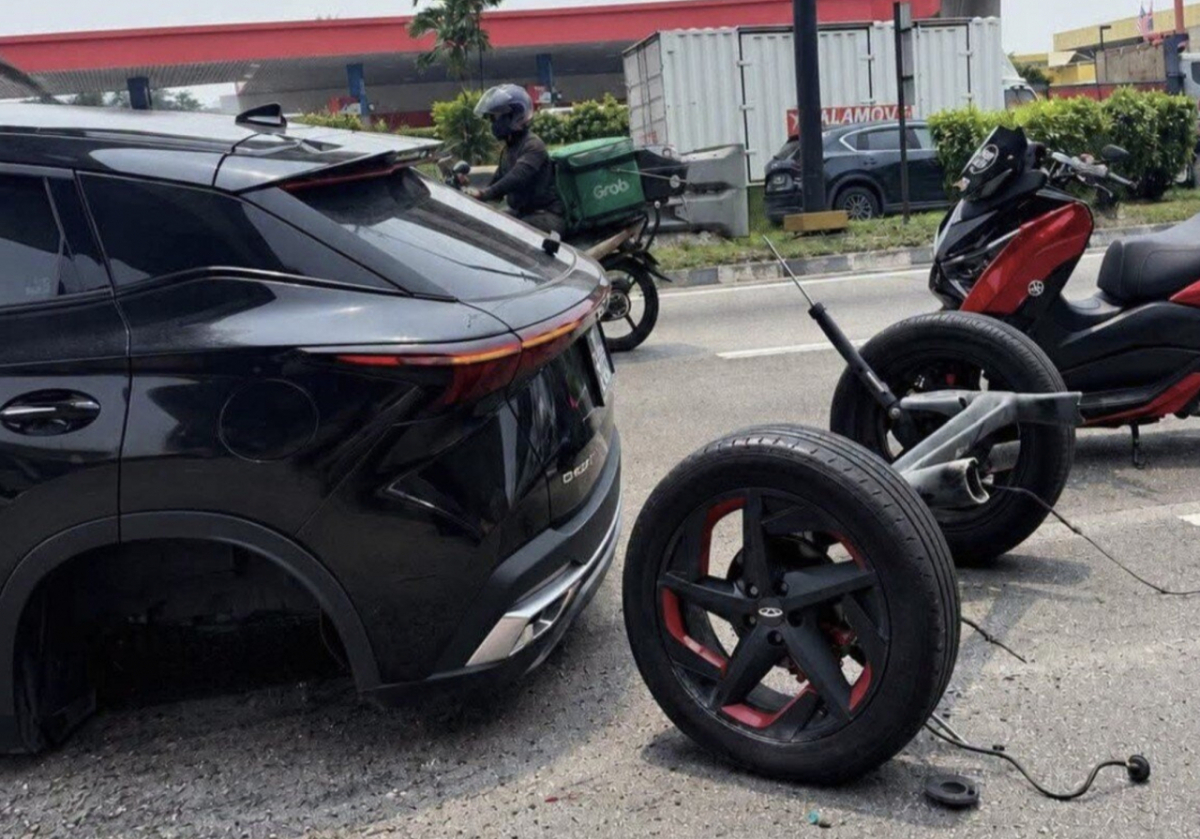
Hyundai Motor Group appears set to place even greater emphasis on enhancing safety following this incident. In fact, the industry cites safety technology as a key factor that could allow Korean automakers to gain an advantage over Chinese brands. This is because consumer anxiety is growing due to a recent series of safety accidents involving Chinese electric vehicles, including the Maestro V800. For example, recently, an accident occurred in which the rear axle of the ‘Omoda 5’ SUV (Sport Utility Vehicle), exported by China’s Chery Automobile to Malaysia, completely detached while driving. Chery acknowledged the possibility of a welding defect and initiated recalls for a total of 8,878 units sold locally.
Hyundai Motor Group expects safety technology to become a core competitive advantage in the future autonomous driving market as well. Hyundai Motor Group Chairman Chung Eui-sun met with reporters after the ‘Kia 80th Anniversary Celebration’ at the end of last year and, regarding Hyundai Motor Group’s autonomous driving technology, stated that while “we are somewhat behind compared to Chinese companies or Tesla in the US,” “safety is more important than the gap, so we are thinking of placing more focus on safety.”

 in INDUSTRY

