

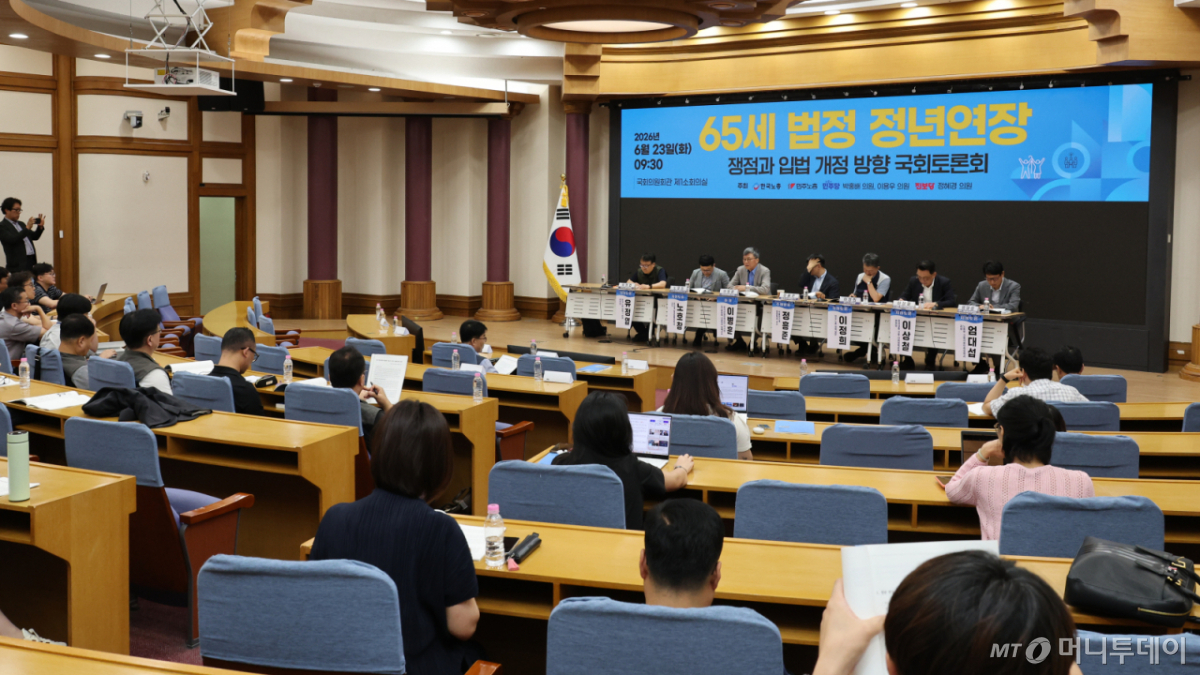
The National Federation of Metal Workers’ Unions of Hyundai Motor Group affiliates has urged the National Assembly to legislate an extension of the statutory retirement age. However, the business community is strongly opposing the extension due to concerns about side effects such as worsening youth unemployment, and criticism continues over the government’s “labor-biased” policies, leaving the prospect of legislation uncertain.
The unions announced on Thursday that they will hold a press conference in front of the National Assembly main building on the upcoming 17th to demand legislation extending the retirement age. The press conference will be attended by the Metal Workers’ Union Hyundai Motor Company Branch, Kia Motors Branch, Hyundai Steel Dangjin Chapter, Hyundai Steel Incheon Chapter, Hyundai Steel Suncheon Chapter, Hyundai Steel Pohang Chapter, Hyundai Steel Hyosco Chapter, Hyundai Rotem Chapter, and Hyundai Kepico Chapter.
They are demanding that the current statutory retirement age of 60 be extended to 65. The Hyundai Motor Group unions stated, “The economic difficulties in old age faced by workers due to early retirement at 60 have long been a social issue,” and argued that “the income gap between retirement and the age of 65, when national pension benefits begin, is pushing workers onto the streets to seek other work.”
Extending the retirement age was a campaign pledge of President Lee Jae-myung. Recently, Ministry of Employment and Labor Minister Kim Young-hoon stated, “The bill on extending the retirement age must be processed within this year,” adding, “Given that discussions have matured over a long period through mechanisms such as the National Assembly Task Force (TF), if it is judged that only a decision remains, we will promptly present the government’s proposal.”
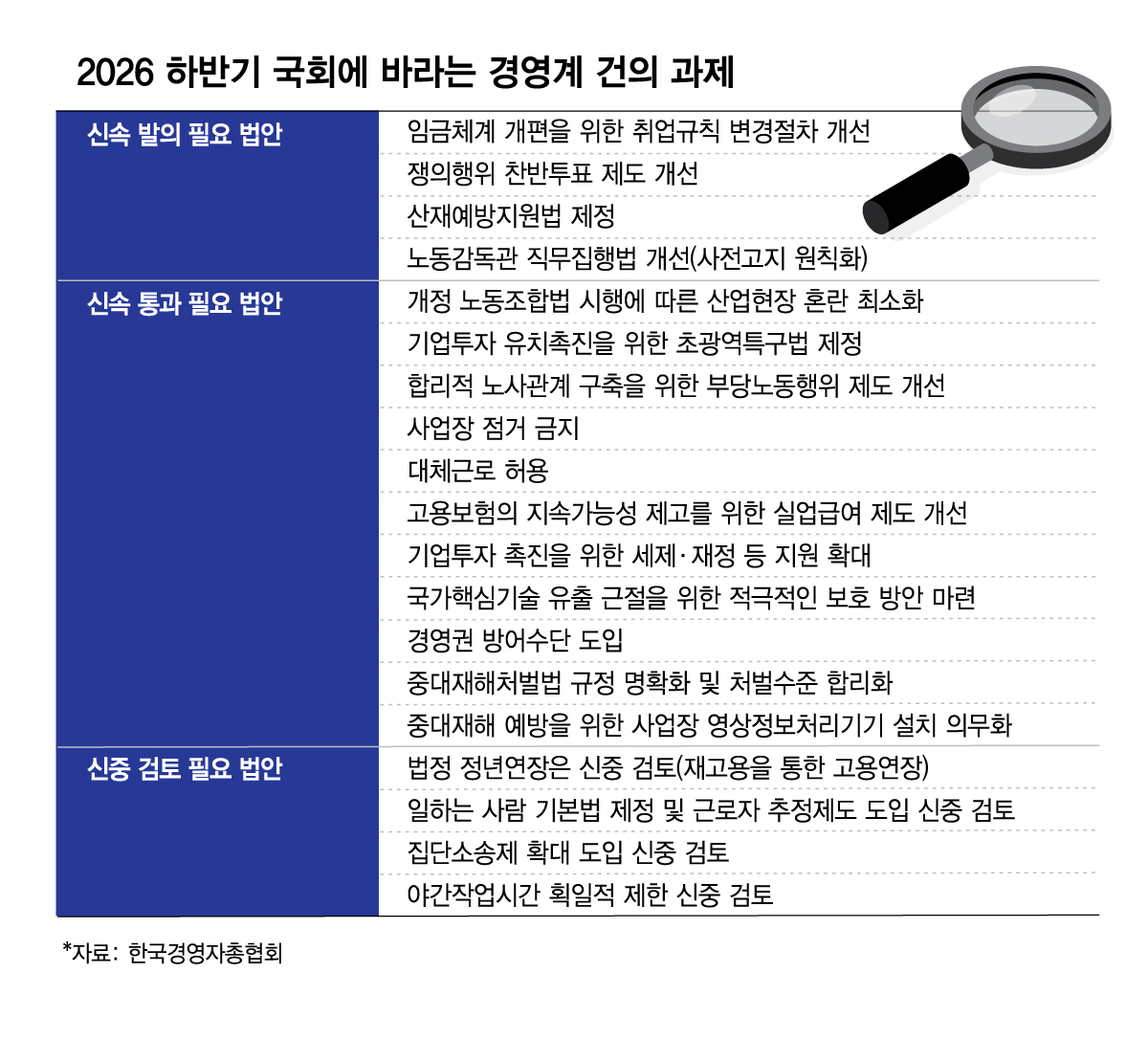
The business community takes the position that a uniform extension of the retirement age should be approached cautiously, considering the high seniority-based wage structure and employment rigidity in Korea’s labor market.
In fact, when the mandatory retirement age of 60 was legislated in 2013, institutional supplements such as wage system reform and enhancing labor market flexibility were not sufficiently implemented. As a result, the effect on improving job security for older workers was limited, and side effects such as an increase in early retirements occurred, it is assessed.
In its “Business Sector Petition Items” recently submitted to the National Assembly, the Federation of Korean Industries (FKI) urged caution regarding extending the retirement age, citing concerns about side effects including △worsening youth unemployment due to reduced corporate capacity for new hiring, △the benefits of extended retirement being concentrated on regular employees at large companies with unions, and △increased labor cost burdens and deepened personnel stagnation at companies.
For the government and the National Assembly, the continuing worsening of youth unemployment is a burden. According to the National Data Office, the number of employed persons last month increased by 139,000 compared to the same period one year ago, marking four consecutive months of increases in the range of 100,000.
However, the number of employed youths aged 15 to 29 decreased by 196,000, marking a decline for the 48th consecutive month. Ongoing criticism of the government’s labor-biased policies is also an obstacle to pushing forward legislation on extending the retirement age. The business community has submitted numerous labor issues, including improvements to the Yellow Envelope Act (amended Trade Union Act), as “Business Sector Petition Items.”
However, the business community shares the view that continuous participation of older workers in the labor market is necessary. This is from the perspective that, to increase employment for older workers while minimizing side effects, “rehiring after retirement” should be activated rather than extending the retirement age.
According to a survey by the FKI last year, 61% of companies with 30 or more employees preferred “rehiring” as a method for employing older workers. Additionally, 80.9% of companies with experience in continuing to employ older workers were found to be utilizing the rehiring method.

 in INDUSTRY

