

"Everything from vehicle specifications to development standards needs to change."
Hyundai Motor is making another major push to localize its business in China, the front line of global electric vehicle competition.
To narrow its cost competitiveness gap with Chinese automakers, the company plans to reassess everything from vehicle specifications to development standards. It aims to reverse its fortunes in the market by expanding its EV lineup tailored to Chinese customers while embracing advanced technologies from local companies.
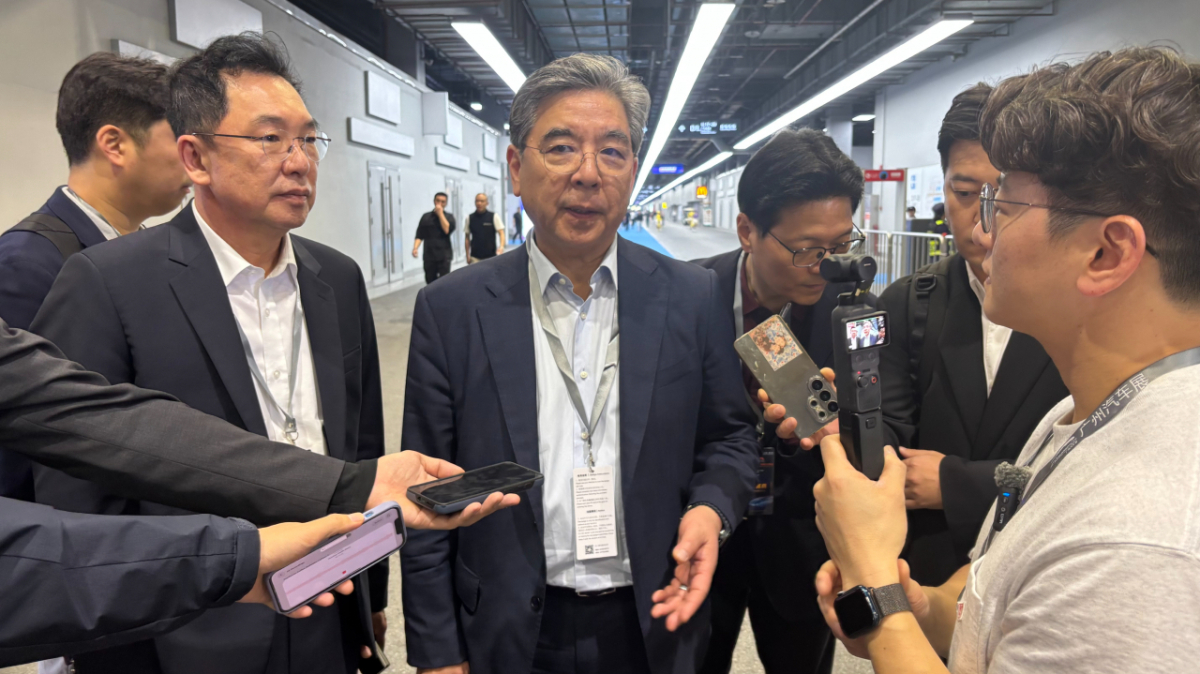
Hyundai Motor Group Vice Chairman Jang Jae-hoon told reporters at the Guangzhou International Auto Show on Nov. 27 that the cost competitiveness gap with Chinese automakers stands at around 30 percent. Hyundai plans to narrow the gap over the next three years and will announce specific cost reduction targets next week.
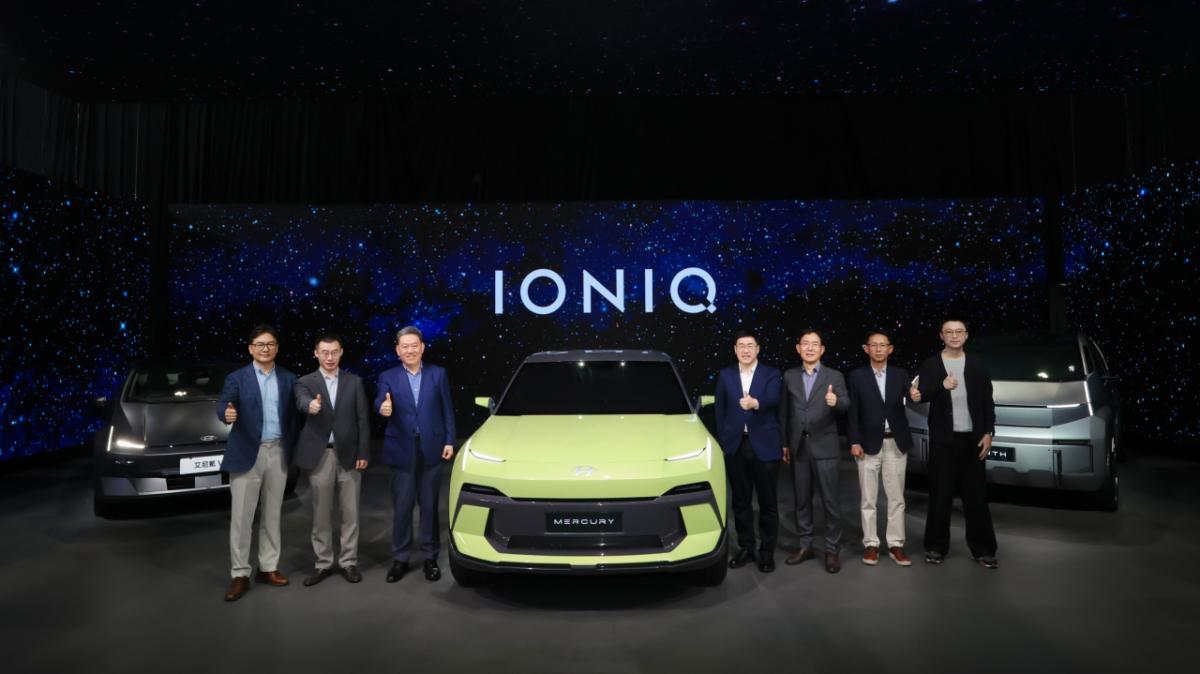
At the 2026 Guangzhou International Auto Show, held at the China Import and Export Fair Complex in Pazhou, Guangzhou, Hyundai unveiled its Mercury Concept for the first time globally. The concept marks the second China-specific model direction presented by the automaker, following the launch of its first China-focused electric sedan, the IONIQ V, in September.
The Mercury Concept is part of Hyundai's IONIQ Planet vision, which likens different IONIQ models tailored to the diverse mobility needs of Chinese customers to individual planets.
"Mercury is the smallest entry-level model in the IONIQ universe," said Guo Yi, chief designer of Hyundai Motor Group's AVP China Hyundai Design Team. "Just as Mercury is the closest planet to the sun, it is also designed to be closest to consumers."
The production version of the Mercury Concept, the IONIQ M, will incorporate a range of advanced technologies from Chinese companies. It will feature driver assistance technology from Chinese company ZYT and a smart cockpit powered by ByteDance's conversational artificial intelligence model.
Hyundai also plans to introduce a battery-swapping version in cooperation with Chinese battery maker CATL, becoming the first joint-venture automaker in China to offer such a model.
"We will continue introducing battery swapping, Level 2++ advanced driver assistance and Doubao, ByteDance's large AI model, to provide customers with greater value," said In Yong-il, senior vice president and head of Hyundai Motor's China Brand Sales Division.
Hyundai aims to expand its local capabilities and partnerships and introduce a total of 24 models in China by 2030. Its rollout plan includes the IONIQ V in 2026; the IONIQ M and an extended-range electric vehicle (EREV) version of the IONIQ V in 2027; a production model based on the Earth Concept in 2028; and two additional electrified models in 2029.
"China is a highly competitive market, but that is also what makes it attractive," In said. "We need to continue deepening our understanding of the Chinese market and work closely with local research and development teams to create products and services that genuinely meet the needs of Chinese consumers."
From Nov. 27 through Dec. 6, Hyundai is showcasing 12 vehicles across 10 models in a 910-square-meter exhibition space. The lineup includes the Mercury Concept, IONIQ V, Earth Concept, updated Custo, Palisade Hybrid, IONIQ 5 N, Elantra N, Sonata, Santa Fe and Tucson.
The exhibition also features displays of CATL's battery technology and autonomous driving technologies from Momenta and ZYT, highlighting the results of Hyundai's technological partnerships with Chinese companies.
The Guangzhou International Auto Show, which opened on Nov. 27, features major automakers including Hyundai, Chinese electric vehicle makers BYD, Xpeng and Xiaomi, as well as global brands Volkswagen, BMW and Mercedes-Benz. A total of 1,106 vehicles are on display, including 707 new energy vehicles and 115 global or China premieres.

 in INDUSTRY

