

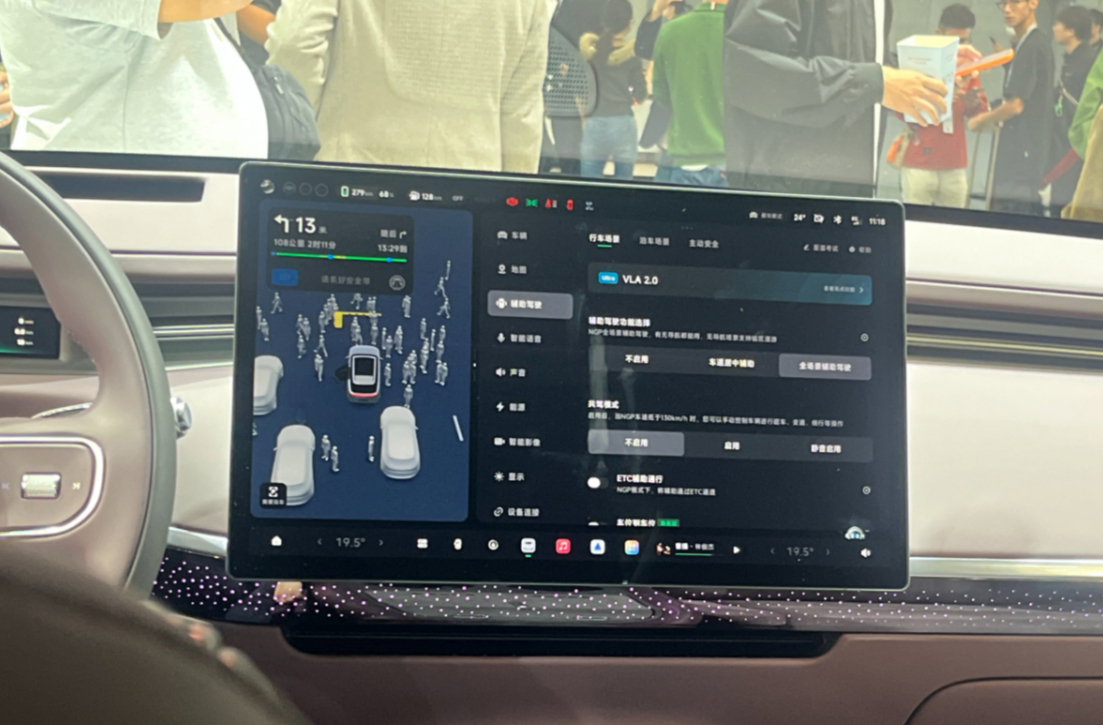
At the XPeng booth at the Guangzhou International Motor Show on Friday in China. Although I sat in the driver's seat of the display vehicle, it felt as if I were looking down from a height of 10 stories at cars and the surrounding scenery.
Dozens of spectators moving through the exhibition hall and nearby vehicles were rendered as individual objects on the indoor display.
The three-dimensional visualization of a complex space with no distinct lanes was quite different from domestic cars I had previously encountered. Outside the vehicle, a humanoid robot with a body shape similar to that of an adult woman engaged in natural conversation with people.
The Guangzhou International Motor Show, which opened its media day on this date, featured a total of 1,106 vehicles on display.
Among these, there were 707 new energy vehicles and 115 world premieres. Throughout the exhibition hall, competition was fierce among Chinese automakers leveraging cutting-edge technologies such as artificial intelligence and robotics.
China, which had expanded its influence in the global electric vehicle market using price competitiveness as a weapon, is now threatening the positions of existing automakers by also emphasizing technological capability and product quality.
Driver's seat like flying a drone, robot announcing new cars... XPeng's AI rise
When I sat in the driver's seat of the large SUV (Sport Utility Vehicle) 'GX' at the XPeng booth on this day, a quite different scene unfolded. Centered around the car on the display, dozens of spectators moving through the exhibition hall appeared densely packed as small human figures.
Other vehicles placed nearby were also rendered in three dimensions. It was as if I had launched a drone into the air to look down at my car and the surrounding scenery.
While driving assistance screens in typical vehicles mainly show information necessary for driving, such as lane markings, adjacent vehicles, and following distance, within a limited scope, XPeng transferred the complex scenery of an exhibition hall with no distinct lanes onto the screen.
The movements of spectators beyond the windshield could also be confirmed on the display.
In one corner of the screen was the settings menu for 'VLA 2.0,' XPeng's AI-based driving assistance technology. This is a technology that connects visual information captured by cameras directly to driving decisions and actions without an intermediate language translation process.
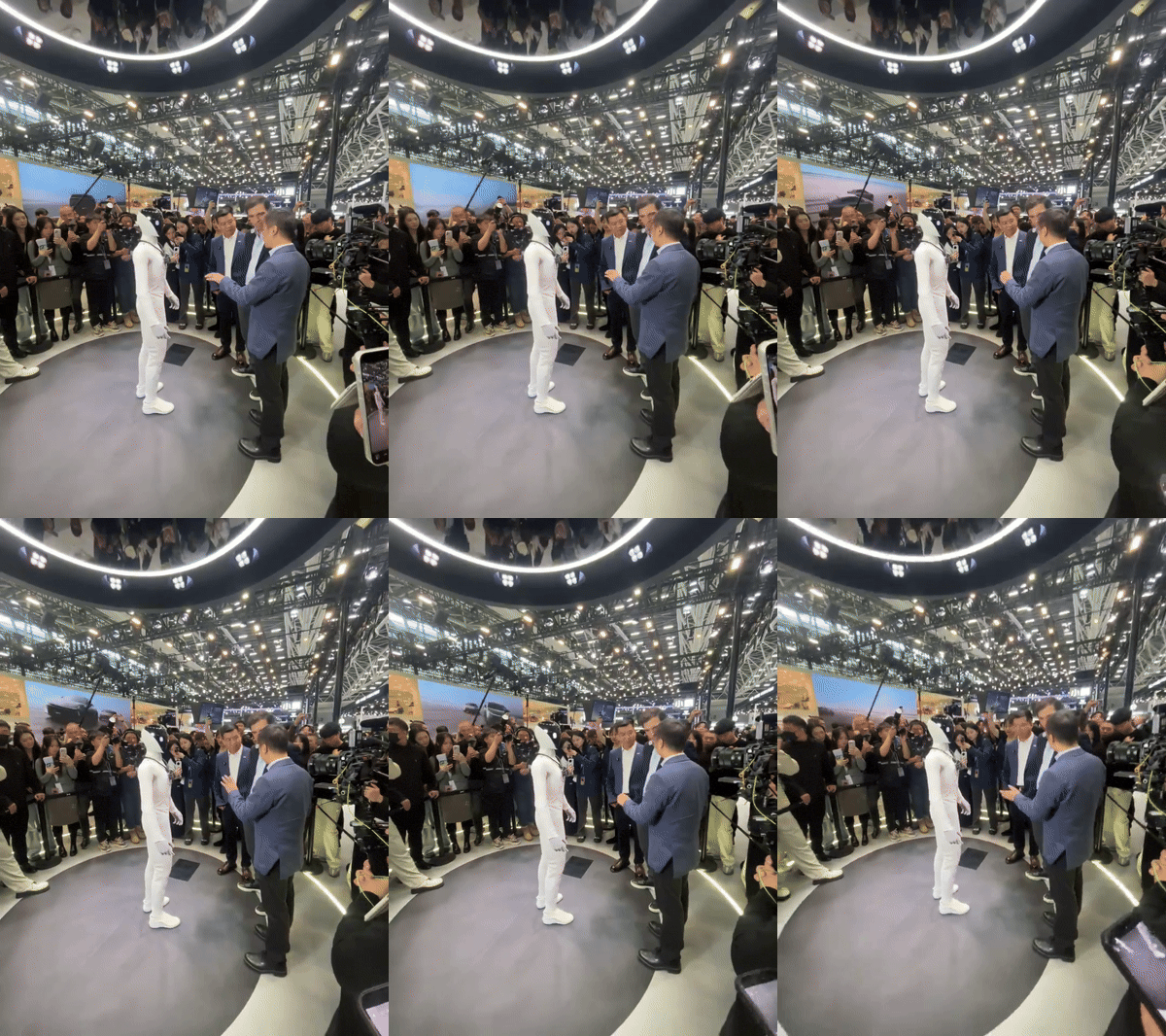
The crowd of spectators, packed so tightly there was no room to step, surrounded not only cars. The curves and silhouette of the humanoid (human-shaped) robots were so refined that one might suspect a real person was acting as a robot.
Not only did they have an appearance resembling humans, but their ability to understand what others said and continue conversations naturally also drew attention.
The one who took the stage as a speaker at XPeng's new car launch event on this day was also a humanoid robot in the shape of a woman. A rare spectacle unfolded where a robot made by an automaker directly introduced a new car.
This robot is 'IRON,' the general-purpose humanoid that XPeng has announced it will begin mass production of next January.
It features 76 degrees of freedom and over 1,500 tactile sensing points across its entire body, and is equipped with three in-house developed AI semiconductors called 'Turing.'
It can recognize human faces and voices and even remember the context of previous conversations.
XPeng applies its automotive production know-how to the mass production of robots as well. The company explained that once the production line reaches maximum capacity, it can produce one robot every 2 minutes and 30 seconds.
It plans to train the robots for customer service and vehicle guidance duties at its car dealerships starting from the first quarter next year, with a formal launch in the second quarter. An era is approaching where a company that makes cars also mass-produces robots that sell them.
Above all, inside the car, the automobile read the movements of people around it, and outside the car, the robot understood human speech. It was possible to experience firsthand XPeng's technology strategy of integrating AI into machines in different forms—cars and robots—and connecting this to mass production.
It was a moment that made one keenly feel that the threat from China facing domestic automakers is expanding beyond electric vehicles into the realm of physical AI.
From gulls and dolphins to whales... BYD aiming for premium family cars
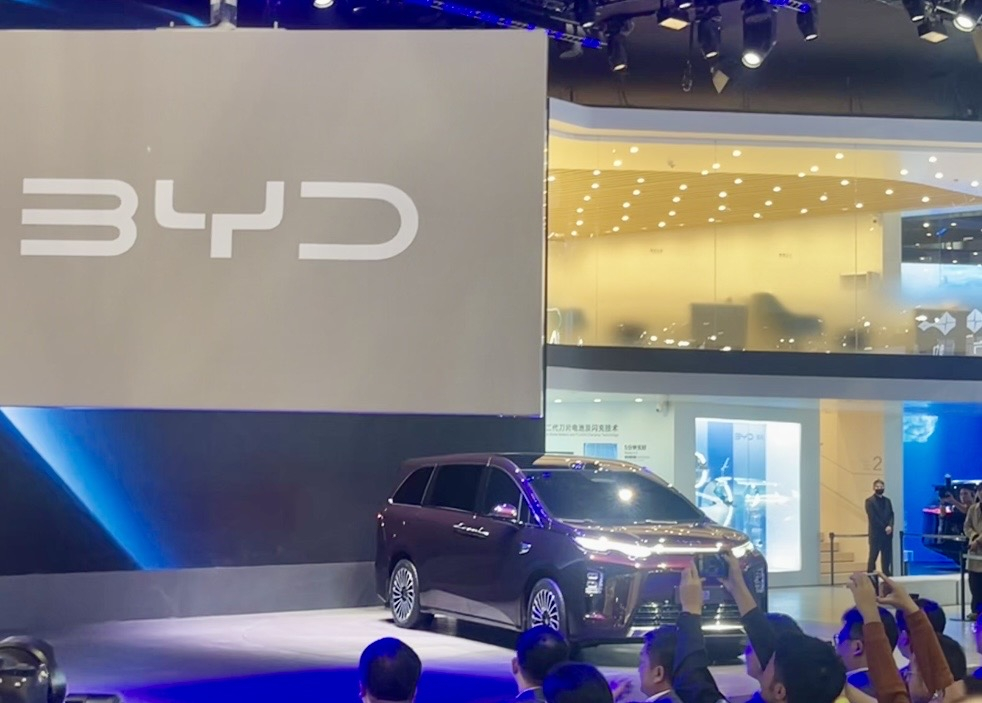
Unexpectedly, a 'whale' appeared on BYD's new car launch stage. Its large body size and social lifestyle were introduced in turn. This was an analogy used to explain a spacious car that the whole family can ride together.
On this day, BYD revealed for the first time in the world the 'Haijing (Sea Whale),' the first flagship multi-purpose vehicle (MPV) of its Ocean Network, developed based on a new platform.
The Ocean Network is a new energy vehicle product line and sales brand launched by BYD in 2021, characterized by vehicle names and designs inspired by marine life.
Zhang Jue, General Manager of the Sales Division for BYD's Ocean Network, who took the stage, looked back on the footprint of the Ocean Network, which started in Guangzhou five years ago. Existing vehicles named after gulls, dolphins, seals, and sea lions were mentioned in turn.
The product line, which has continued from compact cars to sedans and sport utility vehicles (SUVs), now includes a premium family car. This is an effort to secure consumers who desire spacious space and high-quality product features, going beyond compact electric cars with price competitiveness.
Targeting even skiing customers... Xiaomi delving into car lifestyles
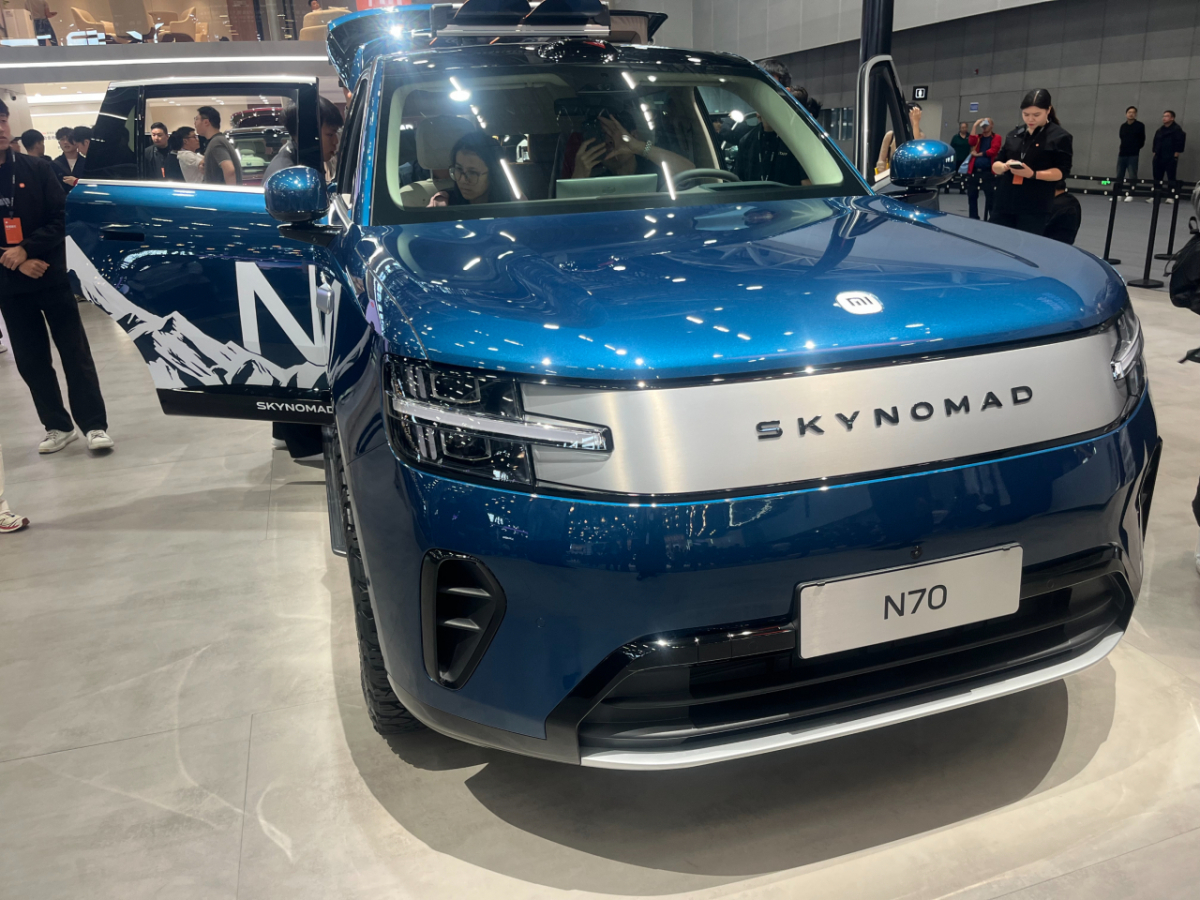
At the Xiaomi booth, a blue SUV (Sport Utility Vehicle) with snow-covered mountain ranges engraved on its side stood out. Its angular body, large silver front section, and ski equipment on the roof were differentiated from the sleek design of existing Xiaomi electric sedans.
This vehicle is the 'SkyNomad N70' ski-specialized model, revealed for the first time on this day through a collaboration between Xiaomi and 'Süugar,' a sports brand founded by Chinese snowboard Olympic gold medalist Sui Ming.
It features a spacious second-row space to allow changing clothes or resting after skiing, with waterproof materials applied to the interior.
The trunk includes a space to store wet equipment and dry luggage separately. It is also equipped with facilities for drinking warm beverages and even a hair dryer. This is an automobile reconfigured to match the lifestyle of consumers who enjoy specific hobbies.
The base model, the N70, is an extended-range electric vehicle (EREV), with a combined driving range of 1,461 km under China's certification standard (CLTC) for the top trim.
According to Xiaomi, cumulative customer deliveries of the SkyNomad series, launched in September last year, surpassed 60,000 units as of the 26th of this month. Xiaomi, which started as a smartphone manufacturer, is not only settling into the automotive market but also delving into consumers' segmented lifestyles.
The competitive weapons of the Chinese auto industry encountered at the Guangzhou Motor Show no longer remain solely in price. By leveraging artificial intelligence (AI), robotics, and enhanced product quality, they are rapidly dismantling the competitive advantages built up by existing automakers.
What the Korean automotive industry will present as a new competitive weapon to counter China's technological capabilities, which are surging forward at a frightening speed, is a homework assignment thrown out by the Guangzhou Motor Show.

 in INDUSTRY


