

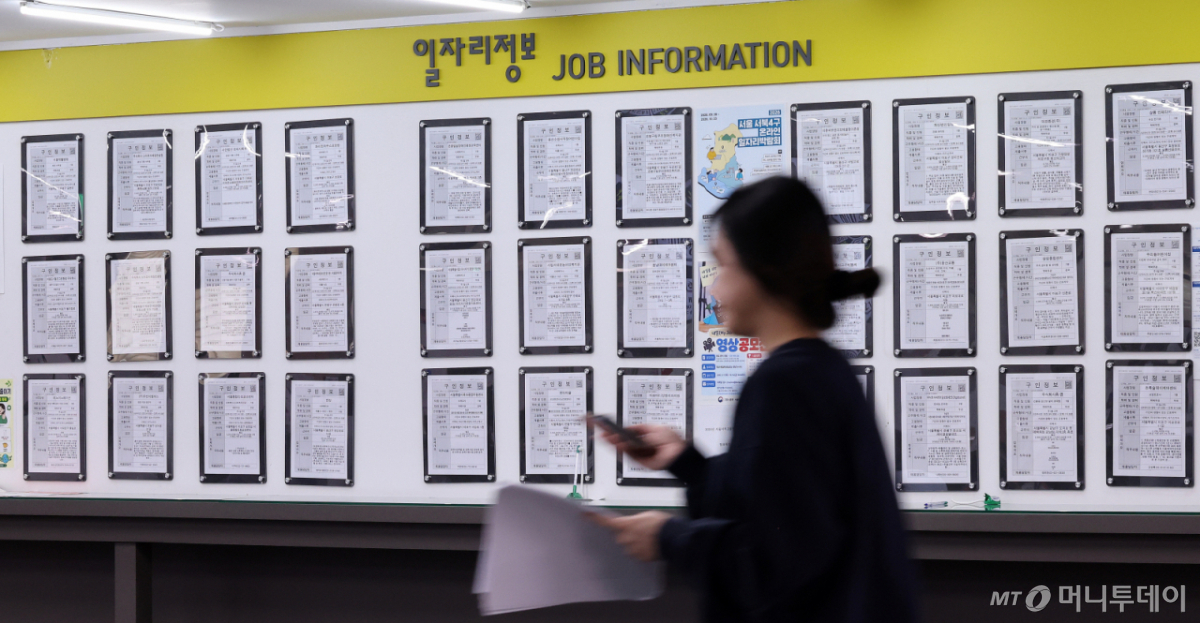
Ms. A (31, female), who entered her 30s, has been working part-time at a cafe for five years. After preparing to enter a public enterprise for over a year, she started the part-time job with the thought of earning at least living expenses without asking her parents for money, but it has now become her main livelihood. As her working hours increased, exam preparation became more distant. Instead, her accumulated experience working in cafes served as a foundation for changing jobs to other cafes. She even considered starting her own cafe using this experience, but she was barely able to cover her living expenses with the part-time wages. With part-time pay of around 2 million won, she could not afford the deposit of several tens of millions of won and the costs of interior design and equipment. Ms. A lamented, "I don't have enough money to start a business, and I don't know where to begin if I try to prepare for employment again."
The number of young people in the 'Freeter' demographic (from 'free' + 'Arbeiter') who turned part-time jobs, which they intended to do temporarily before finding full-time work, into a de facto means of livelihood is increasing. This phenomenon occurs because they earn living expenses through part-time work while unable to find their desired job, but rarely gain the capacity to move on to the next step.
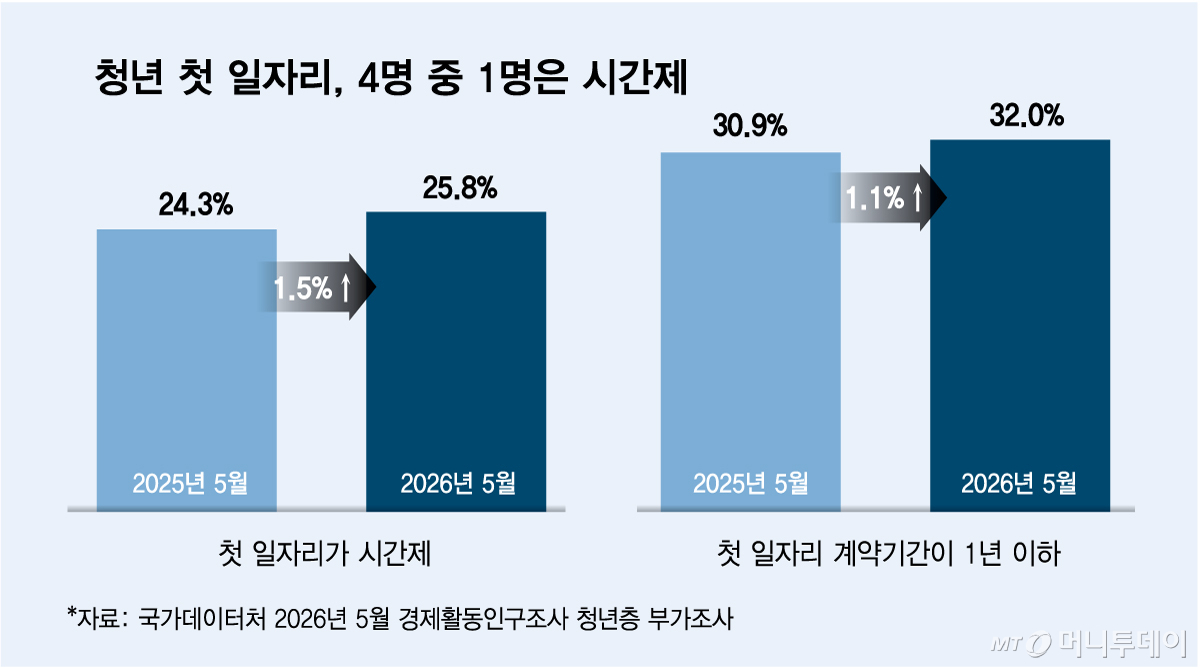
According to the "May 2026 Economic Activity Population Survey Supplementary Survey for Youth" released by the National Data Agency in July last year, among youth aged 15 to 29 who experienced employment after graduation or dropping out, the proportion whose first job was part-time was 25.8%, up 1.5 percentage points (p) from the previous year. The proportion of contracts with a duration of one year or less also rose from 30.9% to 32.0%. This means that one in four youth starts working on a part-time basis, and one in three starts with a contract of one year or less. Conversely, the proportion of jobs without a fixed contract period, allowing for continuous work, decreased from 52.8% to 52.2%.
The food service and retail industries are the main sectors where youth first enter the workforce. In the same survey, the proportion of first jobs by industry was highest for accommodation and food services at 15.9%, followed by wholesale and retail at 12.4%. Combined, these two sectors account for 28.3%. Additionally, in response to a question about wages and income at the time of securing a first job across all industries, 2 million to 3 million won was the most common at 42.1%, followed by 1.5 million to 2 million won at 23.3%.
It is also not common for youth to stay long in their hard-won first jobs. Among youth who quit their first job, 44.4% cited dissatisfaction with working conditions such as wages and working hours as the reason. The proportion who quit because temporary or seasonal work ended or the contract period expired was 18.0%, up 2.5%p from the previous year. The average tenure of wage earners who quit their first job was one year and 2.3 months. The period of unemployment after graduation is also trending longer. Among unemployed youth after graduation, the proportion with an unemployment period of one year or more was 48.6%, the highest since 2009 (51.7%).
Noh Ye-eun, representative labor consultant at Labor Law Firm Changgong, said, "Part-time periods unrelated to the applied position tend to be evaluated as close to a gap in the hiring market." She added, "Given the domestic characteristic that dismissal is difficult, companies are raising the barrier to regular employment by hiring contract or probationary workers, and youth who cannot let go of part-time work due to livelihood concerns lose even the time to prepare."
She continued, "As the duration of part-time work lengthens, it becomes difficult to lower one's standards because the time invested feels wasted." She emphasized, "Freeter youth are counted as employed in statistics and thus fall into policy blind spots, so support that allows them to balance work and preparation is needed."

 in LIVING

