

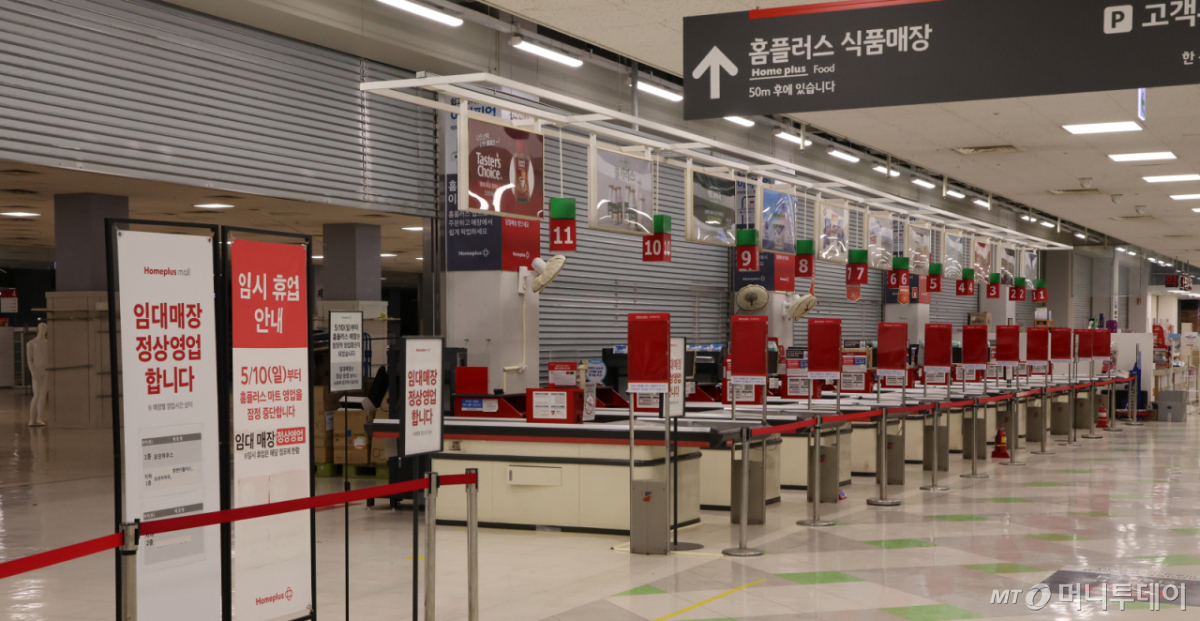
As Homeplus's financial difficulties deepen, a sense of crisis is spreading that the company has been pushed to the brink. Three months after reopening in mid-August, operating costs have run out, leaving employee salaries several months behind and resulting in power cut warnings for stores unable to pay utility bills. Additional store closures are expected, and in the worst case, a declaration of self-bankruptcy cannot be ruled out.
According to industry sources on the 10th, Homeplus has yet to pay 50% of its August salaries this year. The company paid 50% of wages in two installments on the 23rd of last month and the 6th of this month, but the timing for paying the remaining amount is uncertain. There is also a high possibility that September and October wages will be delayed.
Homeplus implemented a voluntary retirement program last month, with approximately 400 employees applying, but it was fully withdrawn midway. This was due to the failure to secure funds to pay the remaining wages and severance promised to those who applied for voluntary retirement. Previously, some stores that ended operations had unpaid electricity bills of approximately 10 billion won and received power cut warnings from Korea Electric Power Corporation.
Homeplus employees and staff, who once numbered over 19,000, have now decreased by more than half to around 9,000. This is the result of increased suspensions and resignations due to financial difficulties, combined with the sale of Homeplus Express stores. The Homeplus union argues that the "employment crisis" most feared by the government and political circles has already become reality.
Homeplus achieved brief success for about two weeks immediately after reopening, but failed to normalize product supply, resulting in recent sales falling below 30% of target sales. It requires approximately 23 billion won monthly just for employee salaries, but at current sales levels, it is difficult to cover even 10 billion won in labor costs per month. If the situation does not improve, this means the company will be unable to pay more than 50% of salaries each month going forward. An industry official said, "Unpaid wages alone accumulate over 10 billion won monthly, making it difficult to manage if additional operating funds are not secured."
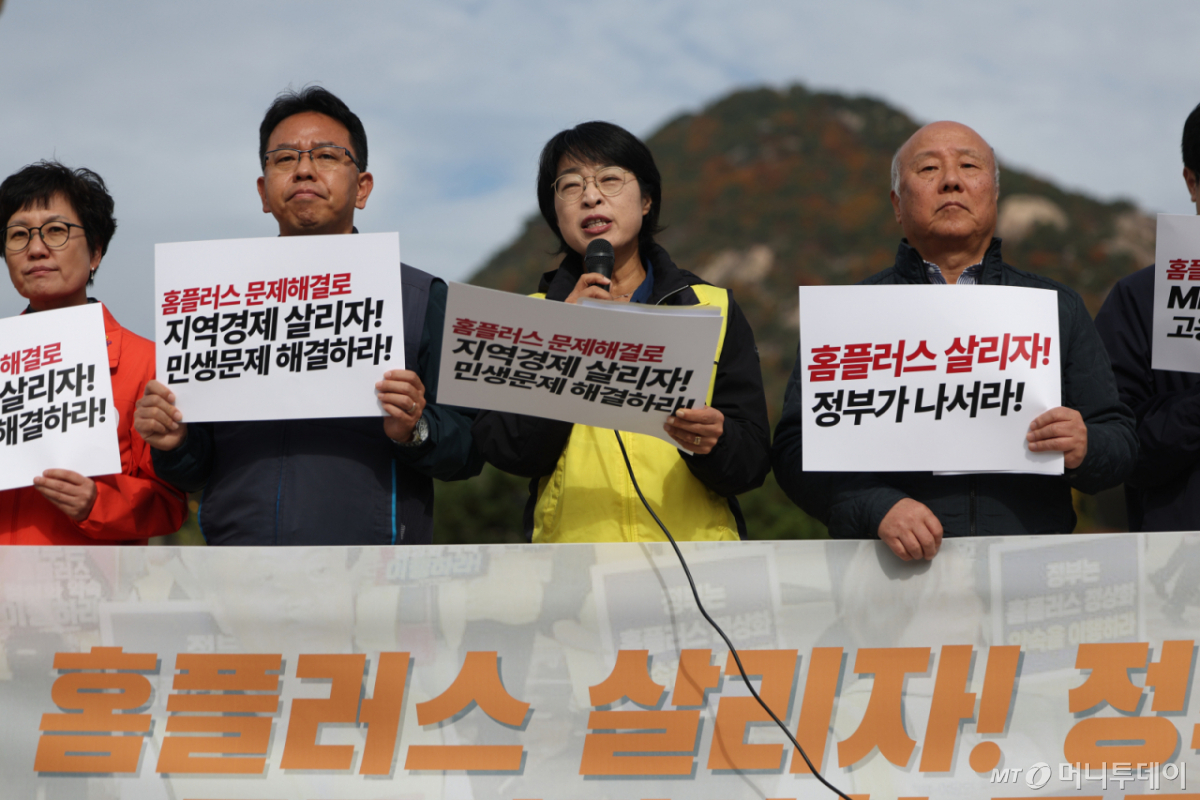
The union states that the company is facing its greatest crisis on the verge of bankruptcy and urges direct government support. At a press conference held at the National Assembly on the 3rd, the union stated, "Homeplus sales have plummeted to a level where normal rehabilitation is difficult to expect," adding, "Workers' livelihoods are threatened, and if an acquirer does not appear immediately, it will be difficult to avoid the worst-case scenario of all stores closing again."
The union further urged, "The government must take responsible mediation and support measures alongside promoting private acquisition," and called for "practical normalization plans, including securing emergency operating funds, to allow Homeplus to continue operations."
The government announced a support package of approximately 550 billion won in July when the Homeplus bankruptcy crisis intensified. However, this is an indirect support method, such as low-interest loans for living expenses for retirees, rather than direct support for company operating costs. The union demands converting this into direct operating cost support, but the government shows reluctance. It is widely believed in the industry that the likelihood of success is low because this approach has few precedents.
The M&A process, the final card for Homeplus's rehabilitation, is also facing difficulties. The sale agent originally planned to close applications from potential acquirers by the end of October, but after failing to attract interest, it decided not to set a separate deadline. Currently, intentions are being explored with some companies, but there are no clear results. In the industry, Homeplus's large contingent liabilities and the limited restructuring capacity of acquirers due to a strong union are cited as the biggest obstacles to the M&A.

 in LIVING

