

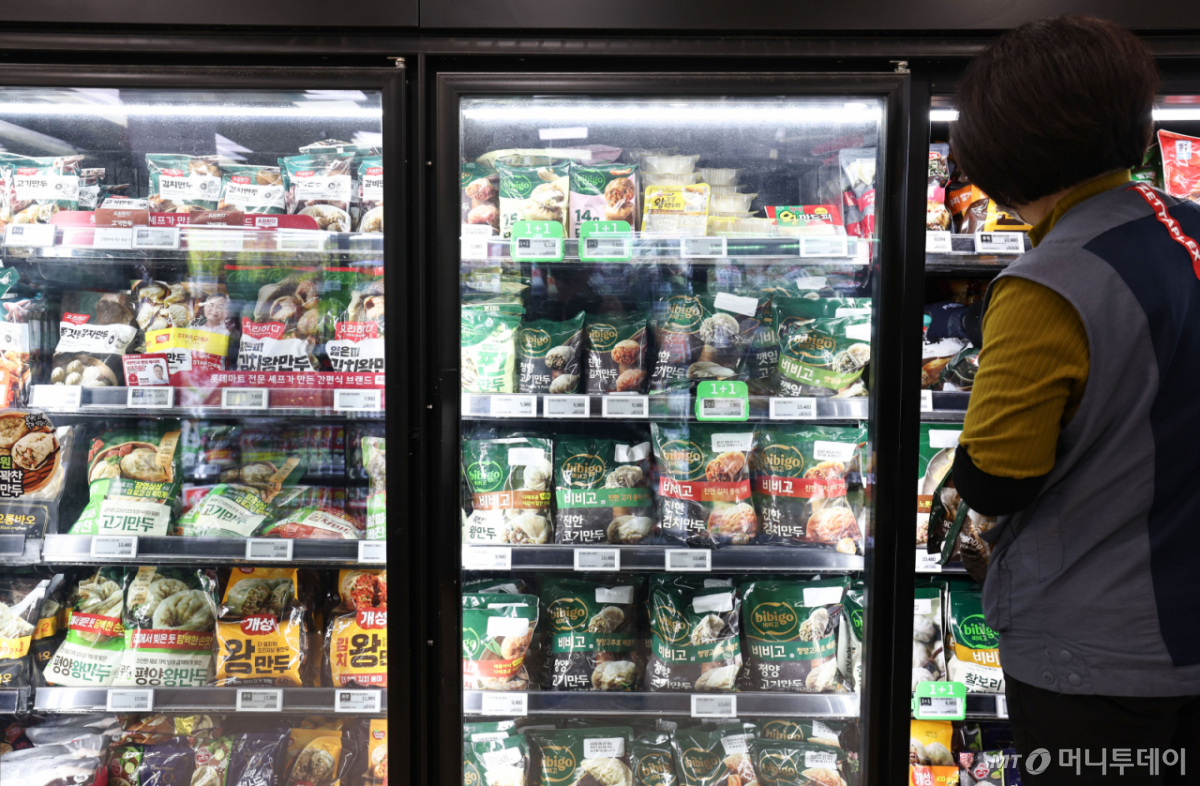
MMajor South Korean food companies continued to drive growth through overseas markets in the third quarter, buoyed by steady global demand for K-food products such as Buldak spicy noodles and dumplings.
At home, however, they struggled to defend profitability amid sluggish domestic demand, rising raw material and logistics costs, and intensifying promotional competition among retailers.
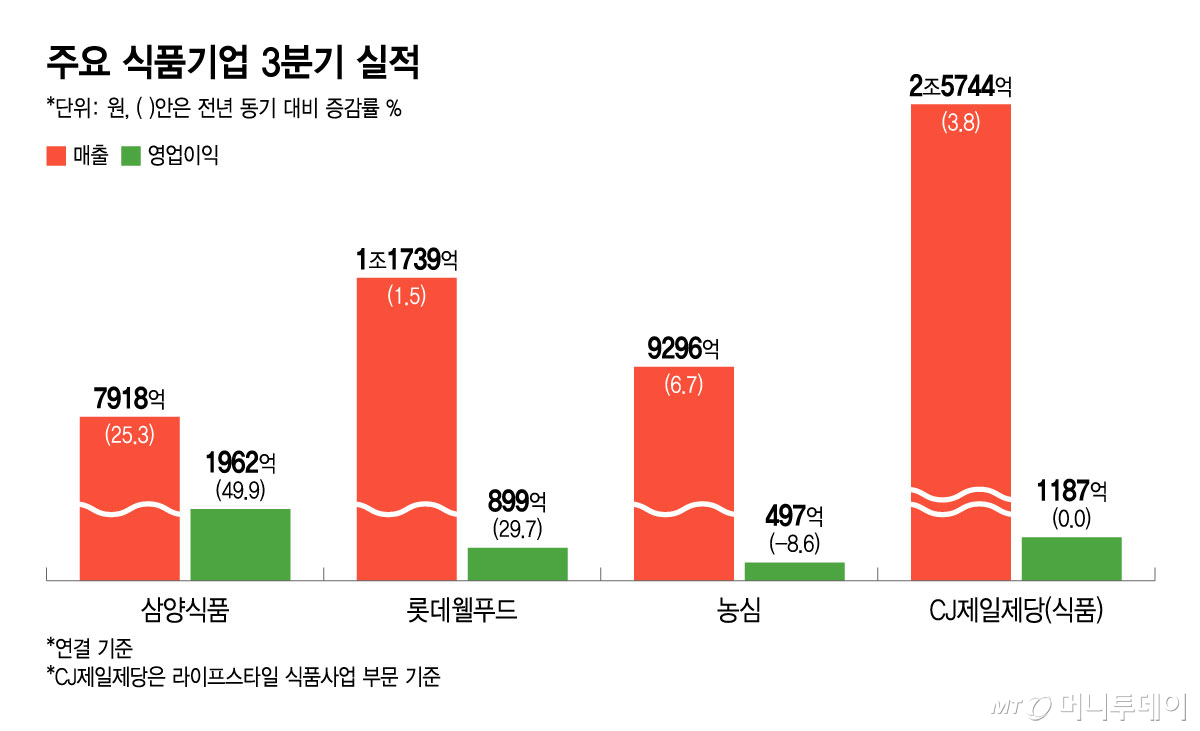
According to the food industry on Nov. 13, Nongshim, which reported its results that day, posted third-quarter consolidated revenue of 929.6 billion won, up 6.7 percent from a year earlier, while operating profit fell 8.6 percent to 49.7 billion won.
Growth at overseas subsidiaries in the United States and China, along with strong exports, boosted revenue. However, rising prices of raw materials such as palm oil, along with higher shipping and energy costs, weighed on profitability in its domestic business.
For the first nine months of the year, operating profit in Nongshim's U.S. business jumped 119.3 percent to 44.5 billion won, while its South Korean business posted a marginal 0.7 percent increase to 109.7 billion won.
CJ CheilJedang also reported higher revenue, but its food business earnings remained flat, as continued pressure from raw material and logistics costs in South Korea offset sales growth. Excluding CJ Logistics, the company posted third-quarter revenue of 4.23 trillion won and operating profit of 203 billion won, up 5.7 percent and 6.9 percent, respectively.
Its food business revenue rose 3.8 percent to 2.5744 trillion won, while operating profit remained unchanged at 118.7 billion won.
Samyang Foods posted record quarterly results, with consolidated revenue of 791.8 billion won and operating profit of 196.2 billion won, up 25.3 percent and 49.9 percent, respectively, from a year earlier. The growth was driven by a 29.4 percent increase in overseas revenue to 660.8 billion won.
Its U.S. subsidiary's revenue rose 36.6 percent, supported by increased sales through major retail channels such as Walmart and stronger shipments to Mexico. Its Chinese subsidiary grew 13.2 percent by expanding into snack distribution channels, while sales in Europe jumped 65.5 percent.
Lotte Wellfood also relied on overseas markets to support its performance. Third-quarter consolidated revenue rose 1.5 percent to 1.1739 trillion won, while operating profit increased 29.7 percent to 89.9 billion won.
Overseas subsidiaries posted revenue of 271 billion won, up 16.1 percent, and operating profit of 23.1 billion won, up 137.8 percent. Growth was driven by the stabilization of its fourth Choco Pie production line in India and expanded sales regions, as well as stronger domestic and export sales in Kazakhstan.
Industry sentiment also remains weak. According to the Korea Agro-Fisheries and Food Trade Corporation's (aT) 2026 food industry business sentiment survey, the overall business conditions index for the third quarter stood at 99.5, below the benchmark of 100.
The most commonly cited reasons for deteriorating business conditions were declining consumption and sluggish domestic demand, accounting for 42.8 percent of responses.
The raw material purchase price index also remained elevated at 121.0, indicating that many companies continued to face higher input costs. According to Nongshim's quarterly report, international palm oil prices averaged $1,174 per ton from January to September this year, 12.6 percent higher than last year's annual average of $1,043.
Food companies plan to maintain overseas growth while protecting profitability at home through operational efficiency.
Lotte Wellfood aims to boost quick-commerce sales of frozen desserts in India and expand its distribution networks in Kazakhstan and Russia. In South Korea, it plans to target growing sales channels such as warehouse-style discount stores and household goods retailers.
CJ CheilJedang plans to expand its distribution channels and supply infrastructure, focusing on key product categories in major regional markets.
"There's little room for growth in the domestic market, and overseas markets are virtually the only place where we can expect growth," an industry official said.

 in LIVING

