

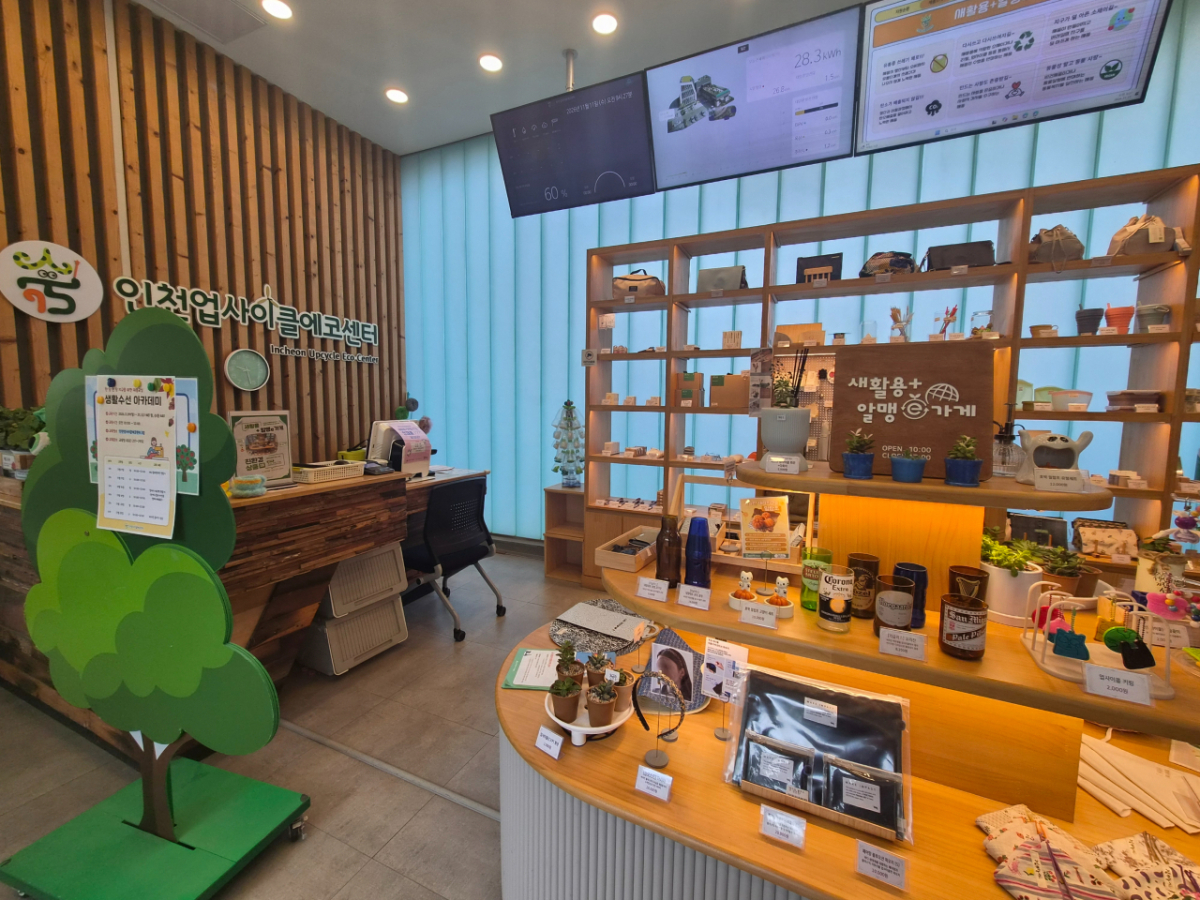
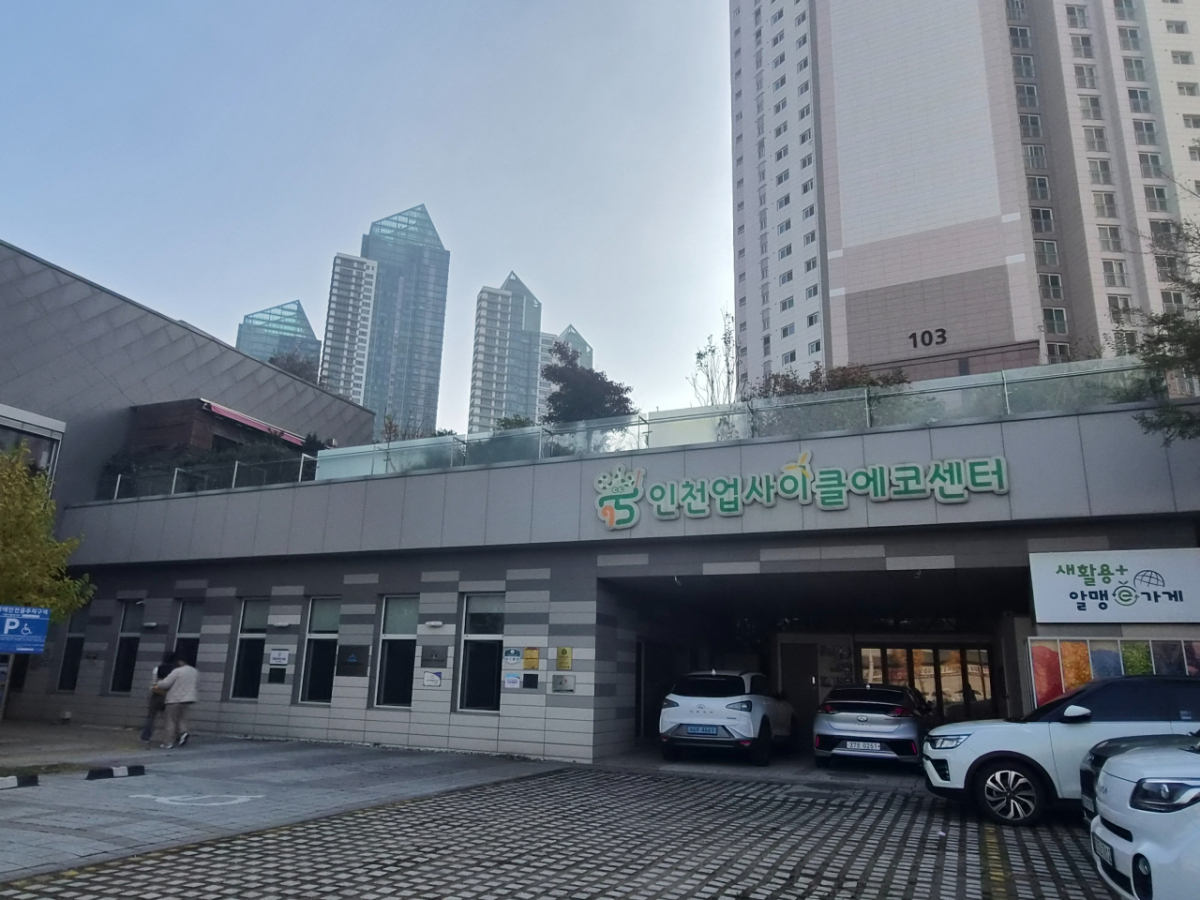
Instructors teaching circular economy visit elementary schools on Baengnyeongdo and Yeonpyeongdo islands. Bringing educational materials to the islands requires a two-day, one-night itinerary, but applications from island regions where access to education is difficult are prioritized. The place that trains these instructors and prepares the lessons is the Incheon Upcycle Eco Center (hereinafter "the Center"), located in Michuhol-gu, Incheon. Starting as a district facility, it has served as the midwife for circular economy education in Incheon.
At the Center visited on the 11th, one could encounter both education and practical action in daily life together. Children learn how to properly sort waste for recycling, while residents borrow household items they use occasionally at a low cost. It is a space that conveys not only how to reuse discarded items but also how to reduce unnecessary consumption and waste from the very beginning.
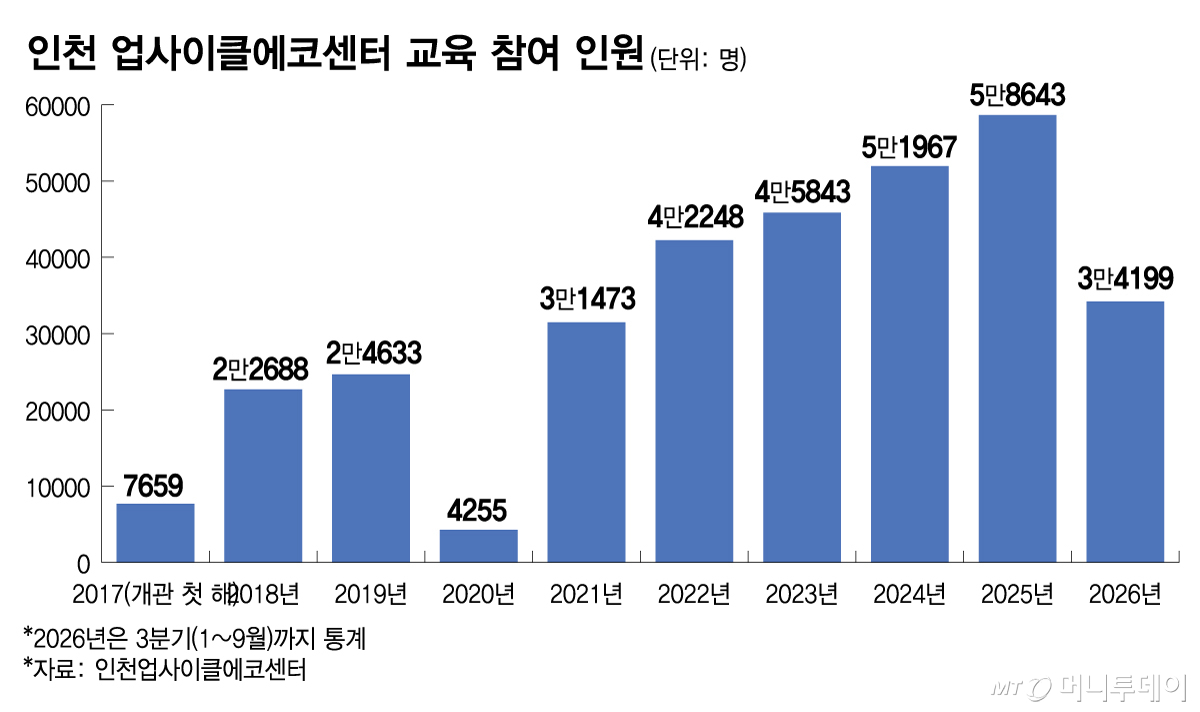
Opened in 2017, the Center is currently operated on commission by the Incheon Environmental Movement Federation with Michuhol-gu's budget. Initially, it taught about climate change and ecology using the building's energy-saving features and surrounding ecological spaces, but now it focuses on circular economy education such as waste sorting and zero waste. According to the Center, the annual number of educational participants increased from 7,659 in its first year of operation to 58,643 last year. The cumulative number of participants since opening through September this year has reached 320,3608. The mobile school education program, operated with support from Incheon City, has reached Baengnyeongdo, Yeonpyeongdo, and Seokmodo islands.
Alongside school lessons centered on elementary students, it also operates visitation education for young children and exhibition commentary. Underpinning this is a system for cultivating instructors. Every year, 40 instructors are selected through document reviews, lesson plans, and demonstration evaluations. Instructors undergo about a month of preparation, studying and researching the program for that year before heading to schools. Some have grown into professional instructors, such as by gaining interest in citizen education and obtaining environmental educator qualifications.
The lessons changed through trial and error. Initially, there were many experiences where multiple classes made the same items with the same materials. Children created works using kits prepared overnight by instructors, but unfinished or unsatisfactory results were discarded again. In trying to teach circular economy, they were instead creating waste mixed with various materials.
Based on initial trial and error, current lessons center on utilizing reusable educational tools. Making activities are conducted on a small scale using recycled materials, focusing on creating items that can actually be used afterward. This is a change that considers what remains after the experience is over.
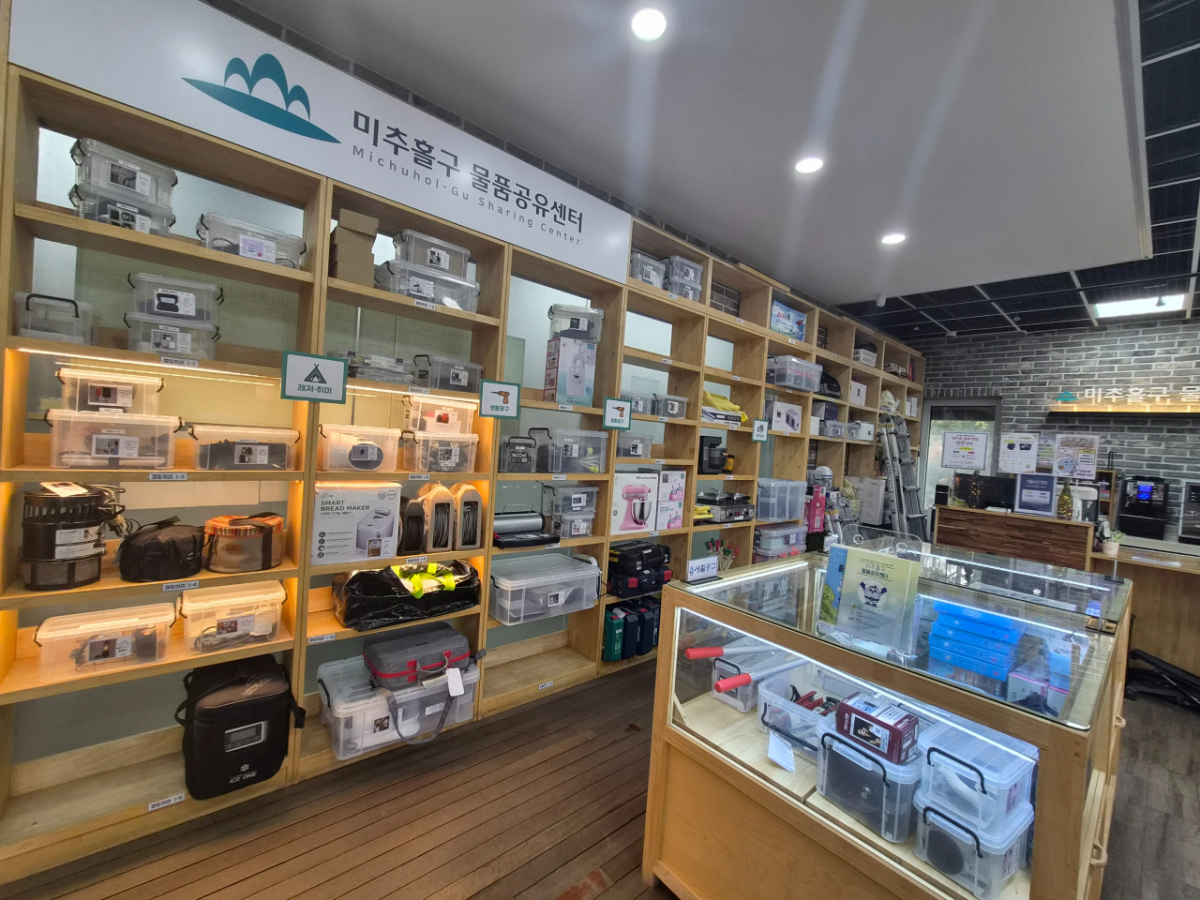
The principles conveyed in education extend to a living service at the "Michuhol-gu Item Sharing Center" on the second floor of the Center. Opened at the end of 2019, the sharing center is equipped with items that are not frequently used but feel burdensome to buy when actually needed, such as large mixers required for kimchi-making season, window cleaners, and ladders. Any Incheon citizen can use it by paying a rental fee of about 1,000 won, and Michuhol-gu residents receive a 50% discount on the rental fee.
The inventory has been adjusted to meet user demand. When the atmosphere of being reluctant to use items used by others spread due to the 2019 novel coronavirus (COVID-19) as operations began in earnest in 2020, it equipped and rented out ultraviolet sterilizers and disinfectants, gaining great support. Recently, demand has been steady for household goods and cleaning supplies. It reduces purchase costs and storage burdens for residents, and serves as a channel for the local community where multiple people use one item for a long time.
The Center's next assignment is to provide more children with opportunities to learn about circular economy. Currently, instructors visit schools that apply for lessons, but it could become possible if systems are established allowing all students to receive lessons upon reaching a certain grade level. Jung Dong-min, team leader of the Center's education team, said, "I hope everyone can have the opportunity to learn about circular economy at least once."

 in INDUSTRY


