

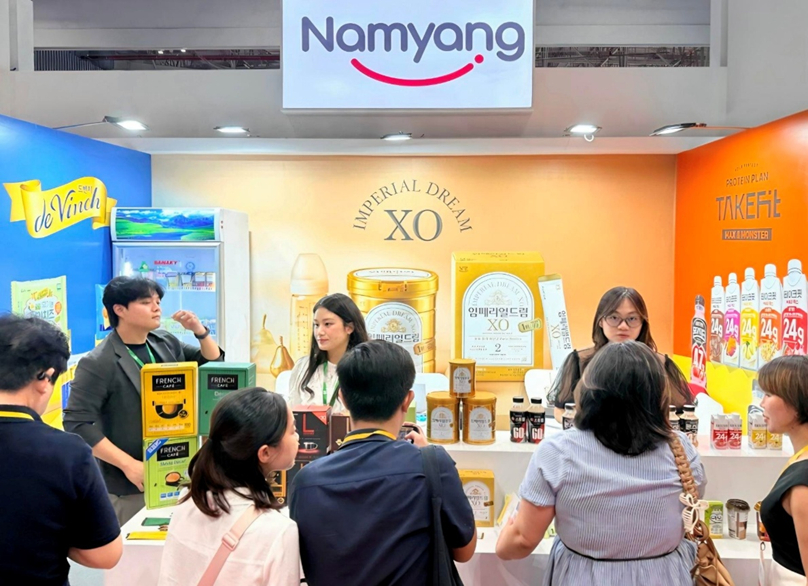
Amid declining white milk consumption and a shrinking domestic market, the dairy industry is seeking to improve performance by leading with Banana Flavored Milk, infant formula, protein drinks, coffee, and other products.
According to the Financial Supervisory Service's electronic disclosure system on the 16th, Binggrae recorded Q3 consolidated operating profit of 65.2 billion won. This represents a 10.7% year-on-year increase. However, revenue fell by 4.8% to 456.3 billion won. Maeil Dairy's Q3 operating profit was 22.2 billion won and revenue was 493.7 billion won, up 11.6% and 4.7%, respectively. Namyang Dairy posted consolidated revenue of 257.6 billion won and operating profit of 3.5 billion won, increases of 8.5% and 104%, respectively.
All three companies continued their growth trend in overseas business. Binggrae's Q3 overseas revenue rose by 17.7% year-on-year, showing balanced growth across key markets including the United States, China, and Vietnam. The U.S. subsidiary's first-half revenue this year was 81.1 billion won, a 30.3% increase from the same period last year, while the Chinese subsidiary's revenue also grew by 31.4% to 23.8 billion won.
Binggrae is expanding its sales channels with Melona at the forefront. After establishing a U.S. subsidiary in 2016, the company began local production of Melona the following year and secured listings in major retail chains such as Costco. In Europe, it overcame dairy import regulations by exporting a dedicated 'Plant-based Melona' that replaces milk fat with plant-based ingredients, recently securing listings at major retail chains in France and Germany. Last month, at 'SIAL Paris 2026,' the company debuted Banana Flavored Milk in the European market for the first time.
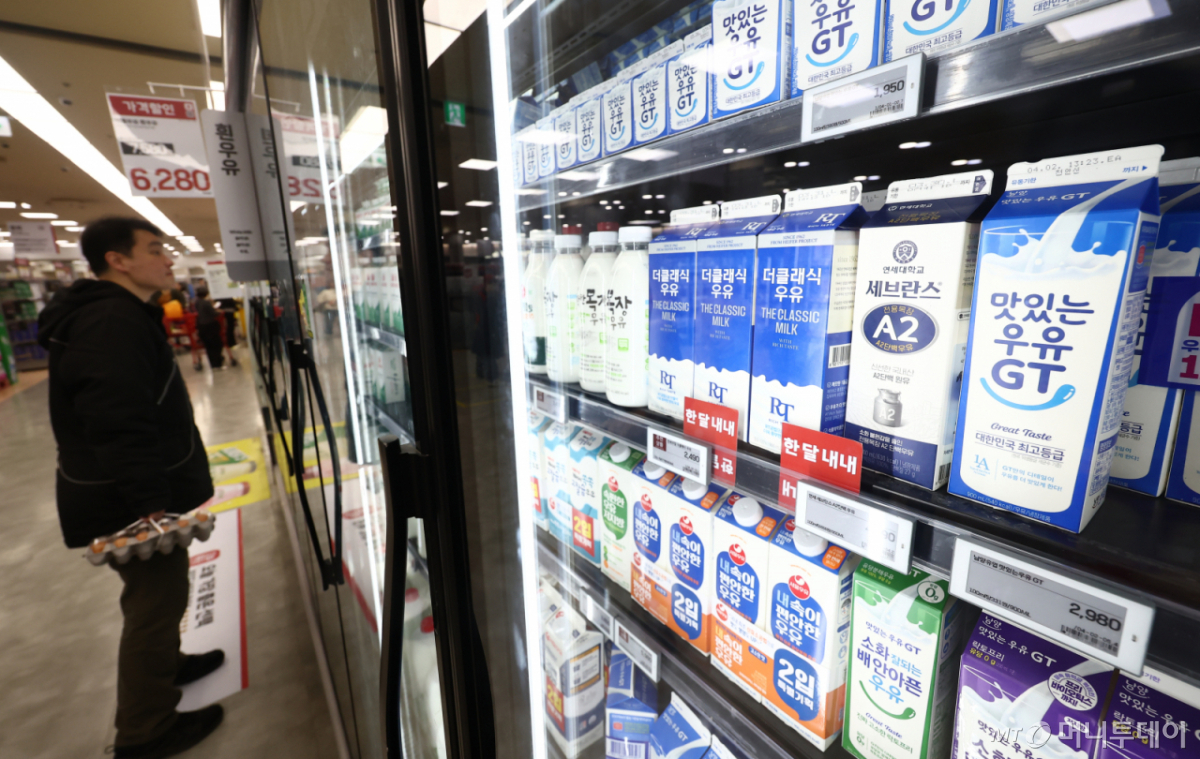
Maeil Dairy explained that it bore a significant cost burden due to losses in white milk from raw milk oversupply, as well as rising exchange rates and raw material prices. Nevertheless, operating profit increased as sales of yogurt centered on Greek yogurt, grain drinks, and nutrition products grew. Overseas business also contributed to performance improvement through the expansion of key customers and structural improvements. Maeil Dairy's first-half exports this year were 53.7 billion won, a 26.4% increase from the same period last year. In China, the company supplies Almond Breeze Barista products to more than 6,000 Starbucks China stores.
Namyang Dairy's operating profit increased each quarter: 500 million won in Q1, 1.3 billion won in Q2, and 3.5 billion won in Q3. The company explained that strengthening its product portfolio and cost efficiency contributed to the performance improvement.
Overseas business is also maintaining a growth trend. Cumulative export revenue for the first three quarters of this year was approximately 69.7 billion won, already surpassing last year's full-year export volume (approximately 39.6 billion won). The share of exports in total revenue expanded from 4.1% in the cumulative third quarter of last year to 9.4%. Q3 export revenue for the 'Other' segment, which includes protein drinks, soy milk, and coffee, was 14.1 billion won, an increase of approximately 9.2 times compared to the same period last year. Overseas sales of freeze-dried (FD) coffee, 'French Cafe' and 'Lucas Nine' coffee mixes, and the protein drink 'Take Fit' increased. For infant formula, the company is supplying 'Imperial XO' and the local-exclusive brand 'Star Grow,' centered on Cambodia.
The reason the dairy industry has no choice but to turn its eyes overseas is also due to the situation of declining domestic white milk consumption. According to the Korea Dairy Industry Promotion Association, per capita white milk consumption last year was 22.9 kg, a 9.5% decrease from the previous year. A dairy industry official said, "The trend of sluggish domestic demand and declining white milk consumption is expected to continue," adding, "Overseas business performance will be a variable that determines the results of the dairy industry."

 in LIVING

