

"When I sell a whole chicken for 25,000 won through a delivery app, there's virtually nothing left after deducting platform commissions and delivery fees. But if I raise prices, consumers complain that chicken is too expensive. I'm caught between a rock and a hard place."
This is the complaint of a 57-year-old owner of a chicken franchise store in Dongjak-gu, Seoul, identified only as A. As orders through delivery apps account for an increasing share of sales, the store has maintained its revenue, but various platform commissions and delivery-related costs are eating into its profitability.
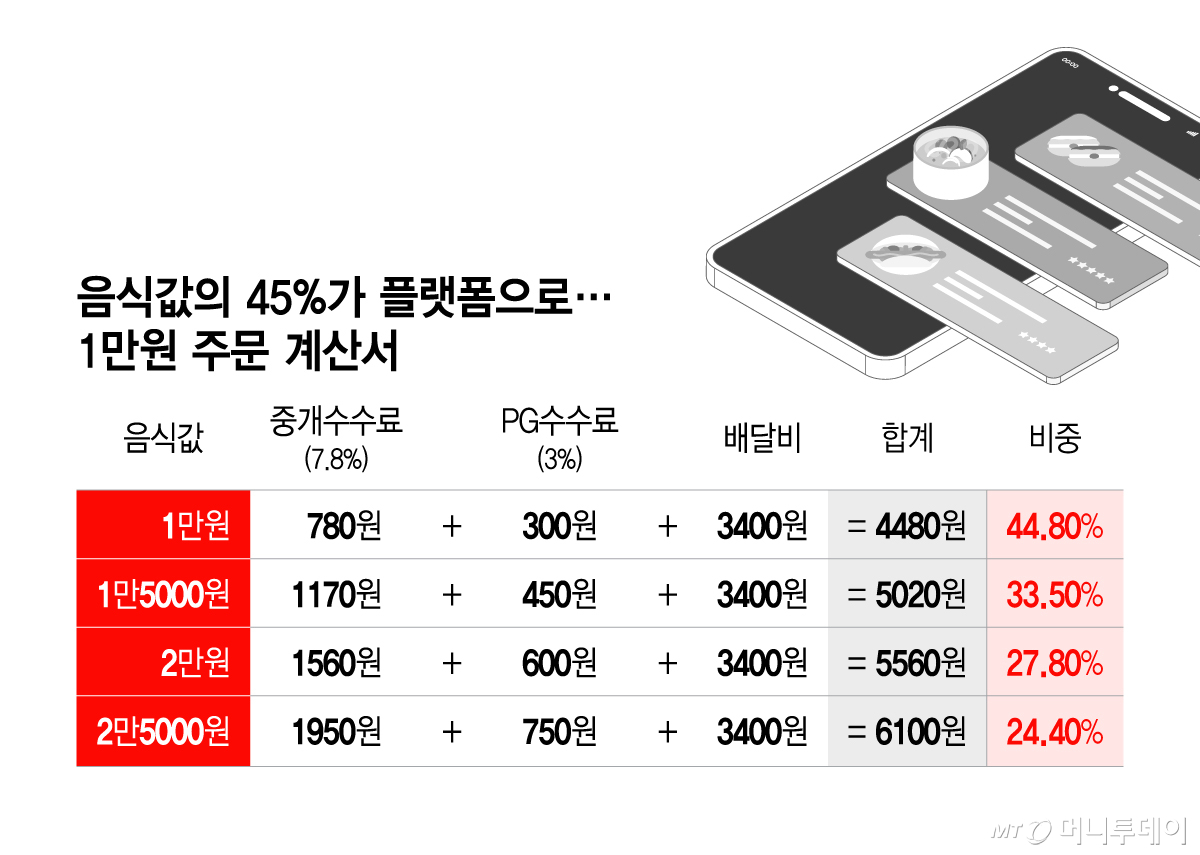
According to the Fair Trade Commission on Saturday, when a franchise owner sells a 25,000-won chicken through a delivery app, the platform charges an intermediary fee of 1,950 won (7.8 percent, excluding VAT). Adding a payment processing fee of 750 won (3 percent, excluding VAT) and a delivery fee of 3,400 won paid by the store owner brings total delivery-related costs to 6,100 won.
This means that more than 24% of the 25,000 won received from selling one chicken goes out as intermediary, payment, and delivery-related costs.
The franchisee receives 18,900 won, but must bear raw material costs such as chicken meat, cooking oil, sauce, and packaging materials, as well as labor costs and rent. This applies not only to chicken but also to various foods listed on delivery platforms, such as jokbal (pig's trotters) and pizza.
The problem is that while the cost burden associated with delivery services affects food prices, this structure is not transparently disclosed to consumers and therefore not fully recognized. Because the price of one chicken is listed as 25,000 won on delivery apps, consumers accept this as the price of the food itself.
However, from the franchisee's perspective, this price is set taking into account various costs incurred during the sales process through the delivery app.
Consequently, there are calls for South Korea to transparently disclose all costs paid by consumers in addition to the food price, similar to U.S. delivery apps. Major U.S. delivery platforms such as DoorDash and Uber Eats guide consumers with separate items including Delivery Fee, Service Fee, Tax, and optional Tip when ordering food.
Consumers can check not only the price of the food they ordered but also how much additional cost they must bear to use the delivery service. After reviewing the delivery fee and service fee, consumers can choose whether to use the delivery service or visit the store directly to pick up the food.
This has fostered the perception that delivery is a convenience service involving separate costs, rather than a free service that incidentally accompanies food purchases.
An official in the distribution industry said, "The essence of the delivery app fee issue is that excessive cost burdens from platforms are concentrated on self-employed operators," adding, "In reality, when consumers order chicken or beverages for delivery, they bear nearly 30,000 won including delivery fees. It is necessary to transparently disclose how this cost structure is formed so that consumers can understand it."

 in LIVING

