

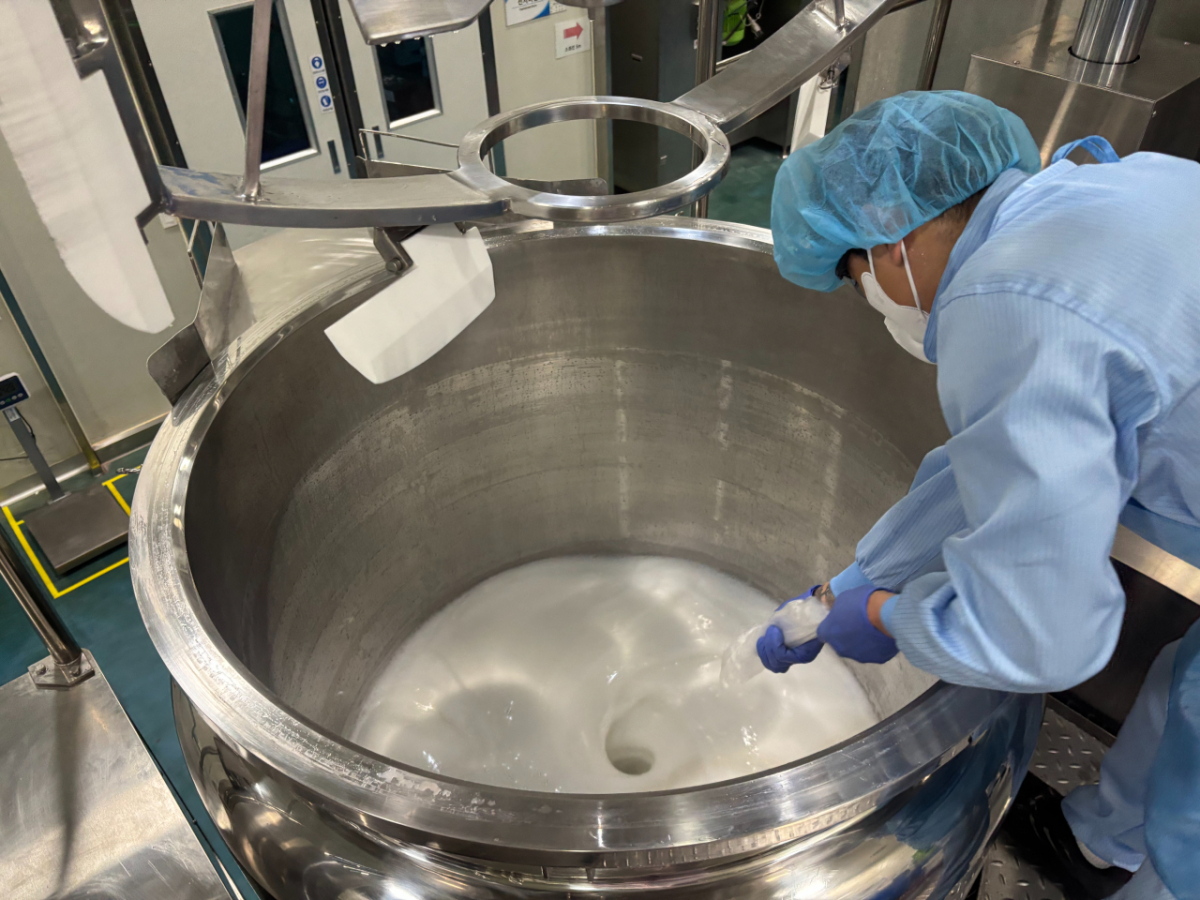
How is the cream you apply to your face every day made? At the manufacturing building of Korea Kolmar's Sejong plant, visited on the 20th, work was in full swing producing creams for familiar cosmetic brands. Upon entering the site wearing protective suits and masks, large manufacturing equipment was set up. Workers were scanning barcodes attached to raw material containers one by one. This was a process to verify ingredients and weight before adding the raw materials to the equipment.
After barcode verification, the raw materials were sequentially fed into the manufacturing equipment. As multiple raw materials were added, the equipment lid closed and mixing began. Cosmetics use different raw materials and mixing ratios for each product. Even products of similar form, such as creams or lotions, have different manufacturing formulations depending on the formulation and texture required by the brand. Accurately verifying raw materials and mixing them according to set standards is the starting point of the manufacturing process.
Korea Kolmar's Sejong plant is the largest cosmetic production base in Korea, with an annual production capacity of 890 million units. As it outsources production for multiple cosmetic brands, it manufactures a variety of products at a single factory. In addition to different raw material compositions and formulations by brand, container and packaging specifications also vary. Unlike factories that mass-produce a single product, it operates production processes tailored to the requirements of each client.
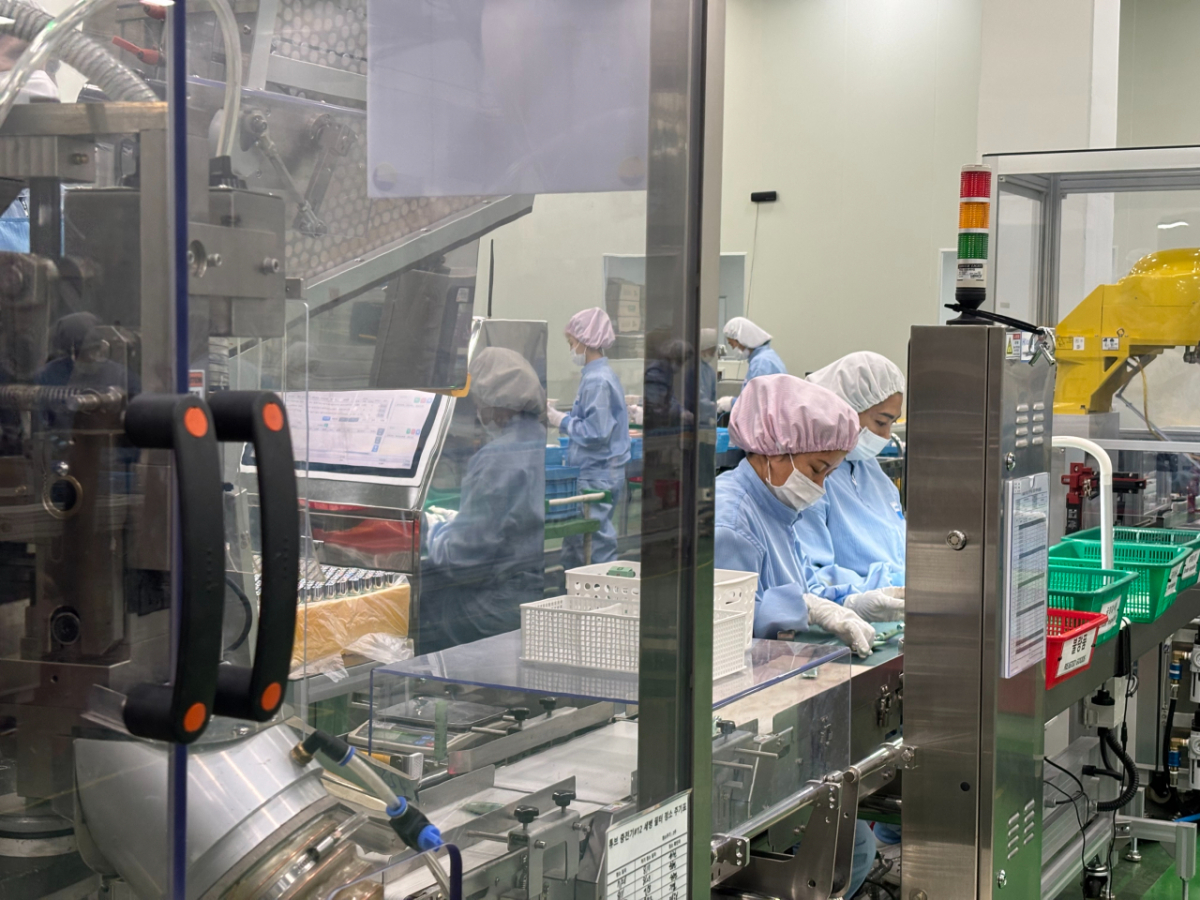
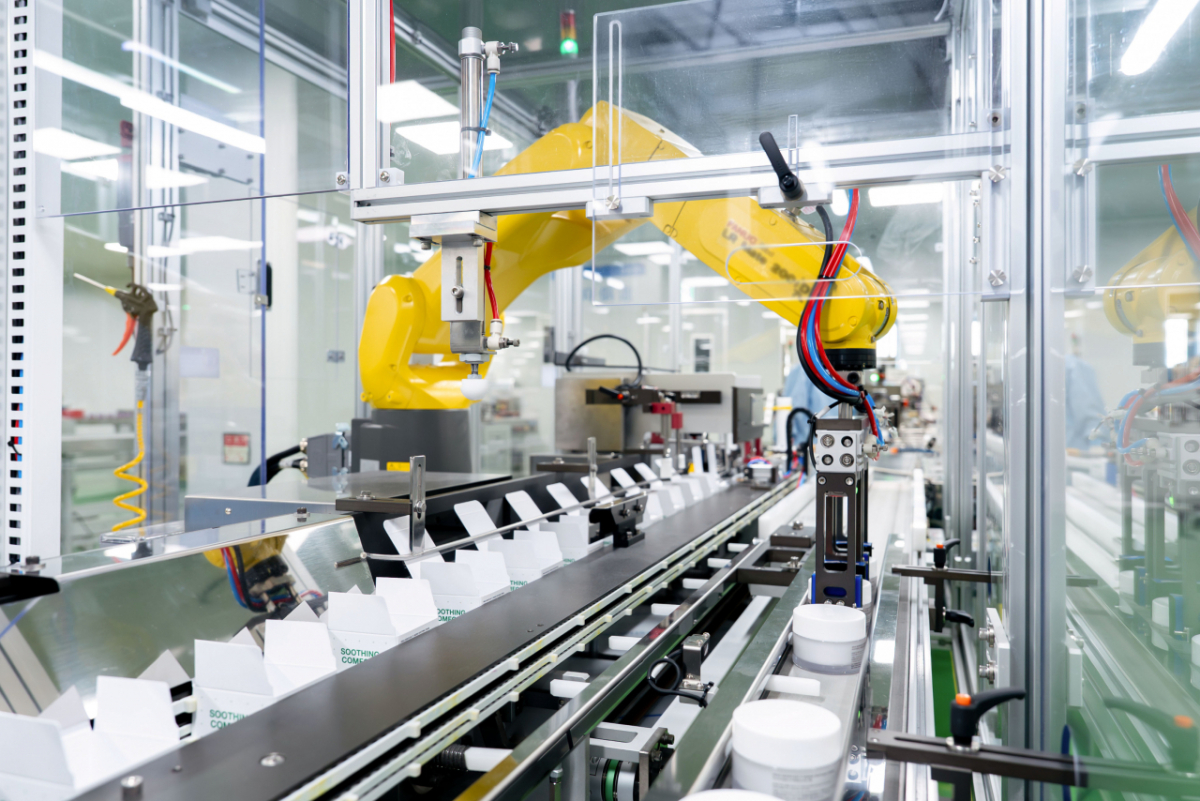
The contents mixed in the manufacturing building are moved to the filling and packaging building. Here, work is carried out to fill the finished contents into containers and complete them according to product-specific packaging specifications. The packaging site was divided into areas using automated equipment and areas where workers pack manually. Since the desired packaging forms vary by client, the required work differs depending on the types of containers and packaging materials, as well as product composition. Products that can be handled by automated equipment use machines, but when separate assembly or detailed work is needed, workers pack them directly. Even within the same factory, different packaging processes are operated according to product-specific specifications.
Korea Kolmar's Sejong plant performs major cosmetic production processes from manufacturing to filling and packaging. It operates separately with a manufacturing building that mixes raw materials to create contents and a packaging building that produces finished goods according to product-specific specifications.
Korea Kolmar is currently expanding the raw material building at its Sejong plant. This measure aims to enhance raw material storage and supply capabilities to increase production capacity and factory operating efficiency. Once the expansion of the raw material building is completed, the production capacity of the Sejong plant will further increase.

 in LIVING


