

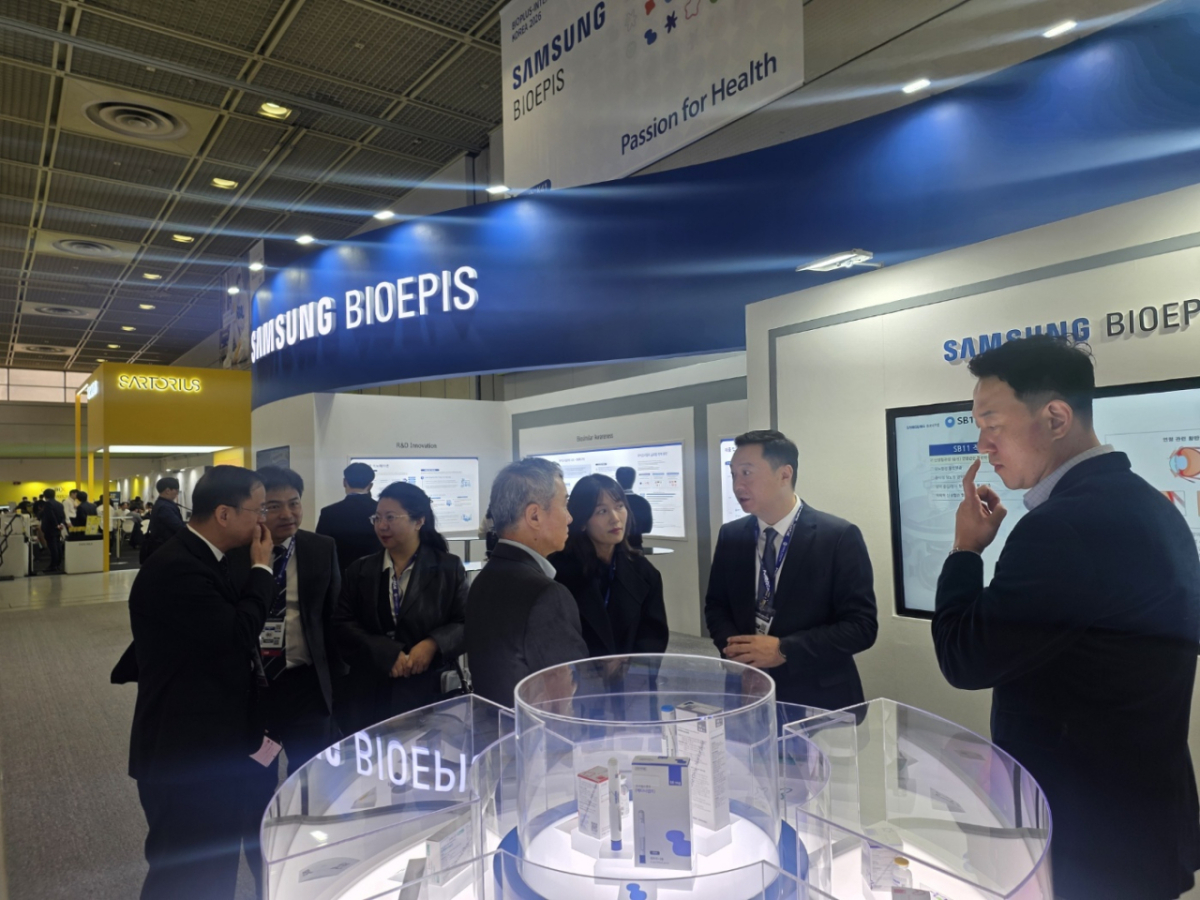
As China emerges as a key supplier for global new drugs, collaborations with K-Bio companies such as Samsung Biologics Episy and Celltrion are expanding. A fierce race is underway to leverage China's next-generation modalities (therapeutic approaches) and rapid clinical development capabilities to expand new drug pipelines and strengthen global competitiveness.
Samsung Biologics Episy announced on the 29th that it selected Chinese biotech firm 'Innota Therapeutics' as a target company for its global open innovation initiative on the 27th, and plans to support technology advancement and commercialization.
Innota Therapeutics is a biotech founded by researchers from Peking University in China, developing new treatments for refractory cancers using 'Targeted Protein Degradation (TPD) platform' technology that eliminates disease-causing proteins. This selection was carried out as part of an open innovation project following a Memorandum of Understanding (MOU) signed last April with 'Atlant Innovation Center,' the largest institutional investor supporting Chinese biotech firms in Asia.
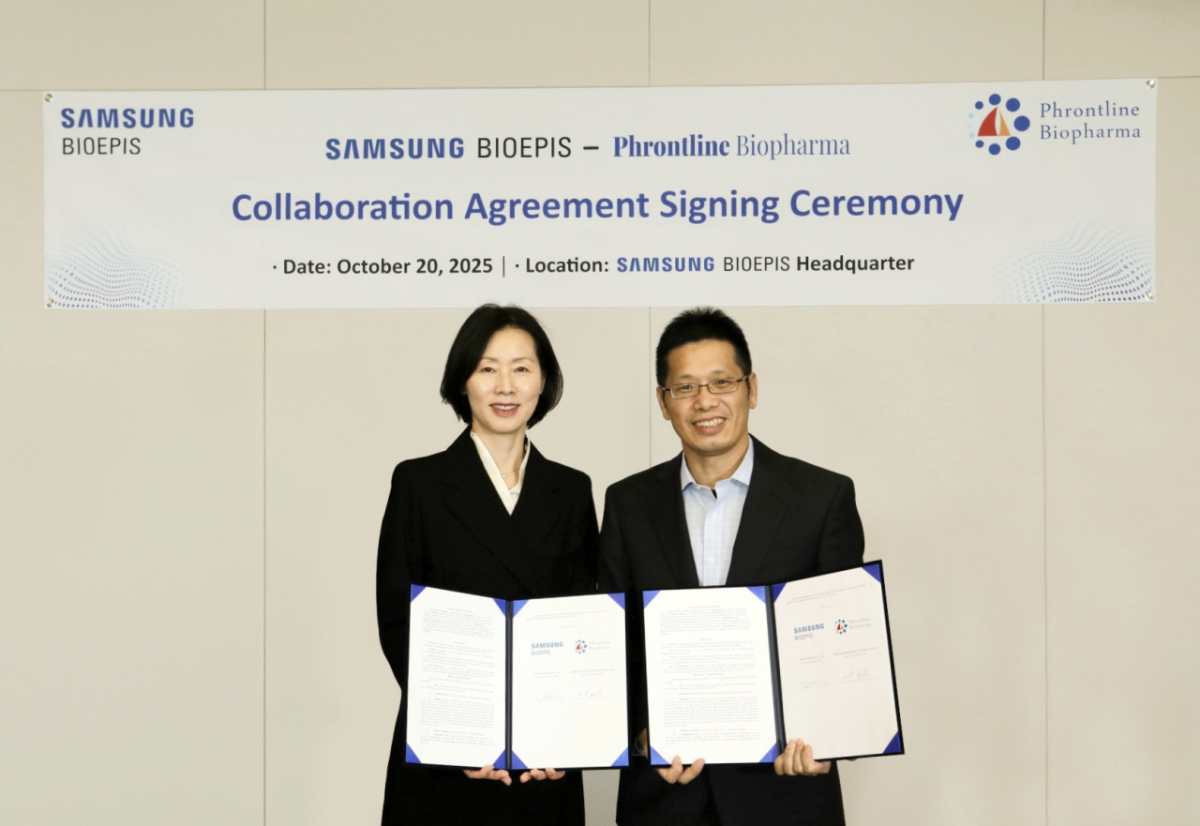
Samsung Biologics Episy has long utilized China as a forward base for new drug development. Last October, it signed a joint development partnership for next-generation ADC (Antibody-Drug Conjugate) new drugs with China's 'Frontline Biopharma,' entering the development of new drugs applying innovative cancer treatment technologies such as 'dual antibodies and dual payloads.' Samsung Episy Holdings, the parent company of Samsung Biologics Episy, opened an R&D center in Beijing, China, in June this year as its first overseas research and development hub, accelerating efforts to strengthen new drug capabilities through securing technology platforms centered on ADCs.
It is not just Samsung Biologics Episy. Celltrion signed contracts with 'Wuxi XDC,' a Chinese CRDMO (Contract Research, Development, Manufacturing and Organization) specializing in ADCs, in 2023 for △development of ADC linker and payload synthesis processes and △collaboration on the production of ADCs for Phase 1 clinical trials. HK InnoN and JW Pharma secured domestic development and commercialization rights for GLP-1 class new drug candidates 'Ecnoglutide' and 'Bofanglutide,' similar to 'Wegovy' and 'Mounjaro,' respectively, from Chinese biotech companies.
AriBio signed an exclusive contract worth a total of 4.7 billion dollars (approximately 7 trillion won) in May last year with China's Fusheng Pharmaceutical for the global development, production, and commercialization of its Alzheimer's disease treatment candidate 'AR1001.' AR1001 recently demonstrated efficacy in a global Phase 3 clinical trial and is scheduled to undergo global product approval procedures, including in the United States, next year.
The reason K-Bio is paying attention to China lies in the rapid new drug development speed known as 'China Speed.' Combined with full-scale support from the Chinese government, top research talent from institutions such as Peking University and Tsinghua University, large-scale bio clusters, and a rich pool of clinical trial patients, China's biotech industry is growing rapidly. According to the Korea Health Industry Development Institute, the scale of technology transfer contracts by Chinese biotech firms reached 137.7 billion dollars (approximately 184 trillion won) last year, setting an all-time high. In the first half of this year, the scale of technology transfer contracts has already exceeded 100 billion dollars (approximately 134 trillion won), achieving more than 70% of that figure.
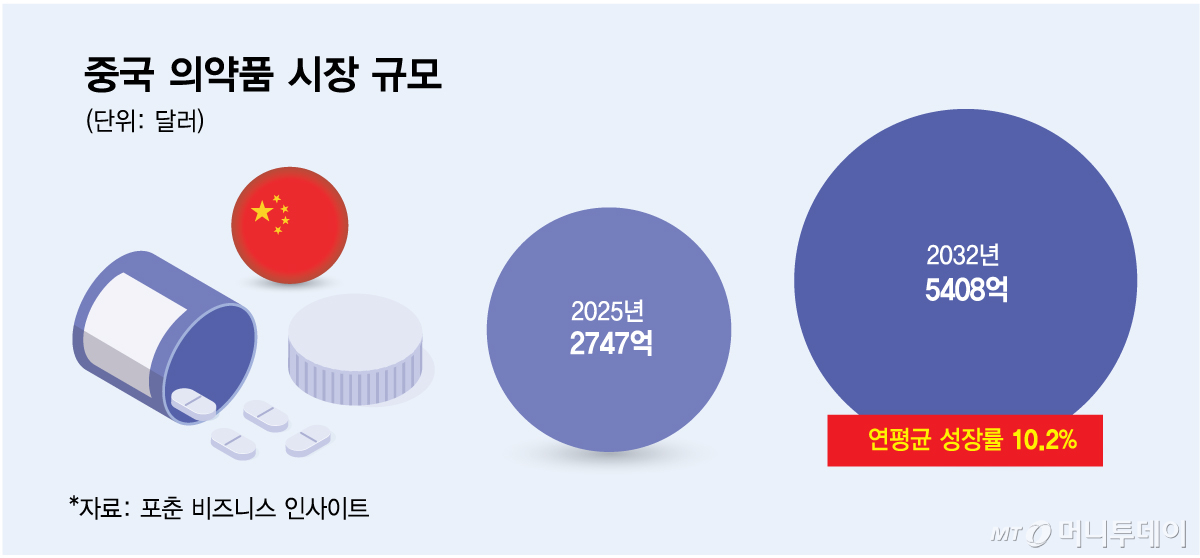
The market growth potential is also significant. Global market research firm Fortune Business Insights forecasts that China's pharmaceutical market size will grow from 274.7 billion dollars (approximately 368 trillion won) last year to 540.8 billion dollars (approximately 724 trillion won) by 2032.
An industry official stated, "China is attractive because it holds diverse early-stage pipelines and can link phased validation with strategic investment through bio clusters and open innovation infrastructure," adding, "If K-Bio's accumulated global clinical, regulatory approval, and commercialization capabilities are combined with China's innovative research ecosystem, the efficiency of new drug development can be maximized."

 in THEBIO


