

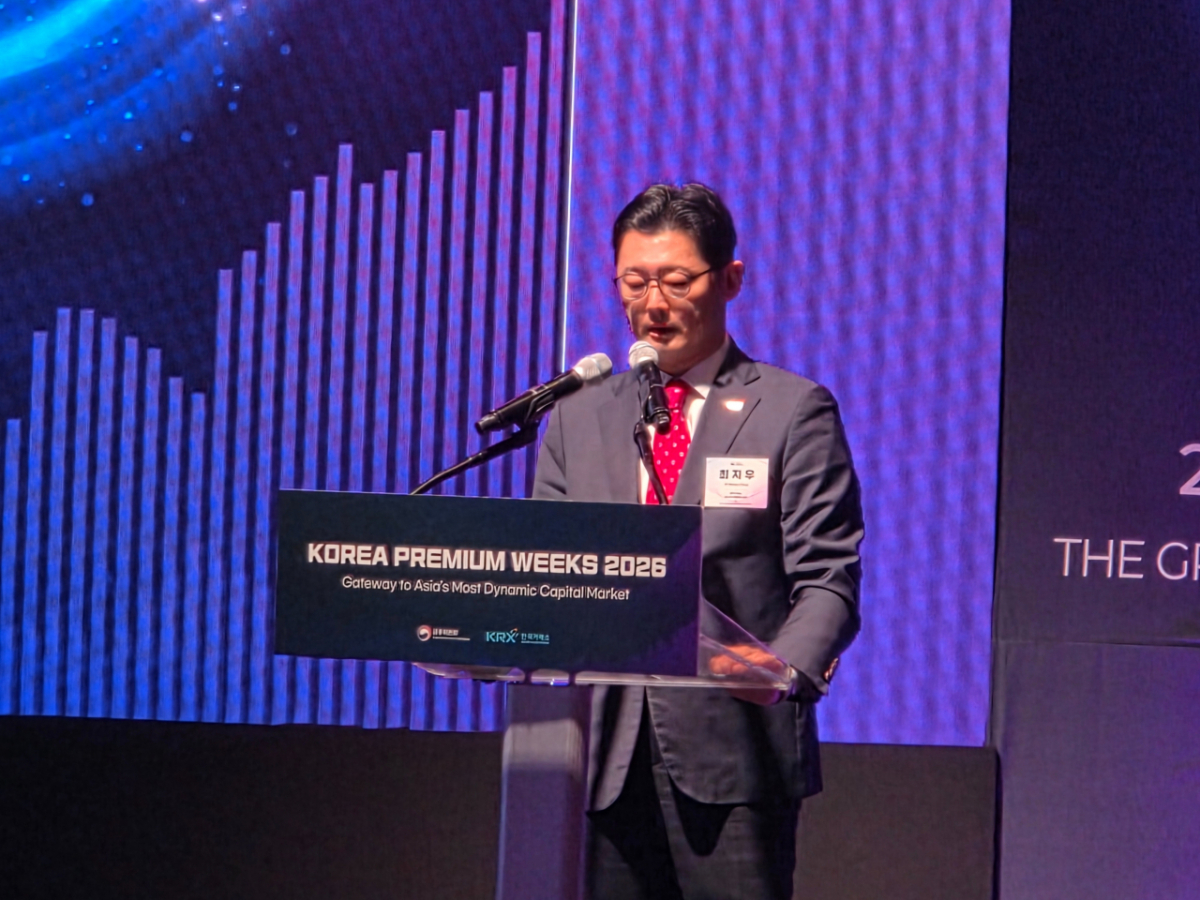
The "segment system" for classifying KOSDAQ-listed companies is set to be introduced by next year. Implementation in the second half of the year is considered likely. A public hearing is also planned for the fourth quarter to gather diverse opinions from industry stakeholders. Incentives to encourage inclusion in upper segments and measures to supply liquidity to lower segments are expected to be discussed intensively.
Choi Ji-woo, Executive Director of the KOSDAQ Market Division at the Korea Exchange (Exchange), stated on the 29th during a session on strengthening the competitiveness of the KOSDAQ market at "Korea Premium Week," held at The Grand Lotte Seoul in Jung-gu, Seoul, that "we are promoting the introduction of a segment system that can more clearly demonstrate the characteristics and competitiveness of companies within the KOSDAQ market."
The KOSDAQ segment system is designed to help investors by subdividing KOSDAQ-listed companies into △Select (representative companies), △Standard (general companies), and △Management Group (underperforming companies). It aims to encourage companies to voluntarily strengthen public disclosures, expand shareholder returns, and improve corporate governance in order to move up to higher segments.
Executive Director Choi stated through presentation materials on the day that a public hearing will be held in the fourth quarter for open opinion gathering, followed by regulatory amendments and other procedures, with the system to be implemented next year.
To this end, the Exchange is referencing the Global Select Market of the U.S. NASDAQ. While NASDAQ was previously perceived as the second-tier market of the NYSE (New York Stock Exchange), it established a segment system through a market restructuring in 2006.
Executive Director Choi said, "KOSDAQ will also lay the foundation to encourage the growth of various innovative companies and cultivate representative companies for the market through the introduction of segments."
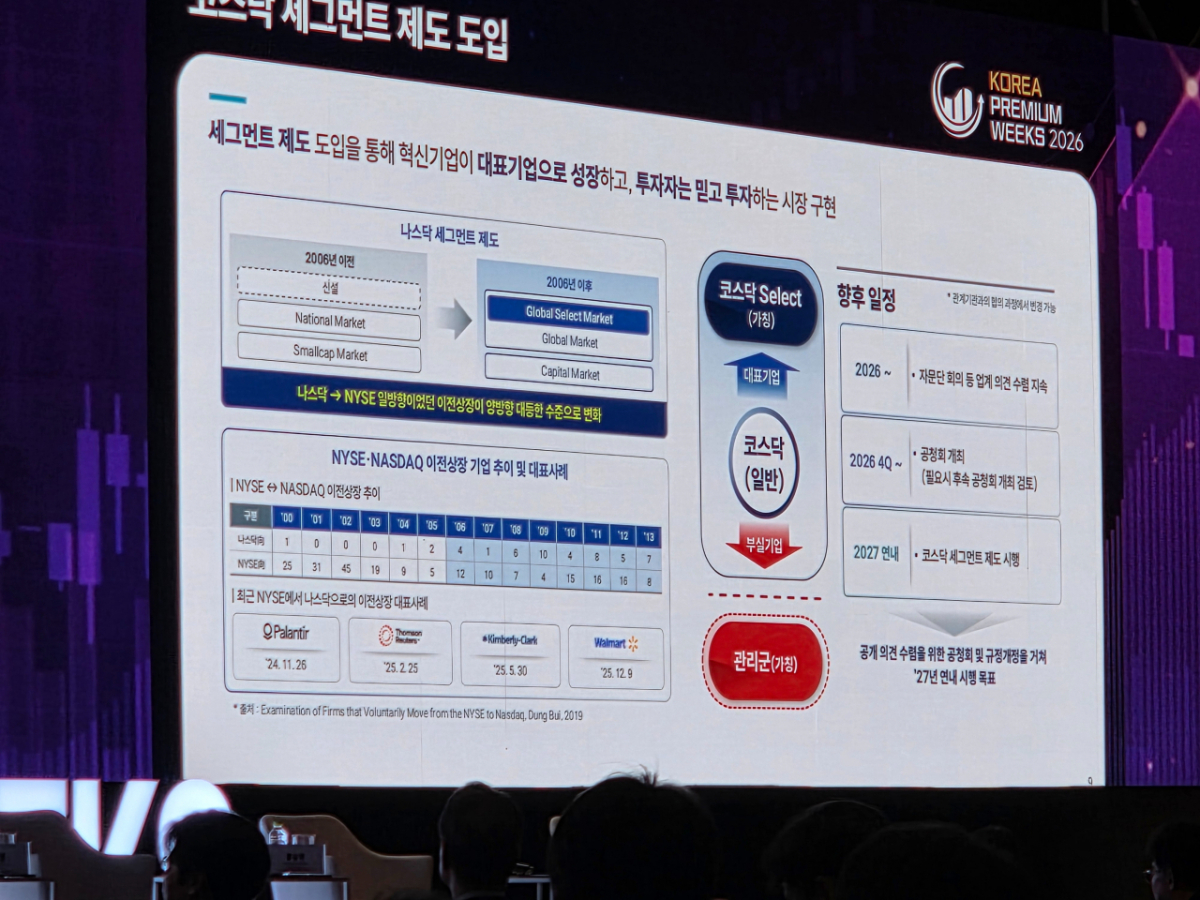
However, the KOSDAQ segment system has raised industry concerns that it could lead to a hierarchy among companies and certain stigmatization effects. This is why the implementation of the system has been delayed beyond its original plan. July was scheduled as the time for announcing specific measures related to the segment system. As a result, the implementation date has been postponed to next year.
Kim Jun-man, Senior Executive Officer of the KOSDAQ Association, who participated as a panelist in the session that day, stated, "While I fully agree with the intent to increase the visibility of high-quality companies and expand investment volumes from institutional investors, there are concerns about stigmatization effects, such as being re-evaluated negatively by the market or excluded from institutional investor funds simply for being included in the Standard segment." He argued, "If we rely excessively on quantitative indicators like market capitalization or short-term performance, companies with high technological capabilities and future growth potential may not be properly evaluated. Therefore, we must also create a structure where long-term institutional investor funds, such as policy funds, flow into the Standard segment."
In response, Executive Director Choi explained, "Given that this issue affects various market stakeholders, we are reviewing overseas cases and system improvement proposals through an external commission for institutional investors before formulating specific measures." He added, "We are operating a 'KOSDAQ Segment Advisory Group' comprising academia, industry, institutional investors, and individual investors to discuss key considerations for the system."
To minimize such side effects, the government and the Exchange are considering various measures, including expanding tax benefits for investors in KOSDAQ venture funds or ETFs (Exchange-Traded Funds), developing active ETFs that focus on investing in Standard segment companies to supply liquidity, and expanding pension fund investments in the Standard segment.

 in STOCK

