

It was confirmed on the 15th that the National Pension Service (NPS) has invested in CGN's nuclear power subsidiary, even as the licensing process for CGN's domestic power generation business has been raised as an issue in the National Assembly. CGN is subject to multiple regulations from the U.S. government (Treasury Department, Department of Commerce, Department of Defense). The NPS had also faced criticism, primarily from opposition parties, over insufficient risk management of aging assets for investing in the initial public offering (IPO) of Zhongji Innolight, a company listed on the Chinese Military Companies (CMC) list sanctioned by the U.S. Department of Defense.
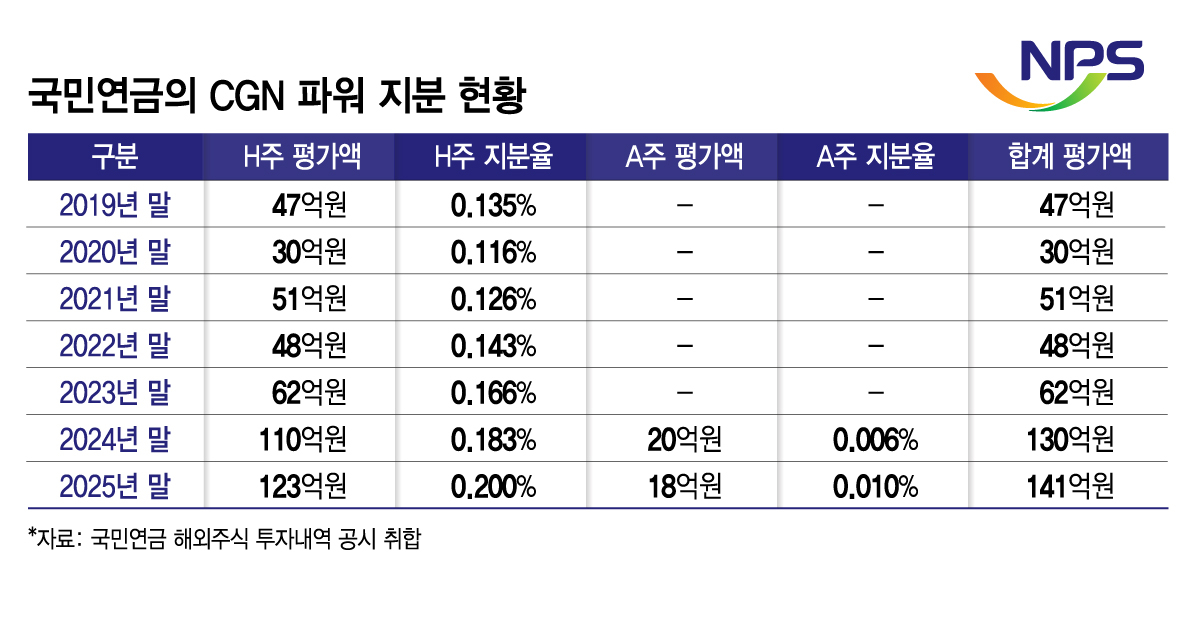
According to the NPS and the Korea Securities Depository (KSD), the NPS has invested in the Chinese stock market through overseas accounts rather than via the KSD's settlement network. Through this process, as of the end of last year, the NPS held shares in CGN Power, a subsidiary of CGN, totaling 14.1 billion won (H-shares: 12.3 billion won, 0.20% stake; A-shares: 1.8 billion won, 0.01% stake), combining A-shares listed on the Shenzhen Stock Exchange and H-shares listed on the Hong Kong Stock Exchange.
The NPS's holding of CGN Power has continued since the end of 2019, as identified in the NPS's public disclosure of overseas stock investment status by ticker. The end of 2019 predates June 2020, when CGN was first added to the U.S. Department of Defense's CMC list. At the end of 2019, the holding size was 4.7 billion won in H-shares only (0.135% stake). The NPS's stake in CGN Power H-shares increased every year from 2019 to 2020, with one exception. Additionally, the NPS newly acquired A-shares worth 2 billion won (0.006% stake) at the end of 2024, and its stake ratio also rose.
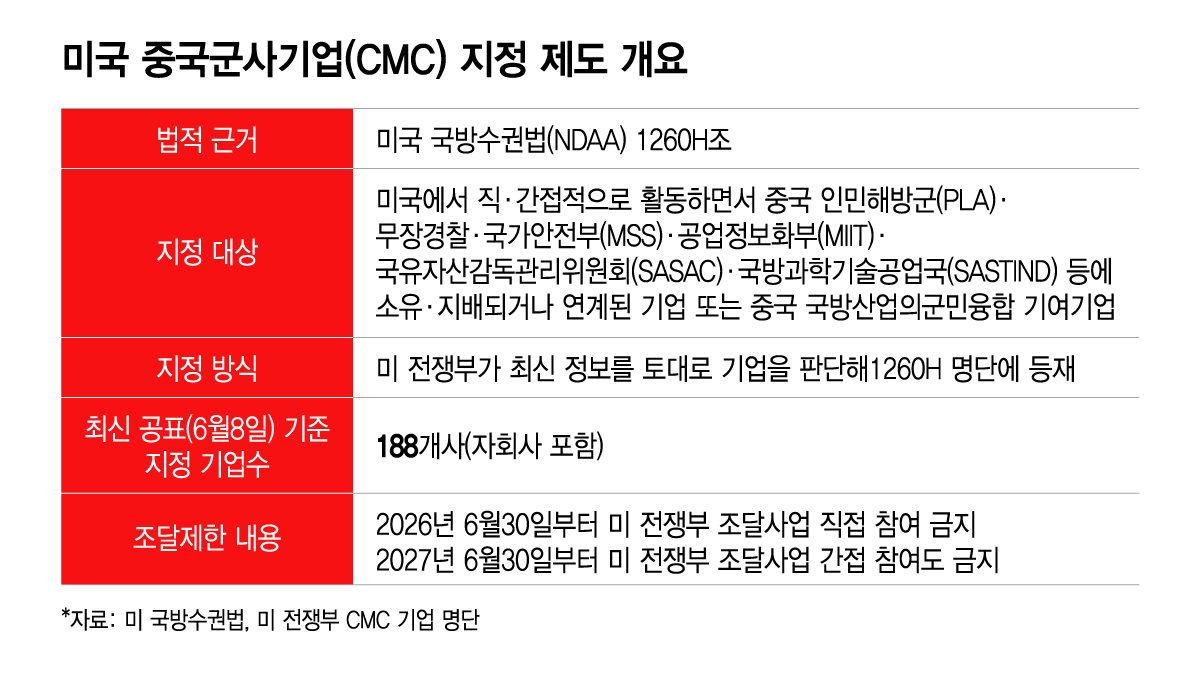
CGN was also added to the U.S. Treasury Department's Office of Foreign Assets Control (OFAC) Non-SDN Chinese Military-Industrial Complex Companies (NS-CMIC) list in June 2021. Trading of listed or traded securities issued by companies on the NS-CMIC list is prohibited for U.S. persons. The securities subject to the Treasury Department's trading ban are those issued by CGN headquarters, while shares of its listed subsidiary, CGN Power, are not included in the list.
Previously, Ministry of Health and Welfare Minister Chung Eui-kyung explained the circumstances behind the NPS's investment in the Hong Kong Stock Exchange IPO of CMC company Zhongji Innolight, stating, "It is a company with restricted financial investments, not a prohibited one." Considering the investment in CGN Power, it can be interpreted that if a subsidiary is not on the prohibited list, investment is possible even if the parent company is subject to U.S. government financial investment bans. CGN is an unlisted Chinese state-owned enterprise.
The NPS's stake in CGN Power H-shares increased every year from the end of 2021, when CGN was added to the NS-CMIC list, through the end of last year. The NPS's stake in CGN Power H-shares at the end of last year is 1.7 times that of the end of 2020. CGN was also added to the U.S. Department of Commerce's Entity List (export control list) in August 2019.
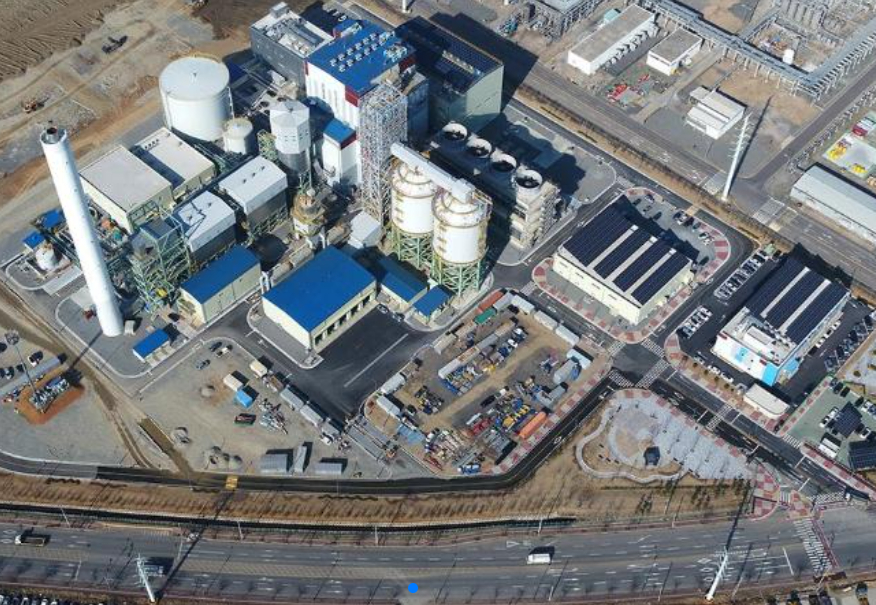
CGN operates five power plants, including in Daejeon and Yeulchon in South Chungnam and Gwangyang in South Jeolla, through domestic affiliates such as CGN Daejeon Power and CGN Yeulchon Power. The U.S.-based East Asia Research Center (EARC) argued that CGN's domestic power generation business could pose a security vulnerability to the Korean power grid and U.S. forces stationed in Korea.
Kim So-hee, a People Power Party lawmaker on the National Assembly's Climate, Energy, Environment and Labor Committee, pointed out on the 5th that the Electricity Commission under the Ministry of Trade, Industry and Energy did not review CGN's history of U.S. sanctions when it licensed CGN Daejeon Power's power generation business in November 2021. Kim (Rep.) stated, "The appropriateness of licensing for domestic CGN-affiliated power generation businesses must be re-examined."
A comparison by MoneyToday in August of the NPS's overseas stock investment status by ticker with the CMC list revealed that, as of the end of last year, the NPS held 6.5961 trillion won in assets from 21 companies whose corporate names were directly listed on the list. If listed subsidiaries are included where only the parent company is on the CMC list and the subsidiary's name is not recorded, similar to CGN Power, the NPS's investment in U.S.-sanctioned listed companies appears to be larger than this figure.
Security experts have pointed out that, given the unfolding phase of U.S.-China tensions, the NPS should expand risk reviews during the investment process for aging assets. The People Power Party has also argued that risks such as increased sanction intensity through secondary boycotts (secondary sanctions) related to target companies under economic security or political judgments in the U.S. Congress must be considered.
In fact, after being designated as a CMC by the U.S. government, Zhongji Innolight saw heightened U.S.-China tensions when a bipartisan bill was introduced in Congress to legislate additional sanctions related to optical transceivers, which fall within Zhongji Innolight's business area. An NPS official explained, "While we cannot confirm details regarding individual investment records or circumstances, we will seek ways to recover funds through asset management companies and others if risks arise."

 in STOCK


