

There is a saying that blue jeans sell well during economic downturns, as consumers with thinner wallets hold on by opting for an affordable and durable pair of jeans instead of expensive clothing. On the surface, the current U.S. economy appears far removed from this scenario. Driven by a boom in artificial intelligence (AI) investment, corporate capital expenditures rose 9 percent year-on-year in the second quarter. Additionally, consumer spending increased 3.8 percent year-on-year in the second quarter as wealthy individuals, whose assets have grown due to rising stock prices, opened their wallets.
But the reality is different. Amid the fallout from the Middle East conflict, energy prices have surged, pushing the September consumer price inflation rate up to 3.7%. Gasoline prices rose by 9.1% in just one month. To rein in inflation, the Federal Reserve (Federal Reserve System) raised its base rate again last month for the first time in three years. With a 0.25 percentage point increase, the base rate now stands at 3.75% to 4.00%. This means that as grocery prices, fuel costs, and loan interest rates all rise simultaneously, consumers' actual disposable income is shrinking.
Consumer sentiment is at rock bottom. The University of Michigan Consumer Sentiment Index for October stood at 46.3, down 13.6% from a year earlier. This level is just over half of the long-term average of 83.6. Joan S. Su, head of the University of Michigan's survey team, noted that dissatisfaction with the burden of living costs continues to accumulate, diagnosing that sentiment has deteriorated particularly rapidly among low-income households with little room to absorb rising prices. The luxury goods market is also stalling. LVMH, the world's largest luxury group, reported a 5% decline in sales for its fashion and leather goods division in the third quarter.
As a result, consumers have begun tightening their belts. Spending is trending downward across the board, from grocery shopping to clothing and home repairs. Walmart expanded its list of price-reduced items in the second quarter to 11,000, up from approximately 7,000 in the first quarter. So-called trade-downs are also emerging, with even high-income earners purchasing discretionary items such as clothing at Walmart. This is why Contour Brands, which owns Wrangler, a mid-to-low-priced jeans brand representative of the United States, is benefiting significantly from this shift in economic trends.
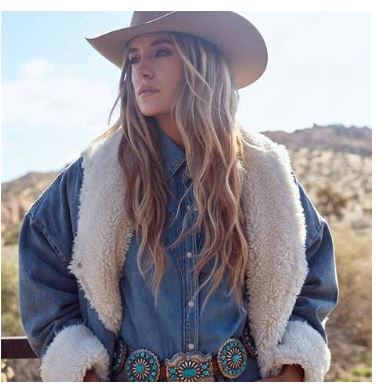
Contour is a U.S. apparel company that owns the jeans brand Wrangler. Wrangler is the most commonly seen name on the denim shelves at Walmart in the United States. When the economy deteriorates, consumers turn to Wrangler jeans priced in the $20 range instead of expensive branded jeans. This is why it is considered a representative beneficiary of downtrading. In other words, it is a consumer goods stock that actually draws attention when the economy slows down.
According to global investment research firm Oneil Research, shares of Contour Brands (KTB) closed at $72.94 (97,111 won, based on an exchange rate of 1,331.4 won per dollar) on the New York Stock Exchange on the 15th (local time), up 4.8% in a single day. Oneil Research analyzed that a price-to-earnings ratio (PER) of around 10 times (based on projected earnings for 2027) is excessively low, considering the company’s multi-year growth story driven by its own structural transformation and its two brands, Wrangler and Helly Hansen. The stock price, which had fallen to $62.47 intraday on the 1st of this month, closed at $73.28 on the 16th, rebounding by more than 15% in half a month.
The company has transformed both its scale and business structure over the past year. In late May 2025, it acquired Norwegian outdoor brand Helly Hansen for CAD 1.3 billion (USD 957.5 million; KRW 1.2748 trillion). In May of this year, it agreed to sell Lee, a denim brand with more than 130 years of history, to U.S. brand management company Authentic Brands Group for up to USD 10 thousand won (KRW 1.3314 trillion). Of the sale proceeds, USD 400 million (KRW 532.6 billion) will be used for share buybacks. This marks a transformation from a denim company into one focused on denim, outdoor apparel, and workwear.
Jeans brothers ousted from VF → Transformation through Levi's sale and Helly Hansen acquisition
The roots of Wrangler trace back to Blue Bell, a workwear company based in Greensboro, North Carolina, United States. In 1943, Blue Bell acquired another apparel company and obtained the Wrangler trademark. In 1947, it released Western-style jeans designed by rodeo tailor Rodeo Ben. The flagship model 13MWZ, which was tried on and quality-guaranteed by top professional rodeo riders of the era, is still sold today under the same name, 79 years later.
In 1974, it became the first Western wear brand to receive official sponsorship from the Professional Rodeo Cowboys Association (PRCA). Lee is rooted in a company founded by Henry David Lee in Salina, Kansas, in 1889. The two brands became siblings under one roof within the American apparel giant VF Corporation. VF acquired Lee in 1969 and merged with Blue Bell in 1986.
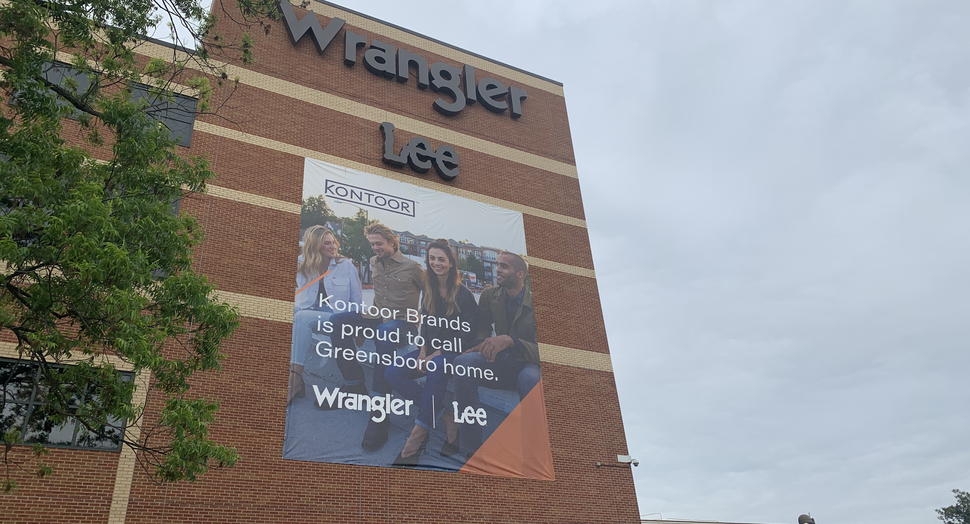
It was then that the company decided to focus on outdoor and active brands such as The North Face and Vans, spinning off its slow-growing jeans business. The spun-off entity, Contour, went public on the New York Stock Exchange in May 2019. Its headquarters is located in Greensboro, the birthplace of Wrangler. A crisis struck immediately the year after its launch. As department stores closed their doors due to the spread of the novel coronavirus in 2020, Contour also suffered a major blow.
First-half sales that year plunged 32% from the previous year to $853.7 million (1.1366 trillion won). At the time, the future of the jeans company, which had a high dependence on department stores, appeared uncertain. However, sales of Wrangler held up as Walmart, a retailer of daily necessities, continued its operations. The share of sales from Walmart rose from 34% in 2019 to 38% in 2020. This period confirmed the structure in which low-price retail channels gain strength during economic downturns.
The issue was Lee. Lee, which has a large share of its sales through department store channels, saw little recovery in revenue. While Wrangler's 2025 sales increased by 6% to $1.91 billion (2.543 trillion won), Lee's sales decreased by 5%, reaching only $750 million (998.6 billion won). Contour initiated the sale process for Lee in the first quarter of this year and signed a contract with Authentic in May. The deal involves an upfront payment of $750 million, with an additional amount of up to $250 million contingent on future performance. The transaction is expected to close in the fourth quarter of this year.
The vacant position was filled by Helly Hansen. The company traces its origins to 1877, when Norwegian captain Helli Yul Hansen treated a fabric with oil to create waterproof workwear. It built its reputation as gear worn by professionals working at sea and on snowy mountains. In Europe, it is a dominant player in the construction and energy sector workwear market. Contour acquired the company from Canadian Tire, a Canadian retail firm, along with the yacht and outdoor brand Musto and a 50 percent stake in a Chinese joint venture.
The Power of Walmart's $24 Jeans: Gaining Market Share in Every Recession
The primary reason consumers seek out Wrangler is its price. In June of this year, the average price of the 32nd Wrangler products listed on Walmart's online bestseller list was $23.97 (approximately 32,000 won). The cheapest item cost $11.98, while the most expensive was $39.99. This is about one-third of the regular price of Levi's flagship products. Despite this, the brand enjoys trust for its durability, which has been proven in rodeos and on ranches. Its strength lies in being a pair of jeans that are affordable without appearing cheap.
The second point is that the product is available for purchase anywhere. Wrangler is stocked not only in major retail chains such as Walmart, Target, and Amazon, but also in rural, Western, and workwear specialty stores like Boot Barn, Cavanadas, and Tractor Supply. The third point is supply stability. As of 2025, Contour sources 77 percent of its production volume through contract manufacturing in Asia, centered on Bangladesh, while producing the majority of the remainder at its own factories in Mexico. Of its total workforce of 16,000 employees, approximately 5,000 are production personnel based in Mexico and Latin America.
Production volumes from the Mexico factory are exempt from tariffs under the United States-Mexico-Canada Agreement (USMCA), and its proximity to U.S. retail stores allows for rapid replenishment of fast-selling sizes. There is also a possibility that more than 80% of products made in Bangladesh, which use U.S.-grown cotton, may qualify for tariff exemptions. To balance costs and speed, the company streamlined part of its Mexico factory operations in the third quarter of last year.
The fourth factor is product improvement. Wrangler applied lightweight and comfortable Twillight denim to its signature line, the Cowboy Cut. The company also launched Bespoke, a women's line developed directly by female employees. Women's products, the company's own online mall, and overseas markets were what drove Wrangler's growth in the second quarter. Direct sales revenue from the company's U.S. channels increased by 9%, while overseas revenue rose by 10%.
This competitive advantage was reflected in market share. According to JPMorgan, Wrangler's share of the U.S. denim market stood at 6.3%, rising by an average of 0.25 percentage points annually since 2019. The value-oriented denim market, which is Wrangler's core segment, is estimated at $16 billion (21.3024 trillion won). In the first quarter of this year as well, the brand increased its share in the men's and women's bottoms markets by more than 1 percentage point. Its direct competitors on Walmart shelves are Levi's low-priced Signature line and private label products from retailers.
Customer concentration is high. As of 2025, two major customers, including Walmart, accounted for 42% of revenue. The top 10 customers represented 53% of sales. The company has maintained business relationships with the top three offline distributors for more than 30 years. Helly Hansen helps expand its customer base by serving clients such as Vail Resorts, the largest ski resort operator in the United States, and REI, an outdoor specialty retailer.
Helly Hansen's revenue is composed of 75% from sports and outdoor products, and 25% from workwear. Customers open their wallets based on performance rather than price. The core of the brand's trust lies in its reputation as the apparel worn by marine plant workers at sea and ski resort rescue teams. During the tenure of Patrick Falkenby, Global Head of Workwear, the workwear business grew sevenfold from 250 million dollars (33.3 billion won) to 175 million dollars (233 billion won). Pants account for 40% of revenue in core workwear items, indicating that they are consumable products that field workers seek out again after trying them once.
Helly Hansen's US Expansion and 532.6 Billion Won in Share Buybacks: Q3 Earnings to Be the Turning Point
Looking at the performance trajectory, Contour had been stagnant for a long time after the spin-off. Revenue fell to $2.1 billion in 2020 before recovering to $2.63 billion in 2022, but remained around $2.6 billion from 2023 to 2024. The turning point was Helly Hansen. In 2025, revenue increased by 21% to a record high of $3.15 billion (4,193.9 billion won). However, operating profit decreased by 2% to $336.8 million (448.4 billion won) due to acquisition and restructuring costs. There is a clear difference between brands. Wrangler posted revenue of $1.9146 billion and segment profit of $440 million (585.8 billion won), resulting in a profit margin of 23.0%. In contrast, Lee's profit margin was only 9.2%. This is the reason Contour decided to sell Lee.
The quality of earnings has changed this year. After separating Li into a discontinued operation, second-quarter revenue from continuing operations rose 19% to $584 million (777.5 billion won). Wrangler generated $469 million (624.4 billion won), while Helly Hansen contributed $114 million (151.8 billion won). Helly Hansen’s revenue was composed of 0.7 billion won in sports, $37 million in workwear, and 0.7 billion won in Musto. The gross profit margin increased by 9.7 percentage points to 56.2%, and on an adjusted basis excluding one-time factors, it rose by 7.1 percentage points to 53.8%.
The results were driven by the cost-reduction program Project Genius, the inclusion of Helly Hansen, and a favorable combination of sales channels, product mix, and pricing strategy. Adjusted operating profit rose 19% to $94 million, with an operating profit margin of 16%. Adjusted earnings per share (EPS) came in at $1.06, beating market expectations of $1.04. Although Helly Hansen posted a loss of $0.06 per share during its seasonal off-peak period, the magnitude of the loss was smaller than anticipated.
The company also raised its annual outlook. On a continuing operations basis, it projected full-year revenue of $2.66 billion to $2.71 billion (3.5415 trillion won to 3.6081 trillion won) and adjusted earnings per share (EPS) of $5.25 to $5.35. This represents an increase of $0.10 in EPS compared to its previous forecast. The outlook reflects a remaining indirect cost burden of $0.55 per share following the sale of the R business, while excluding the impact of share buybacks funded by the proceeds from that sale. The company plans to return more than $900 million (1.1983 trillion won) to shareholders and creditors this year through share buybacks, dividends, and debt repayment.
The quarterly dividend is $0.53 per share. In the second quarter, the company repurchased 0.5 billion won worth of its own shares at an average price of $74 per share. Based on the closing price on the 16th, the market capitalization is approximately $4 billion (532.56 billion won). The price-to-earnings ratio based on the midpoint of this year's earnings per share forecast is approximately 13.8 times, and the dividend yield is approximately 2.9%.
The future growth driver is Helly Hansen's push into the U.S. market. At its Investor Day in Oslo last September, Contour announced plans to grow Helly Hansen's revenue from $675 million (898.7 billion won) in 2025 to over $1.1 billion (1,464.5 billion won) by 2030. This represents an annual growth rate of approximately 10%. The company aims to raise its operating profit margin from the high single digits to the mid-10% range. Helly Hansen's market share in the U.S. technical outdoor segment is currently just 1%. The company explained that increasing this share by even one percentage point would boost revenue by more than $400 million (532.6 billion won). To enter the North American workwear market, Contour plans to increase its workwear marketing budget from 2% of sales to 7% by 2030 and has established a dedicated bidding team to secure large-scale group supply contracts. Next year, the company will also launch outdoor footwear in China.
The workforce is led by operational experts from VF. Scott Baxter, Chief Executive Officer (CEO) and Lee Sa-hoe (Chairman), served as a group president overseeing the jeans, workwear, and South America businesses at VF before taking on the role of Contour following the spin-off. Prior to his tenure at VF, he held positions including Senior Vice President of the Services division at Home Depot, the largest building materials distributor in the United States, and worked at PepsiCo and Nestle. He currently also serves as a director at Lowe's.
The fact that the executive reads retail shelves through the lens of a distributor aligns well with Walmart-centric business strategy. Joe Alkier, Chief Financial Officer (CFO), who was promoted to president in August last year, spent 11 years in finance at VF, worked at insulated bottle maker Brumate, and joined the company in 2023. He has since taken on responsibilities for global operations, Helly Hansen, and Wrangler, following his initial role in finance. He is regarded as having demonstrated proven execution capability by reducing inventory and boosting margins. Helly Hansen is led by Boere Heggbom, Global Head of the brand.
The board of directors includes Robert Lynch, CEO of Shake Shack, and Robert Scherer, a senior outside director who previously served as CFO of VF Corp., bringing consumer goods and financial expertise to the company. The fact that Helly Hansen has not yet hired its first North American general manager is also a gap in its U.S. market strategy.
Wall Street's outlook is turning positive. Some analysts point out that, factoring in the proceeds from the sale of Lee and share buybacks, the company's 2027 enterprise value to EBITDA multiple stands at around 8x relative to corporate valuation, representing a modest discount compared with competitors. However, more investors are focusing on the potential for revenue growth during economic downturns rather than this valuation metric. Although the company's reliance on Walmart is high, in the 30th% range, this is not considered a major issue. This assessment stems from the convergence of three factors: Wrangler's resilience against recessions, Helly Hansen's high-margin growth, and shareholder returns funded by the proceeds from the sale of Lee.
◇ Key milestones of Contour Brands
In 1889, Henry David Lee founded Lee in Salina, Kansas, United States.
Secured the Bluebell and Wrangler trademarks in 1943
In 1947, the Rodeo Ben design Western jeans were launched, and the 13MWZ model appeared.
In 1969, VF Corporation acquired Lee.
The first Western wear brand to receive official sponsorship from the Professional Rodeo Cowboys Association (PRCA) in 1974.
In 1986, Bluebell (Wangler) merged with VF Corporation.
Spun off from VF in May 2019; listed on the New York Stock Exchange (KTB)
In March 2020, an emergency drawdown of $475 million in credit lines was made due to the novel coronavirus.
May 2025: Acquisition of Helly Hansen and Musto (USD 957.5 million)
May 2026: L sale contract (up to $10 thousand won) and approval of a $750 million share buyback
Q2 2026 Earnings Release and Raised Annual Outlook; CEO Joe Alkier Promoted
At the Helix Hansen Investor Day in September 2026, a target of $1.1 billion in revenue by 2030 was presented.
R sale expected to be completed in the fourth quarter of 2026

 in STOCK


