

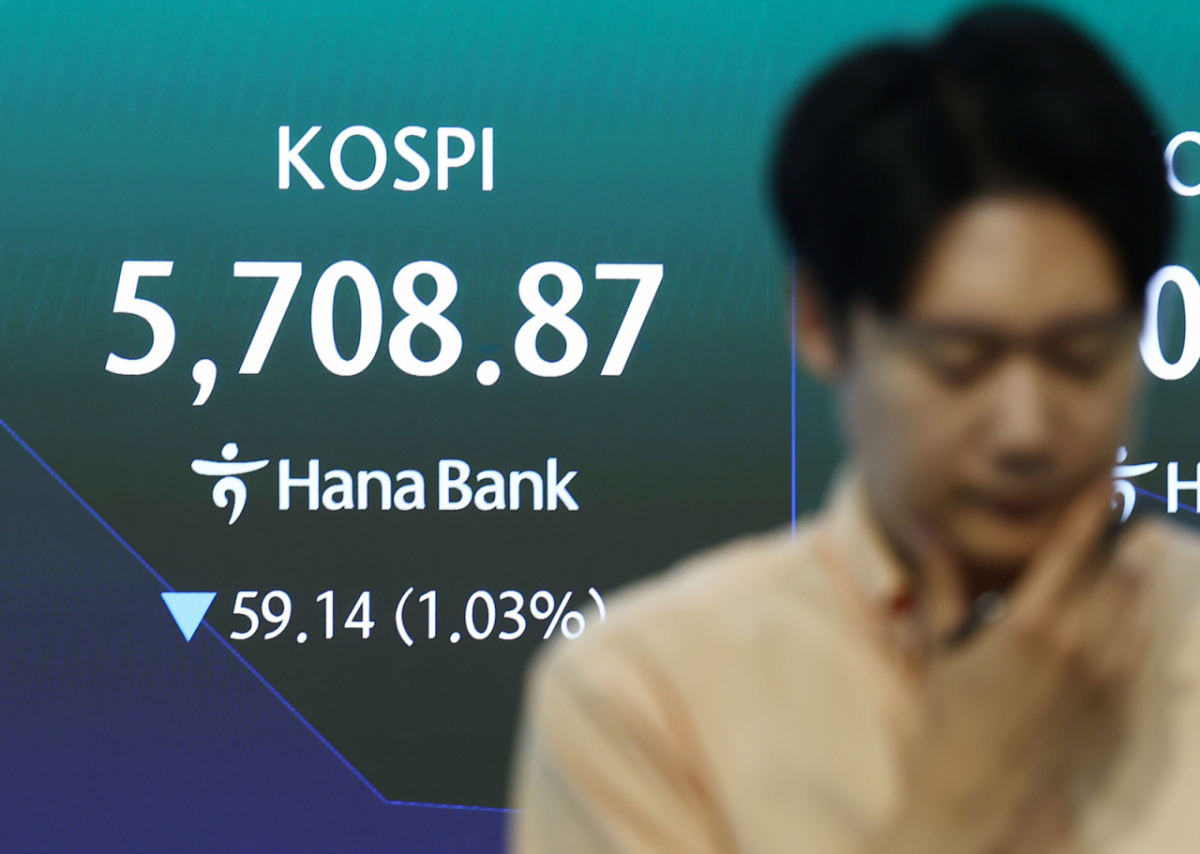
On Tuesday, despite a rebound in U.S. semiconductor stocks, the KOSPI index fell below the 5,500 mark as foreign and institutional investors simultaneously sold off. While major domestic semiconductor stocks showed widespread weakness, the index has failed to surpass its long-term trend of decline. There is also growing wariness that more investors may seek to sell at breakeven points each time the index attempts a short-term rebound.
At 10:16 a.m. on the 20th, the KOSPI index was trading at 5508.01, down 260.00 points (4.51%) from the previous day. After opening at 5733.57, down 0.60%, the KOSPI widened its decline and failed to surpass its opening price even once during trading, falling as low as 5493.24, a drop of 4.76%. In the KOSPI market, retail investors are net buying 643.2 billion won, while foreign and institutional investors are net selling 423.8 billion won and 379.2 billion won, respectively. Among 912 stocks, 817 are falling, only 79 are rising, and 16 are unchanged.
Samsung Electronics is trading at 210,250 won, down 3.56%. SK Hynix showed a price of 1,184,000 won, down 7.28%. Other top market capitalization stocks also fell in succession.
The declines in major large-cap stocks include △SK Square (-7.31%), △Samsung Life Insurance (-4.29%), △LG Energy Solution (-4.05%), △Hyundai Motor (-5.21%), △Samsung Electronics Preferred Shares (-3.28%), △Samsung Electric (-3.50%), △Samsung Biologics (-1.12%), and △KB Financial Group (-0.92%).
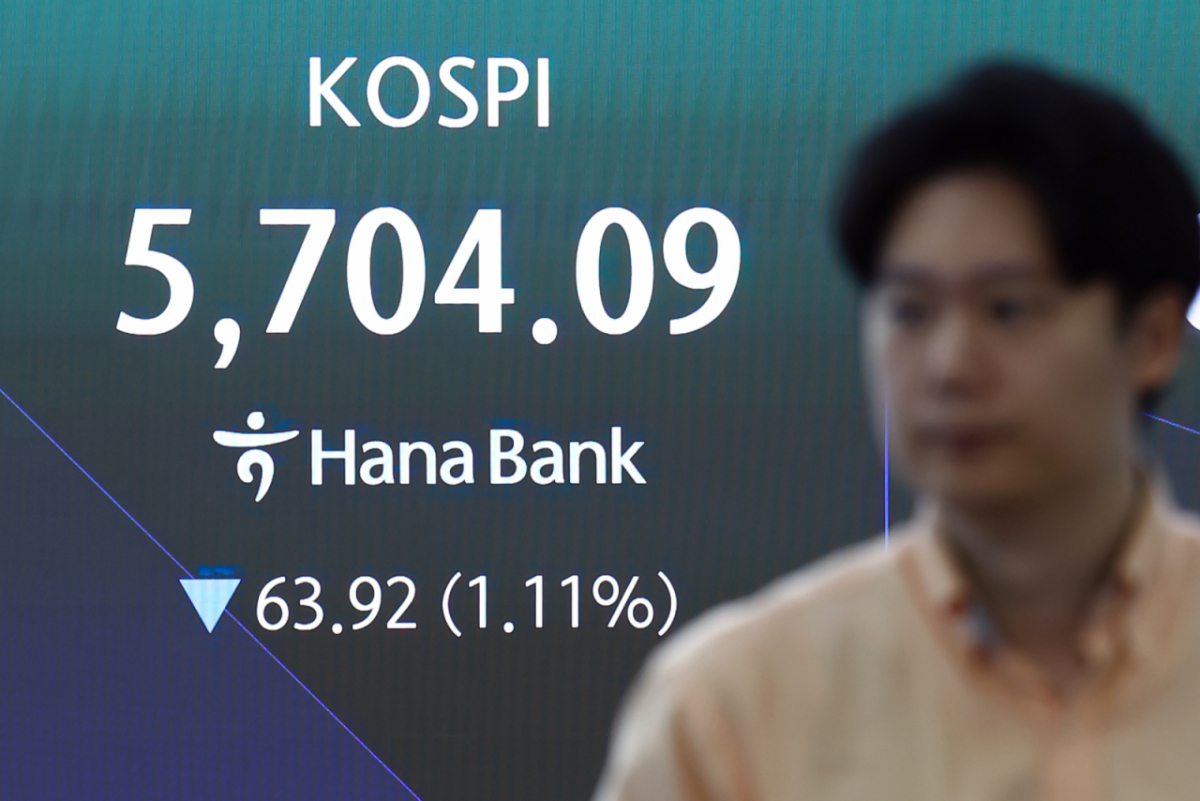
The overnight rebound in U.S. tech stocks failed to boost the domestic stock market. On the 19th (local time), counter-buying flows entered the New York Stock Exchange, causing tech stocks to rise across the board. However, as CoreWeave's share price fell amid its recent corporate bond crisis, concerns over the debt repayment capacity of artificial intelligence (AI) companies remained unresolved.
Labor-gil, a researcher at Shinhan Investment Corp, mentioned market anxiety regarding funding sources for AI investment. He stated, "The market is currently applying a greater discount to how long profits can be sustained rather than their magnitude," adding that there are concerns that "memory excess profits could decrease even as AI demand grows."
The widening gap between the KOSPI index and its 200-day moving average (the average stock price over the last 200 trading days) is also cited as a burden. Based on the previous day's closing price, the 200th-day line is in the 6,400 range, more than 800 points higher than the current index. This means that a significant number of investors who entered the KOSPI over the last 200 trading days are at a loss. From the perspective of technical analysis focused on market supply and demand, a situation where the index falls significantly below the 200th-day moving average is interpreted as one where short-term recovery is difficult.
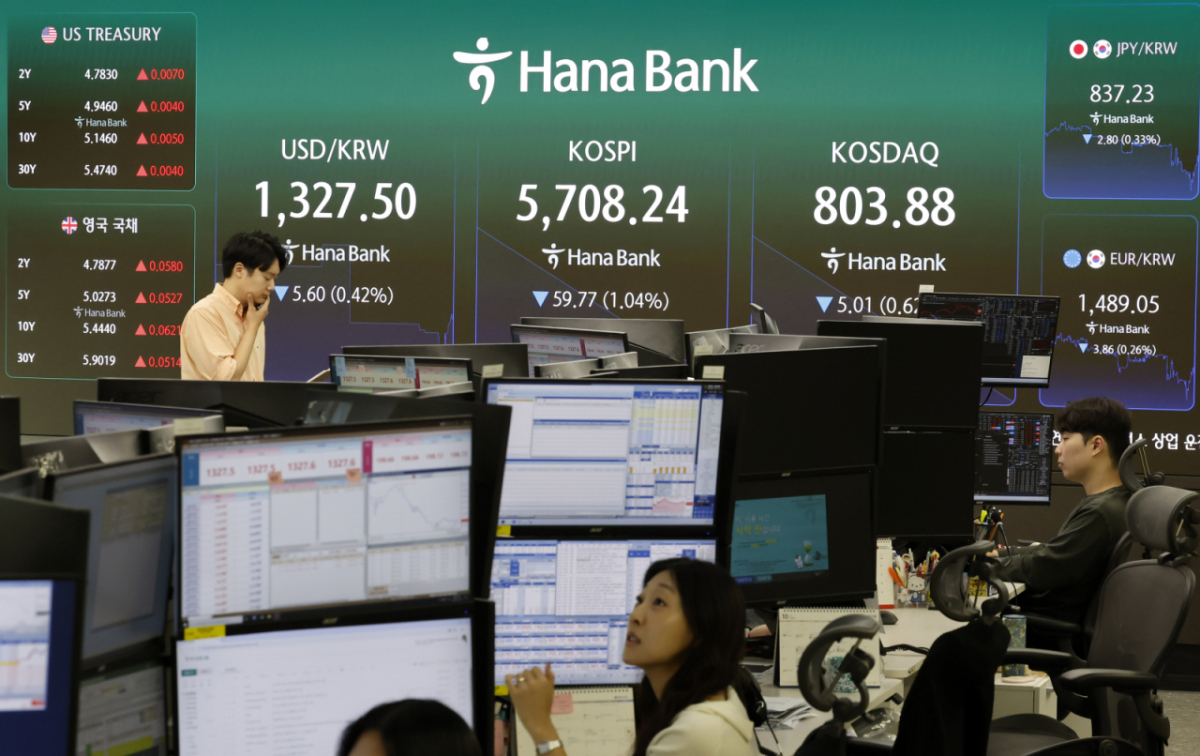
Han Ji-young, a researcher at Kiwoom Securities, said, "From a technical perspective, it is important to see if the index returns above the 200th-day line to confirm a shift into a full-fledged rebound trend." She added, "In fact, since the 200th-day line is at the 6,410 level, which requires a rebound of more than 11% from the closing price on the 19th to reach, it will not be easy to achieve this in the short term this week."
However, the burden regarding stock price levels has been significantly reduced. According to Kiwoom Securities, the KOSPI price-to-earnings ratio (PER·the value obtained by dividing stock price by earnings per share) based on forward 12-month earnings forecasts is 4.4 times, entering a historically low range. Some argue that the PER for the semiconductor sector is extremely low at 2.89 times, creating an optical illusion that makes the entire KOSPI appear cheap. However, it is assessed that the PER excluding semiconductors has also dropped significantly to 10.3 times from this year's high of 14.5 times.
Meanwhile, the KOSDAQ index was trading at 775.77, down 33.12 points (4.09%). After opening at 805.37, down 3.52 points (0.44%), the KOSDAQ index fell below 800. Retail investors are net buying 278.2 billion won, while foreign and institutional investors are net selling 178.5 billion won and 99.1 billion won, respectively.
Among top market capitalization stocks, △EcoPro BM (-7.86%), △Wonik IPS (-6.45%), △EcoPro (-6.86%), △Jusung Engineering (-4.92%), △Alteogen (-5.02%), and △IO Technology (-4.69%) fell.

 in STOCK


