

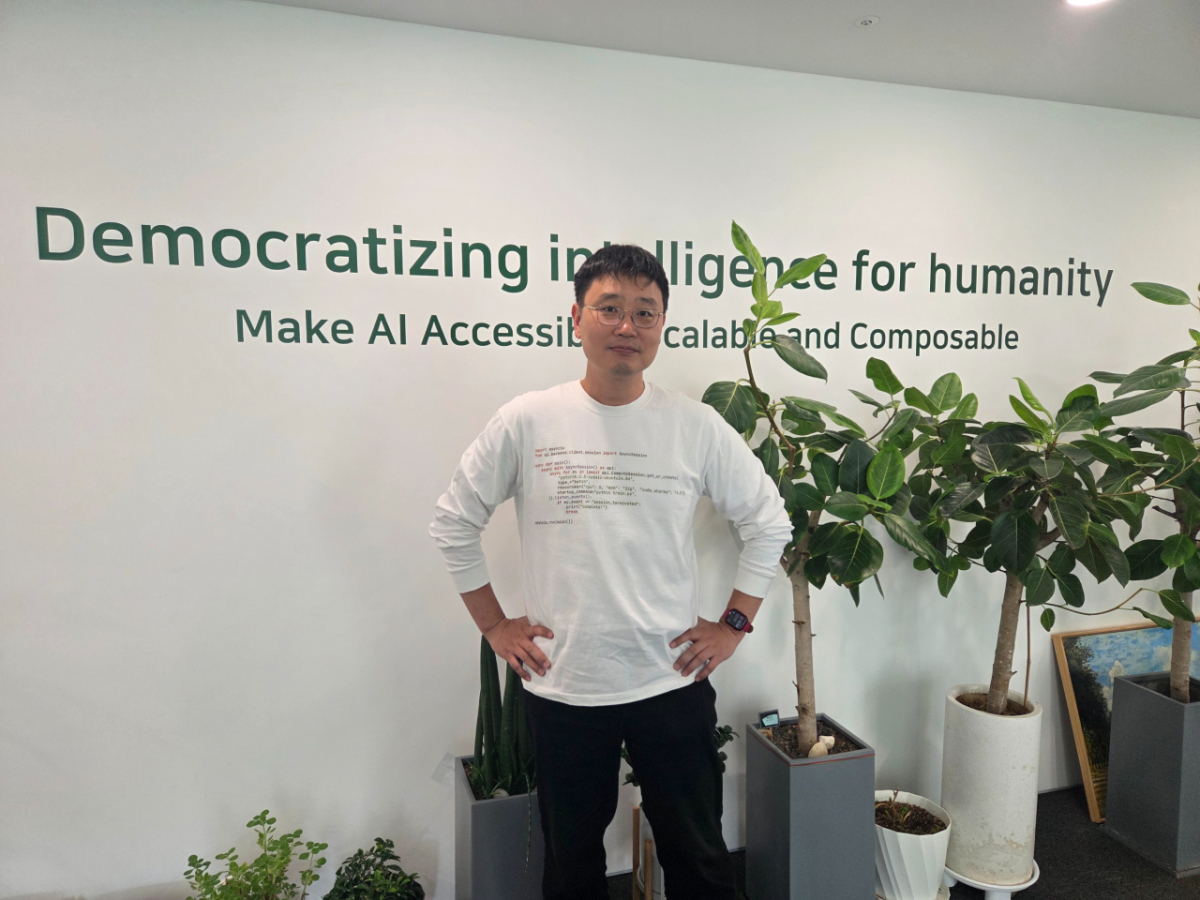
"People often group us together as neo-cloud companies, but RavelUp is a company that reduces the costs of neo-clouds. The more intense the competition in the neo-cloud sector becomes, the greater the demand for our services."
Shin Jung-gyu, CEO of RavelUp, explained that recent concerns about the neo-cloud industry triggered by CoreWeave and the decline in stock prices of AI (artificial intelligence) companies are actually an opportunity for RavelUp. This is because RavelUp's software can reduce the massive GPU (graphics processing unit) investment costs that neo-clouds must bear.
RavelUp boosts GPU efficiency, which typically ranges from 30% to 50%, up to a maximum of 85%. While it does not directly purchase GPUs worth tens or hundreds of billions of won, it can secure all companies that own GPUs as customers.
CEO Shin emphasized, "For neo-cloud companies to generate profits, the role of software companies like RavelUp will become important," adding, "Overseas, we are classified as a neo-cloud risk hedging company."
Neo-cloud is a GPU-based cloud specialized in AI model training and inference. It is an AI and GPU-specialized cloud distinct from general-purpose clouds that provide a mix of CPUs (central processing units) and GPUs, such as Amazon's AWS, Microsoft's Azure, and Google's GCP.
However, Gartner recently released a claim stating that independent survival for neo-clouds would be difficult due to intensifying competition. CoreWeave's stock price dropped by more than 15% in a single day, and another neo-cloud company, Nebius, also plunged 12% in one day. Concerns arose that GPU investment would also plummet, leading to significant corrections in semiconductor stocks as well.
RavelUp's IPO (initial public offering) took the collateral damage. In the demand forecasting for institutional investors conducted from the 13th to the 19th, RavelUp's subscription ratio was only 284.53 to 1. In particular, the application rate for mandatory holding commitments by institutional investors was just 2.09% in terms of quantity. The offering price was finalized at 19,000 won, the lower end of the band. Following this, the subscription ratio for general investor housing subscription conducted on the 22nd and 23rd was also 3.55 to 1.
CEO Shin said he would demonstrate RavelUp's business viability through overseas sales that are set to fully ramp up from early next year. Currently, RavelUp's overseas sales account for a low single-digit percentage of the total, but he expressed confidence that visible growth could be shown starting next year. Regions under discussion include the United States, Europe, Southeast Asia, and Japan.
He explained, "As customer cases increase among neo-clouds, our overseas business will become tangible between March and April next year," adding, "In addition, discussions are progressing with companies implementing AX (AI transformation) in various countries, including the United States and Southeast Asia, so it seems we can disclose this in early next year."
He added, "Currently, we are training six sales partners overseas, and our goal is to begin full-scale sales through them from early next year."
CEO Shin explained that as the AI infrastructure market grows, RavelUp's revenue will also grow. With GPU prices soaring, investments on the scale of tens to hundreds of trillions of won have become necessary; by improving their efficiency, business opportunities expand along with the entire market. Due to the nature of being a software company, overseas expansion is also free and easy. With a software-centric business structure, cost burdens are low, so future revenue growth is expected to outpace cost increases.
For example, if one GPU can perform 100 units of computation, using RavelUp's Backend.AI software improves the computational capability up to 160. CEO Shin explained, "Our revenue model involves charging a certain percentage of the utility corresponding to the additional 60 units of computational capability."
Recurring revenue generated from existing customers is also a competitive strength. In the previous year, 94.7% of total revenue was recurring revenue, and the average net revenue retention rate (NRR) over the last five years is 137.9%. This means that existing customers are expanding their license sizes as they add GPUs or replace them with new-generation GPUs. CEO Shin added, "Looking at last year alone, the NRR reached approximately 170%."
CEO Shin cited securing recognition in the capital markets for overseas expansion and other purposes as the biggest goal of the listing. He stated, "Those who research and develop technology know RavelUp well, but we were almost unknown in the capital markets," adding, "While we are not in a situation where we urgently need capital right now, it was necessary to announce our position within the industry through an IPO at this point."
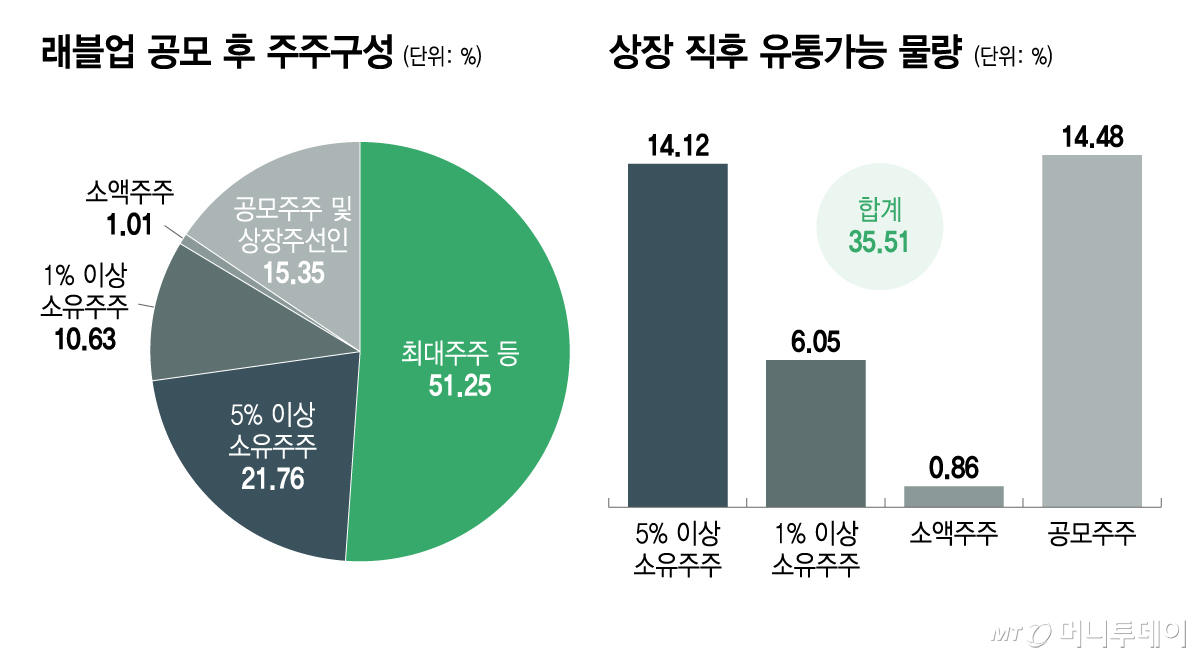
CEO Shin said that voluntary lock-ups by existing shareholders demonstrate confidence in growth potential. Although the application rate for mandatory holding commitments from new institutional investors was low at 2.09%, approximately 40% of existing investors participated in the lock-up. The largest shareholder and co-founders hold more than 50% of the shares, with most lock-up periods being two to three years.
CEO Shin explained, "Because we have only raised external investment twice, in 2017 and 2022, a significant portion of investors' shares are not subject to mandatory holding restrictions," adding, "Most agreed to the requested lock-up periods." The tradable volume immediately after listing is approximately 35%.

 in STOCK

