

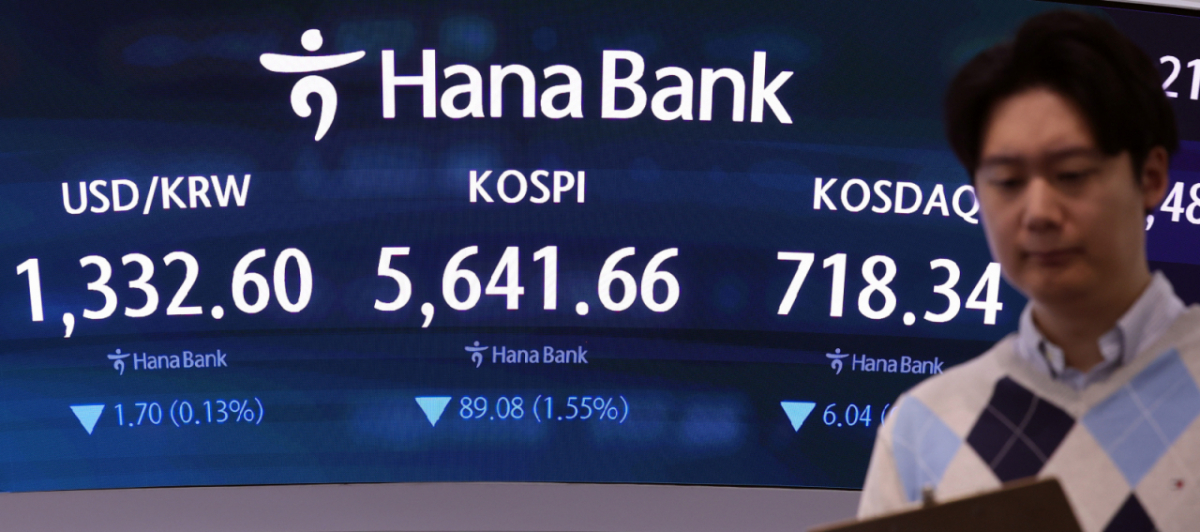
The KOSPI index, which opened lower on the aftermath of a sharp drop in U.S. semiconductor stocks, turned positive driven by buying from institutional investors. Given that AI-related stocks plunged in the Korean and U.S. stock markets on the last trading day of last week (Oct. 30), expectations are emerging that bargain-hunting may continue. However, concerns also exist that stock price volatility could increase this week as major events such as the U.S. midterm elections and Apple's earnings release follow one another.
At 10:32 a.m. on Monday, the KOSPI index was trading at 5782.03, up 51.29 points (0.89%) from the previous trading day.
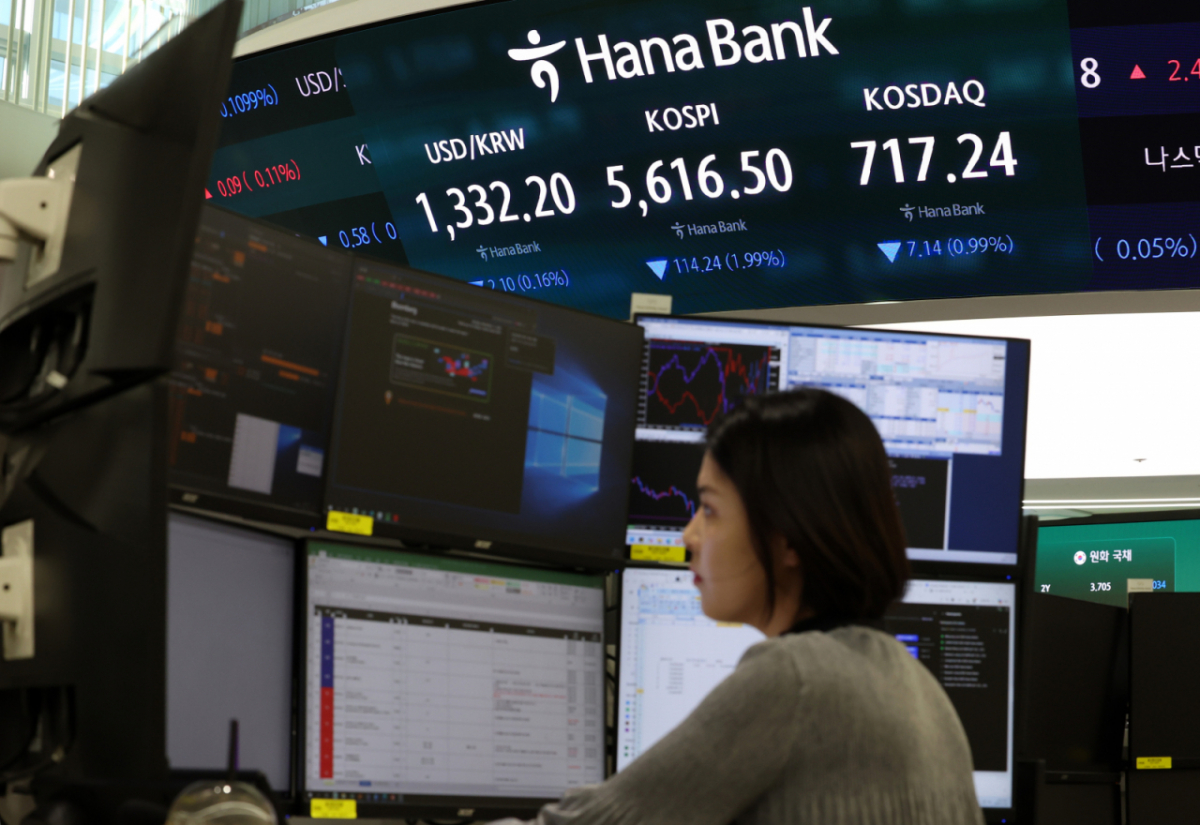
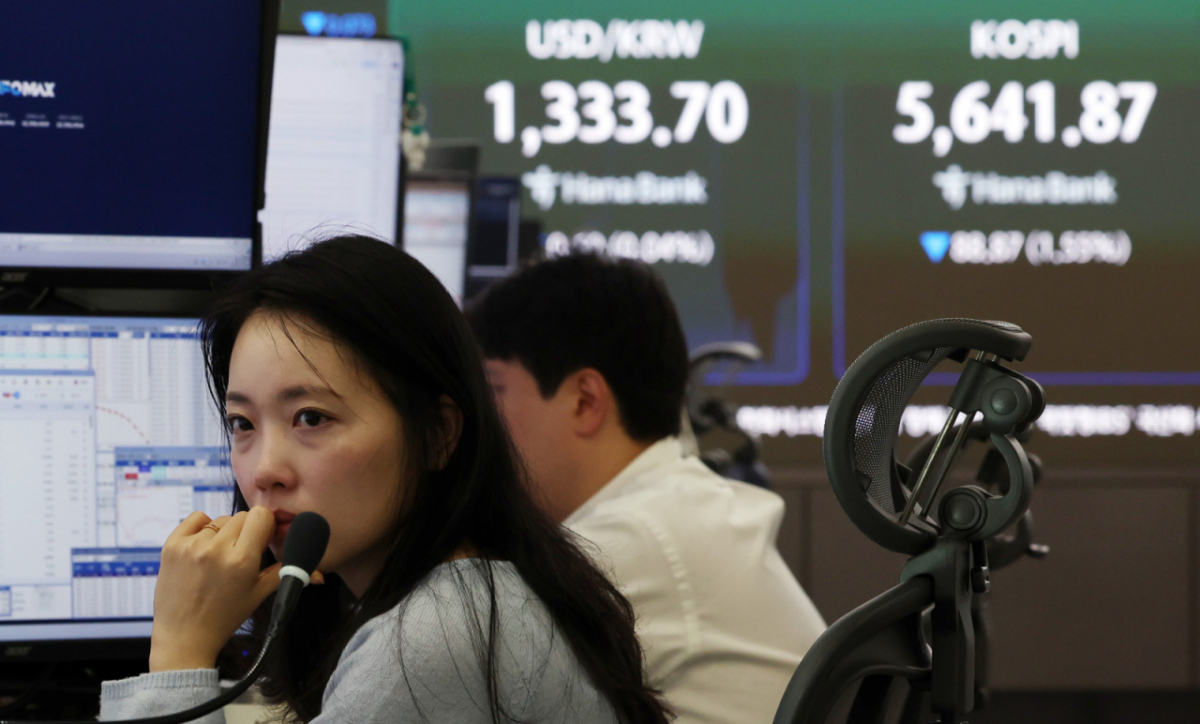
The KOSPI opened down 92.97 points (1.62%) at 5637.77 and fell as low as 5616.50, a drop of 114.24 points (1.99%), in the early trading session, but subsequently recovered all of its losses. By investor type, institutional investors made net purchases of 570.5 billion won, while retail and foreign investors made net sales of 384.6 billion won and 275.1 billion won, respectively. Samsung Electronics was trading down 0.44% at 224,000 won. SK hynix showed a gain of 1.83% at 1,444,000 won. Among top market capitalization stocks, Hyundai Motor (1.95%) and SK Square (1.90%) are rising, while Samsung Biologics Logistics (-2.82%), KB Financial Group (-1.41%), and Samsung Electronics preferred shares (-0.92%) are falling.
Earlier, on the 30th of last month, the KOSPI index closed with a sharp drop in the 3% range due to the impact of poor earnings from major U.S. tech stocks. Nevertheless, on that day, it successfully turned positive as rebound buying centered on institutional investors came in.
However, there are also views that it remains to be seen whether concerns over excessive AI investment, which have been the center of recent stock market instability, will be resolved. Intel announced a fourth-quarter revenue forecast of $15 billion to $16 billion, significantly below market expectations, on the 29th of last month (local time), and its stock price plunged 28.58% in the New York Stock Exchange on the 30th.
The Philadelphia Semiconductor Index closed down 829.40 points (7.20%) at 10688.80, and AMD (-10.88%), Micron (-5.30%), and NVIDIA (-4.22%) also all fell. Previously, Alphabet and Amazon's earnings also fell short of expectations, reigniting doubts about whether the massive investment costs poured into AI can be recovered in a timely manner.
The U.S. midterm elections are expected to determine the policy momentum of the Trump administration. Recent polls predicted a landslide victory for the Democratic Party in the House and a narrow Democratic advantage in the Senate amid close races in swing districts.
This is a scenario where the so-called "Blue Wave," in which the Democratic Party takes over both the currently Republican-controlled Senate and House, could become reality. Analysis also suggests that if the election ends with a Democratic victory, political uncertainty may clear and expectations of benefits for the renewable energy sector may emerge, potentially boosting investor sentiment in the short term.
This week, Apple, AMD, and Palantir will release their earnings. For Apple, the key factors are profitability burdens due to new iPhone sales and rising memory prices; for AMD, data center GPU (graphics processing unit) demand and future revenue outlooks; and for Palantir, the growth in revenue and profits from enterprise AI services. In particular, Palantir's earnings are expected to serve as an opportunity to reconfirm whether AI infrastructure investment is actually leading to increased AI service revenue.
Han Ji-young, a researcher at Kiwoom Securities, said, "Fundamental recovery of investor sentiment depends on how much concerns over the AI industry can be alleviated."

 in STOCK


