

Sovereign wealth funds and state-owned financial institutions, including the Korea Investment Corporation (KIC), could become major shareholders in South Korean cryptocurrency exchanges under a proposed law.
The move follows a provision in the Digital Asset Act being pushed by the government and the ruling party that exempts the government and public asset management institutions from restrictions on exchange ownership.
The proposal is expected to spark debate over expanding government influence over private companies and the appropriateness of using public funds for such investments.
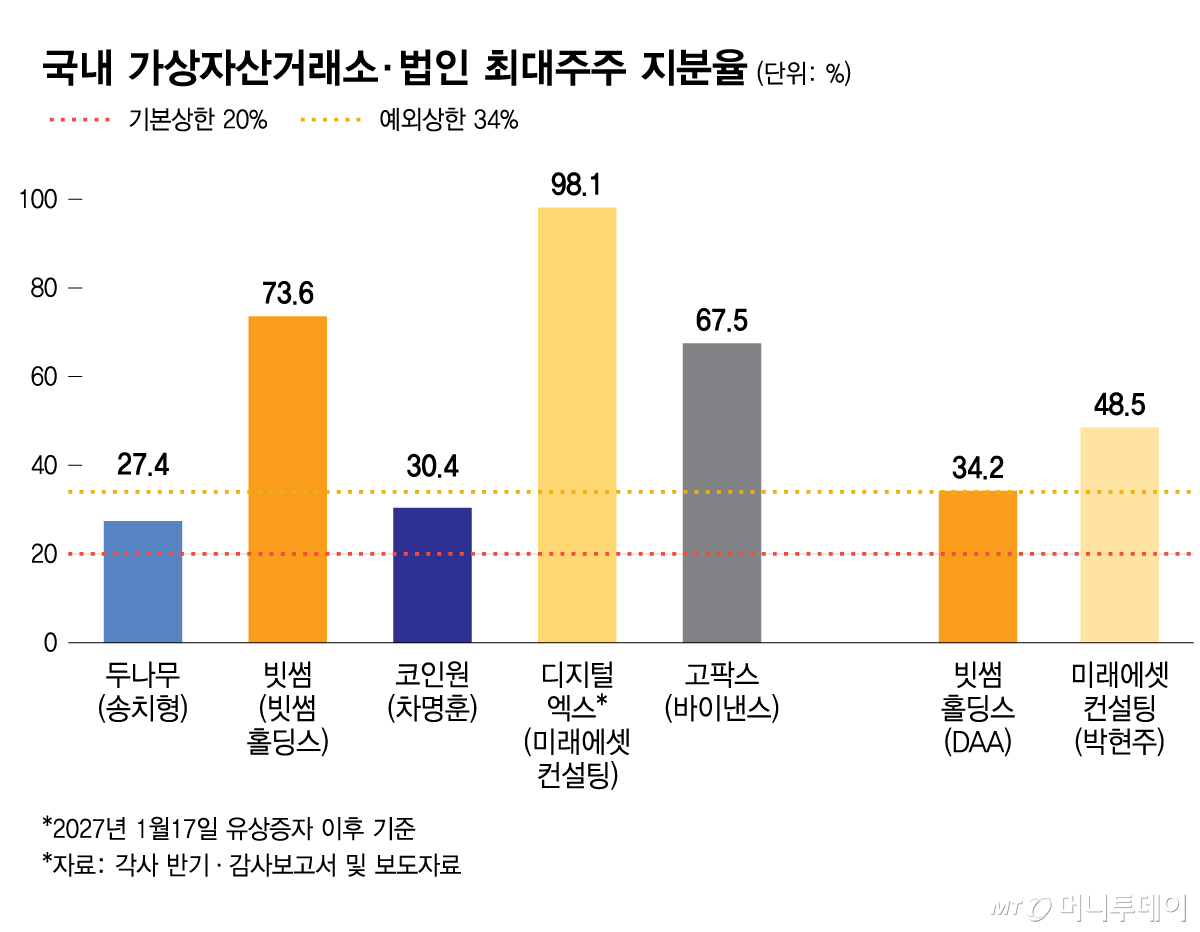
Article 75 of the Digital Asset Industry Innovation and User Protection Act, proposed on Nov. 27 by Rep. Yoo Dong-soo of the ruling Democratic Party of Korea, generally prohibits any shareholder from owning more than 20 percent of the voting shares issued by a cryptocurrency exchange.
However, it makes exceptions for the government and institutions designated by presidential decree that manage and operate assets invested or entrusted by the government.
Unlike a separate proposal that would allow ownership of up to 34 percent with approval from the Financial Services Commission, this provision sets no separate upper limit on their stakes.
The Korea Investment Corporation, a Korean sovereign wealth fund being pursued by the government, and state-run financial institutions such as the Korea Development Bank are being mentioned as potential buyers of exchange stakes.
The specific institutions eligible for exemptions will be determined later through an enforcement decree. The provision is likely to raise questions about whether it is appropriate to exempt public institutions from ownership limits while restricting private shareholders to prevent concentrated ownership and protect exchanges' public role and neutrality.
Critics also warn that if the government becomes a major shareholder, directly or indirectly, while exercising licensing and supervisory authority over exchanges, it could undermine management independence and create conflicts of interest.
"Whether investing in exchange stakes aligns with the founding purpose of public institutions also needs to be examined," an official in the financial investment industry said. "Granting an exemption from ownership restrictions and authorizing individual institutions to make investments are two separate issues."
The official added, "If the investment involves buying shares from existing shareholders, it would not provide exchanges with new capital for business operations. If investments incur losses due to a downturn in the cryptocurrency market, the public sector would bear the burden."
The effectiveness of the ownership restrictions is another challenge. The bill would give existing shareholders who exceed the limit a three-year grace period, with a possible additional three-year extension if certain conditions are met.
Once the grace period expires, their voting rights on excess shares would be restricted, and they would be required to bring their holdings into compliance without delay.
However, unlike the Financial Services Commission's general authority to issue corrective orders, the bill does not include a provision allowing the commission to set a deadline and order the sale of excess shares.
This contrasts with Article 18 of the same bill, which explicitly authorizes orders to dispose of shares when shareholders fail to obtain approval for changes in major shareholders.

 in STOCK
