

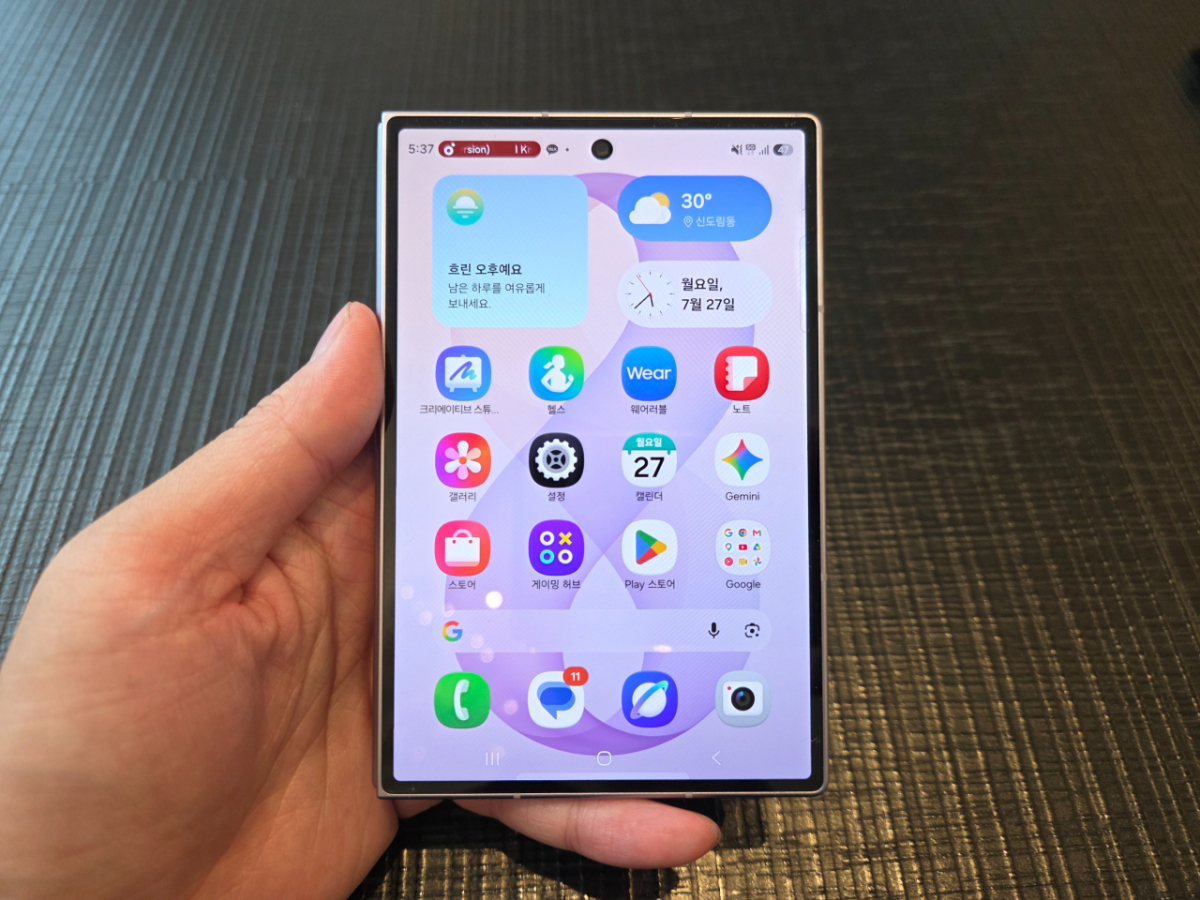
Before even getting to touch Samsung Electronics' new foldable phone, the "Galaxy Z Fold8," I wondered, "How much difference can it really make if the screen ratio changes to 4:3?" Before turning it on, its exterior looked less like a passport and more like a rectangular notepad, giving an impression reminiscent of past Blackberry designs.
However, the moment I held the actual device, my first impression changed completely. It wasn't just about widening the screen; when folded, it can be used naturally like a standard bar-type smartphone, and when unfolded, it offers an immersive experience close to that of a tablet, making usability significantly different. Using the new form factor applied by Samsung Electronics firsthand helped me understand why they did so.
Changing the screen ratio truly made a difference
The first change felt when holding it in hand is portability. The thickness is only 9.7mm when folded and 4.5mm when unfolded, with a weight of just 201g, making it the lightest in the history of the Galaxy Z Fold series. When folded, it felt heavy as typical for foldable phones, but when unfolded, the weight was distributed across the wide screen, significantly reducing the perceived burden.
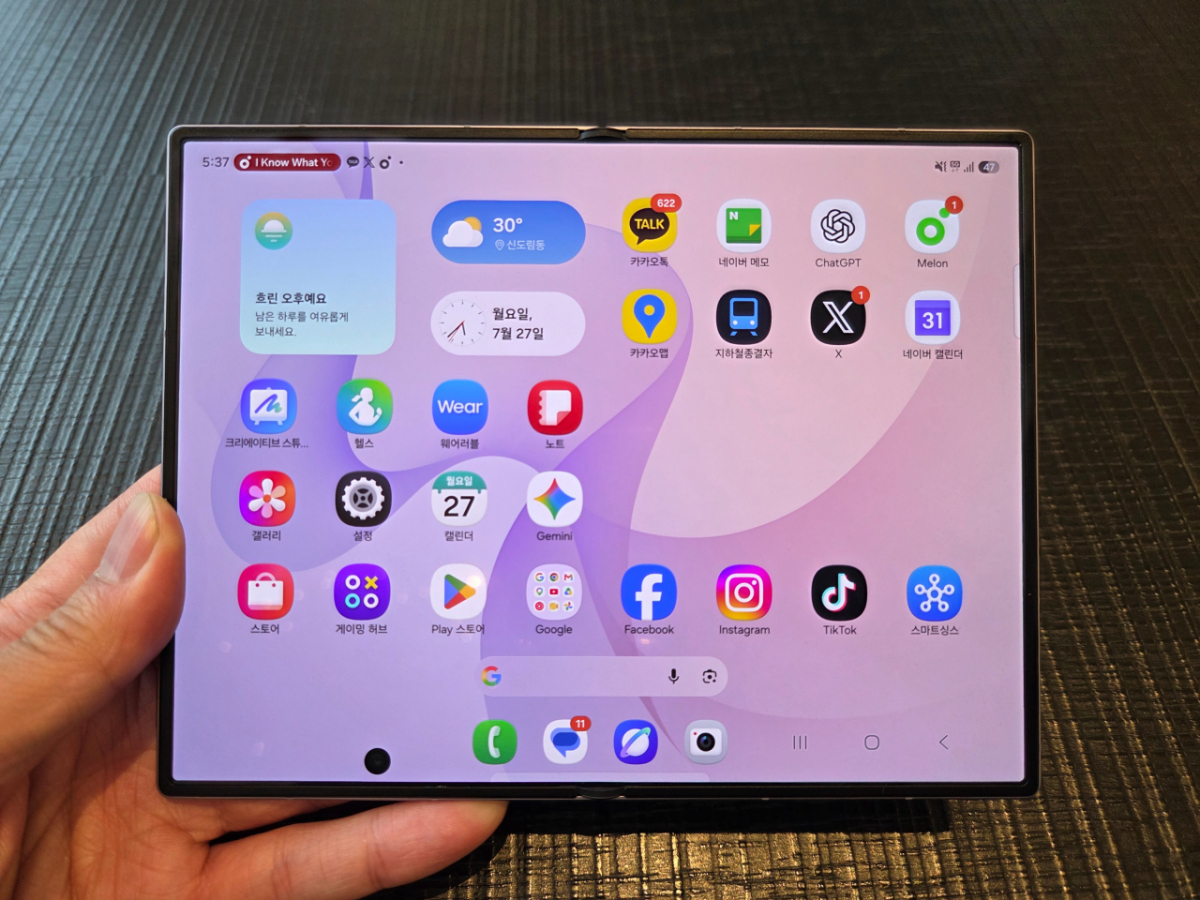
The Galaxy Z Fold8 adopted a new screen ratio with a wider horizontal width than its predecessor. When folded, it features a 138.4mm (5.5-inch, 10:16 aspect ratio) display, and when unfolded, a 193.2mm (7.6-inch, 4:3 aspect ratio) display. Thanks to this, even using just the cover screen allowed for one-handed operation like a standard bar-type smartphone, as well as comfortable text input and web browsing without any inconvenience.
This is also a point that differentiates it from the Galaxy Z Flip series. While the Flip's cover screen has become larger than its predecessor, it still strongly retains the character of a secondary display. In contrast, the Fold8 has become so versatile that most tasks can be handled even without unfolding. However, the protruding camera module was large enough to cause some concern about the device wobbling when placed on a desk for use.
Enhanced immersion... Absence of Flex Mode is a disappointment
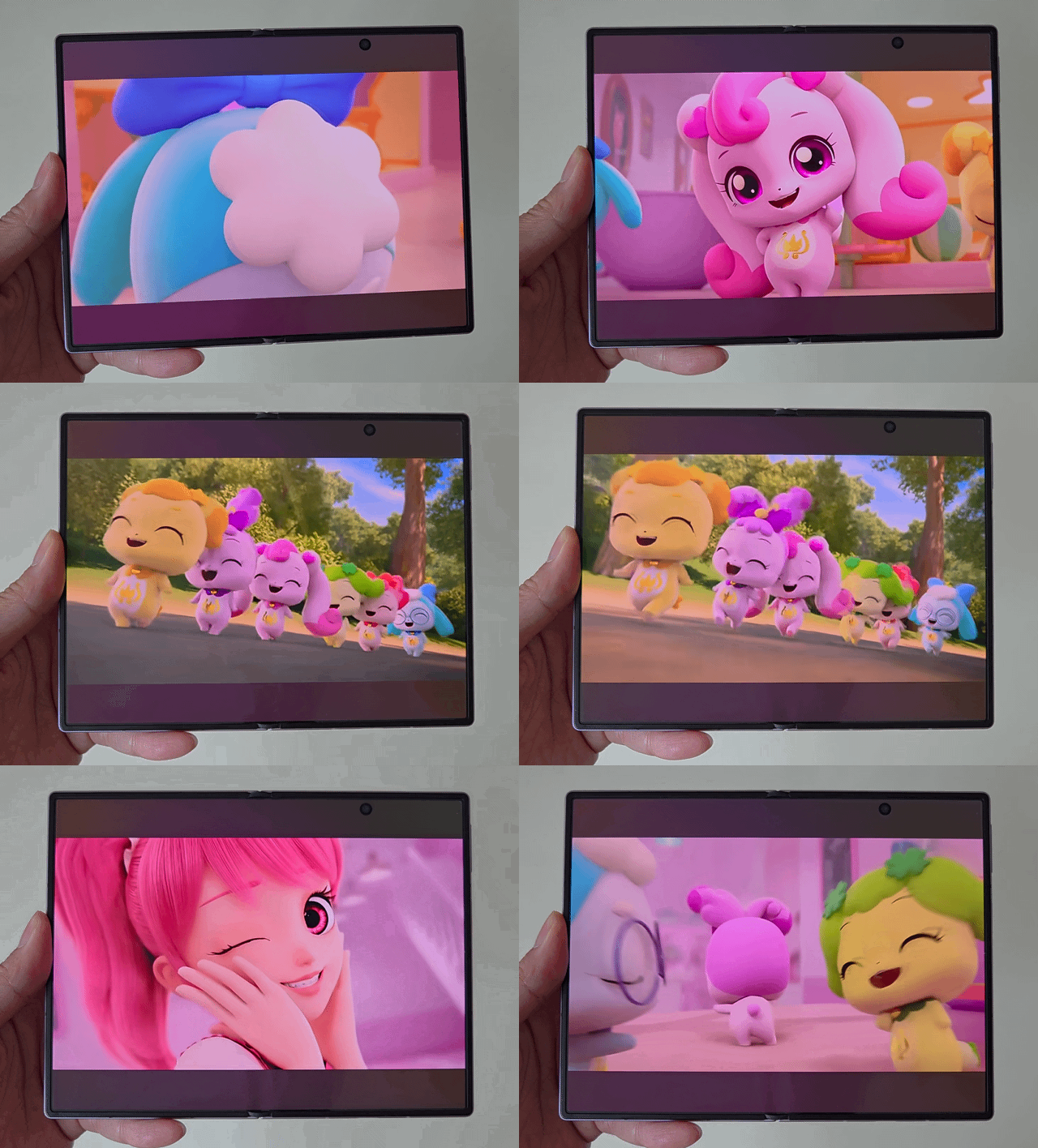
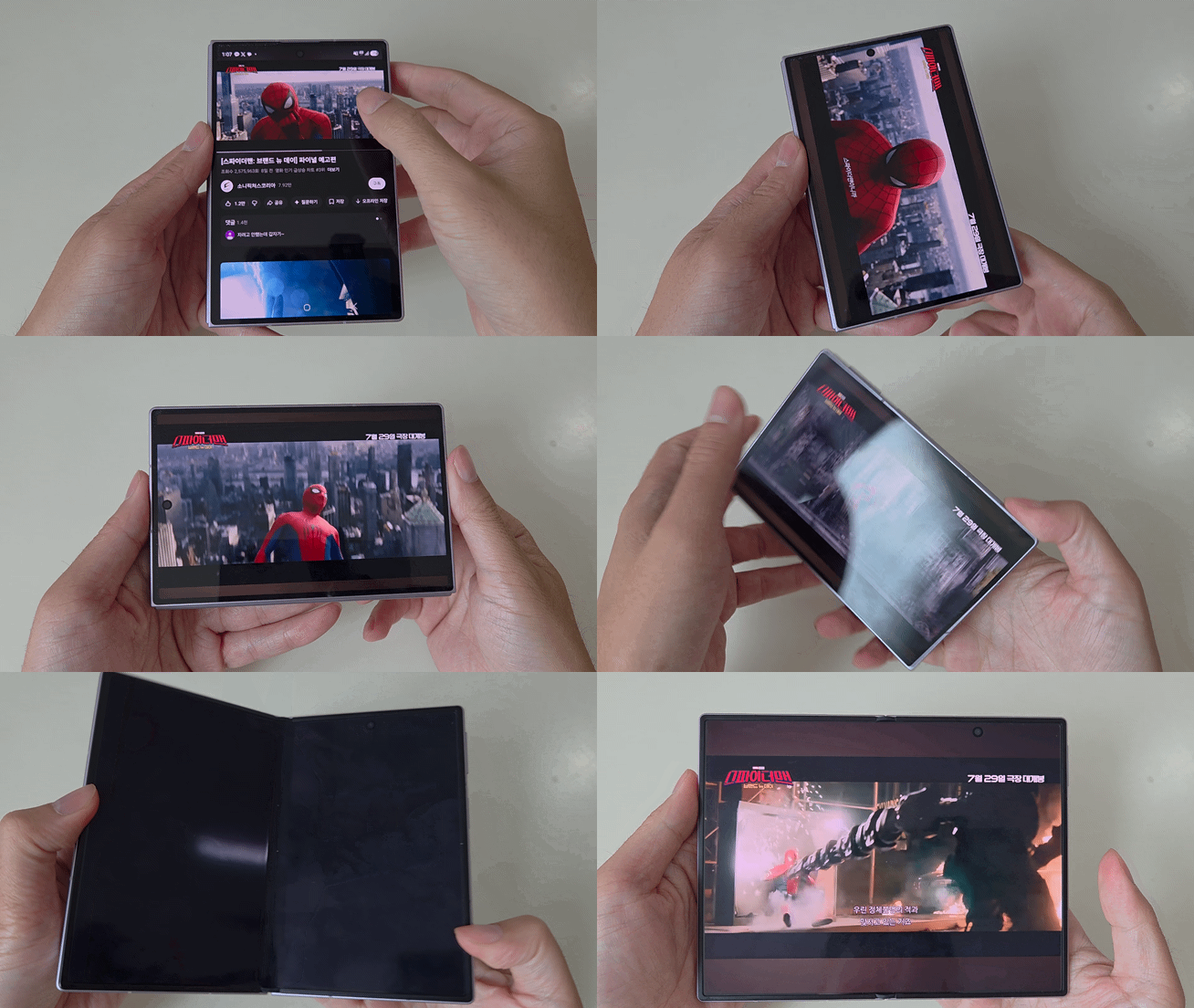
When unfolding the main screen, the true value of the aspect ratio change becomes even more evident. When playing videos on platforms like YouTube, the black borders (letterboxes) that appear above and below the screen are reduced compared to before, allowing content to fill the screen more completely.
The Fold8's advantages do not end with simply having a wider screen. The ability to run up to three apps simultaneously also complemented the large display well. Even while displaying two apps side-by-side or adding a third app for a three-way split-screen view, there was little sense of frustration. Usability felt high, such as browsing the web and using a messenger while watching videos.
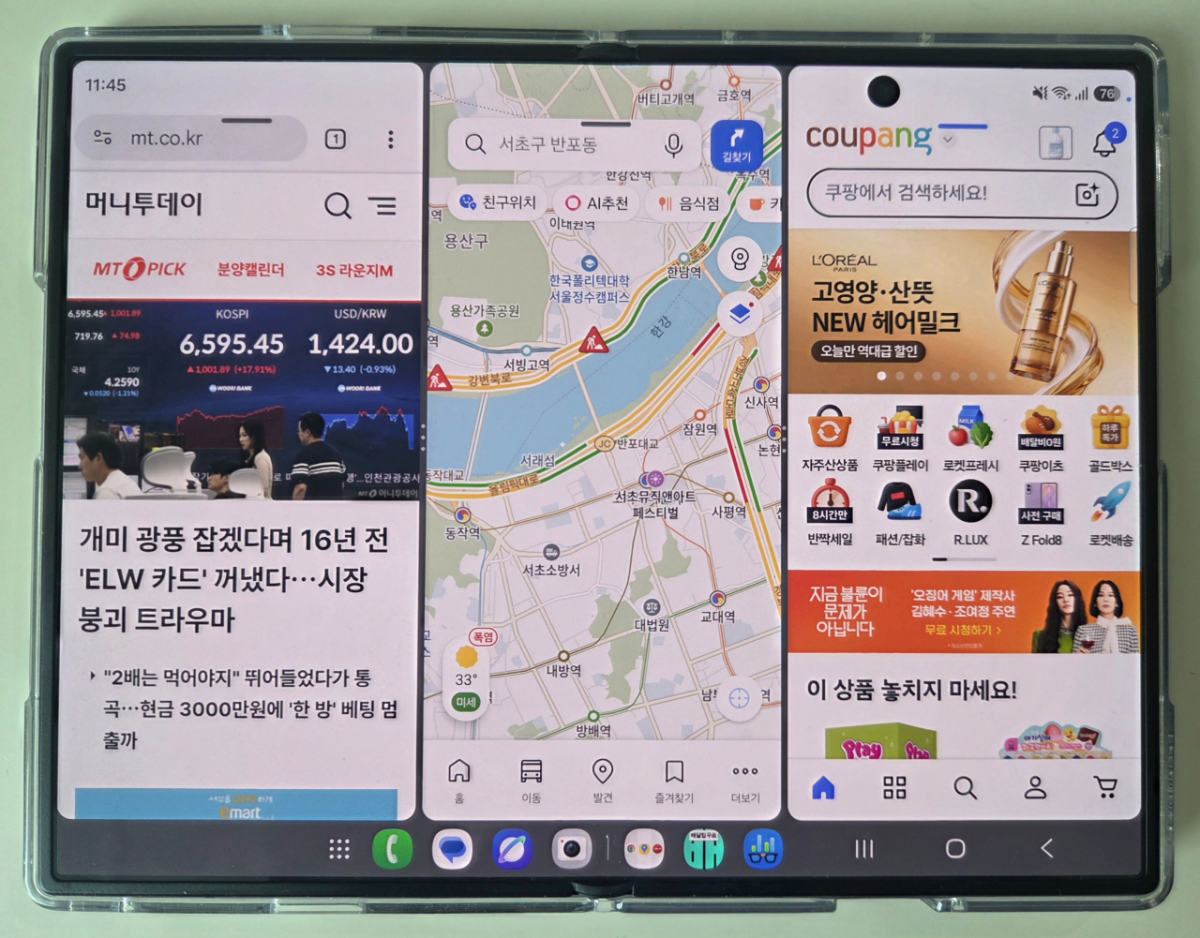
The element that completes the large-screen experience is crease improvement. With the screen off, the central fold is noticeable, but when the screen is actually turned on and used, its presence is greatly reduced. The creases were hardly noticeable, allowing for deeper immersion in the expanded screen. In particular, the usability of the cover screen exceeded expectations. Unlike temporary screens on existing foldables, it was sufficiently satisfying for watching videos and web browsing as well.
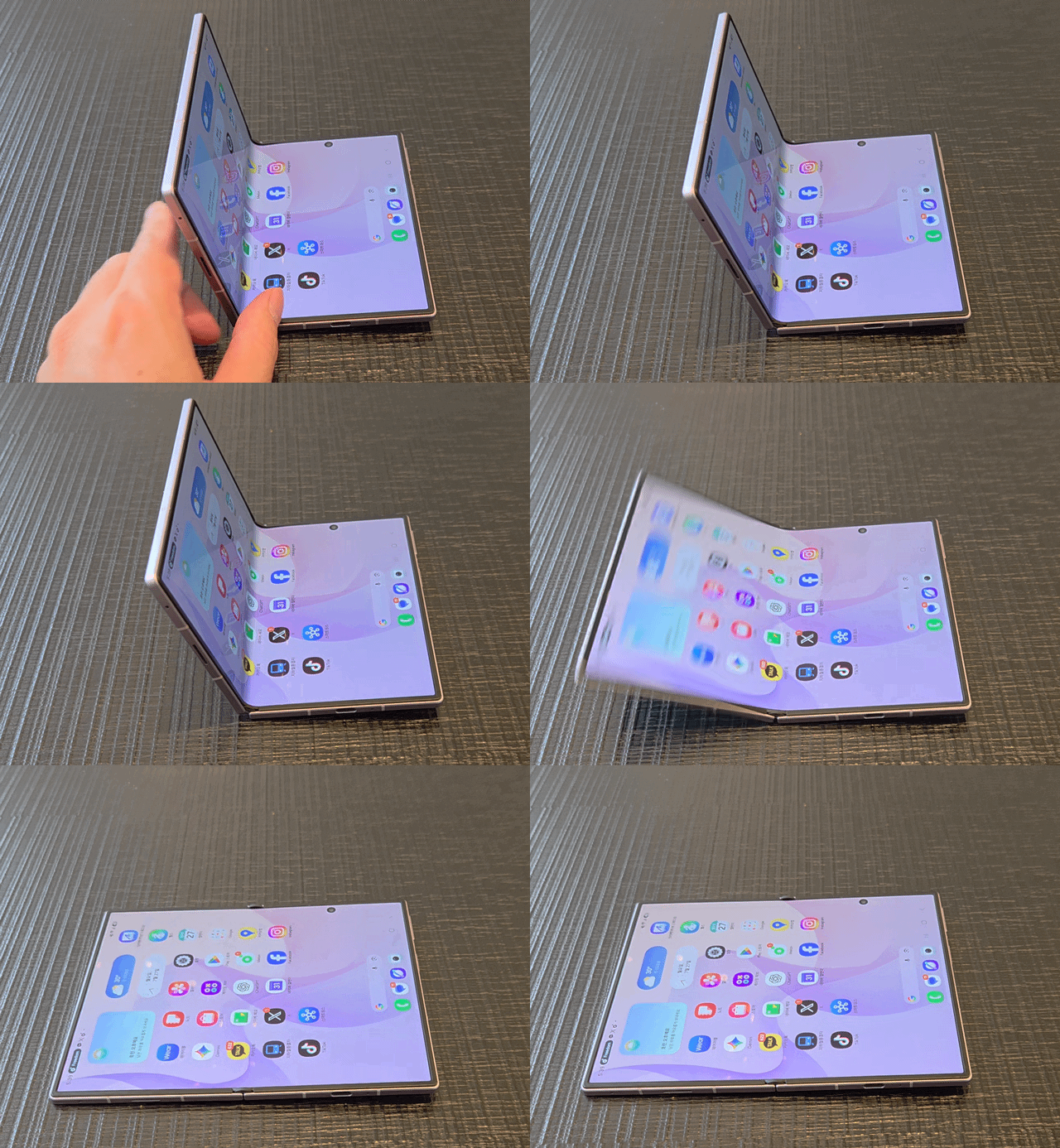
There were also some disappointments. When opening the product to more than about 90 degrees, it did not lock at the desired angle but continued to unfold all the way to 180 degrees.
The Galaxy Z Flip series supports "Flex Mode," which splits the screen into upper and lower sections when the device is propped up at about 90 degrees, allowing users to view content on the top and operate apps on the bottom. In contrast, despite being a higher-end model than the Flip8 with a higher price point, the Galaxy Z Fold8 does not support this feature, leaving a sense of disappointment in terms of usability.
Flagship performance proven... Even "Genshin Impact" runs smoothly
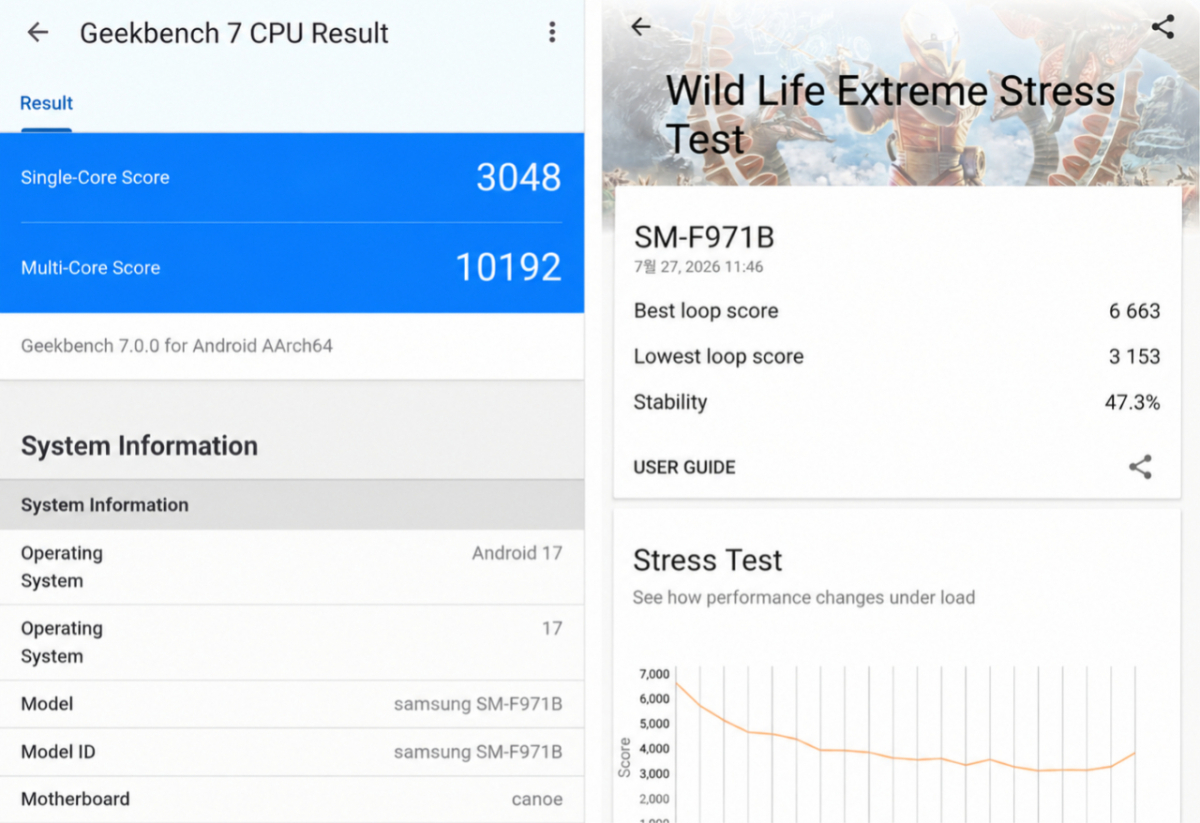
If design and usability changed the most, performance also demonstrated flagship-level quality. The Galaxy Z Fold8 is equipped with Qualcomm's latest mobile AP, the "Galaxy Edition Snapdragon 8 Elite 5th Gen." Running Geekbench 7 to verify actual performance yielded a single-core score of 3048 points and a multi-core score of 11,92 points. Compared to the iPhone 17 Pro (single-core 3157 points, multi-core 8731 points), the single-core performance was about 3.5% lower, but the multi-core performance was about 16.7% higher, showing strengths in multitasking and high-load tasks.
Graphics performance was verified using the 3DMark "Wild Life Extreme Stress Test." This is a benchmark that repeatedly drives high-spec graphics to measure GPU (graphics processing unit) performance and its ability to maintain performance under heat generation. The test results showed a maximum score of 6264 points, a minimum score of 3322 points, and stability at 53%. Since the device was pre-loaded with software before official release, there is a possibility that performance will improve through future optimization, but during this test, the ability to maintain performance in a long-term high-load environment was somewhat disappointing.
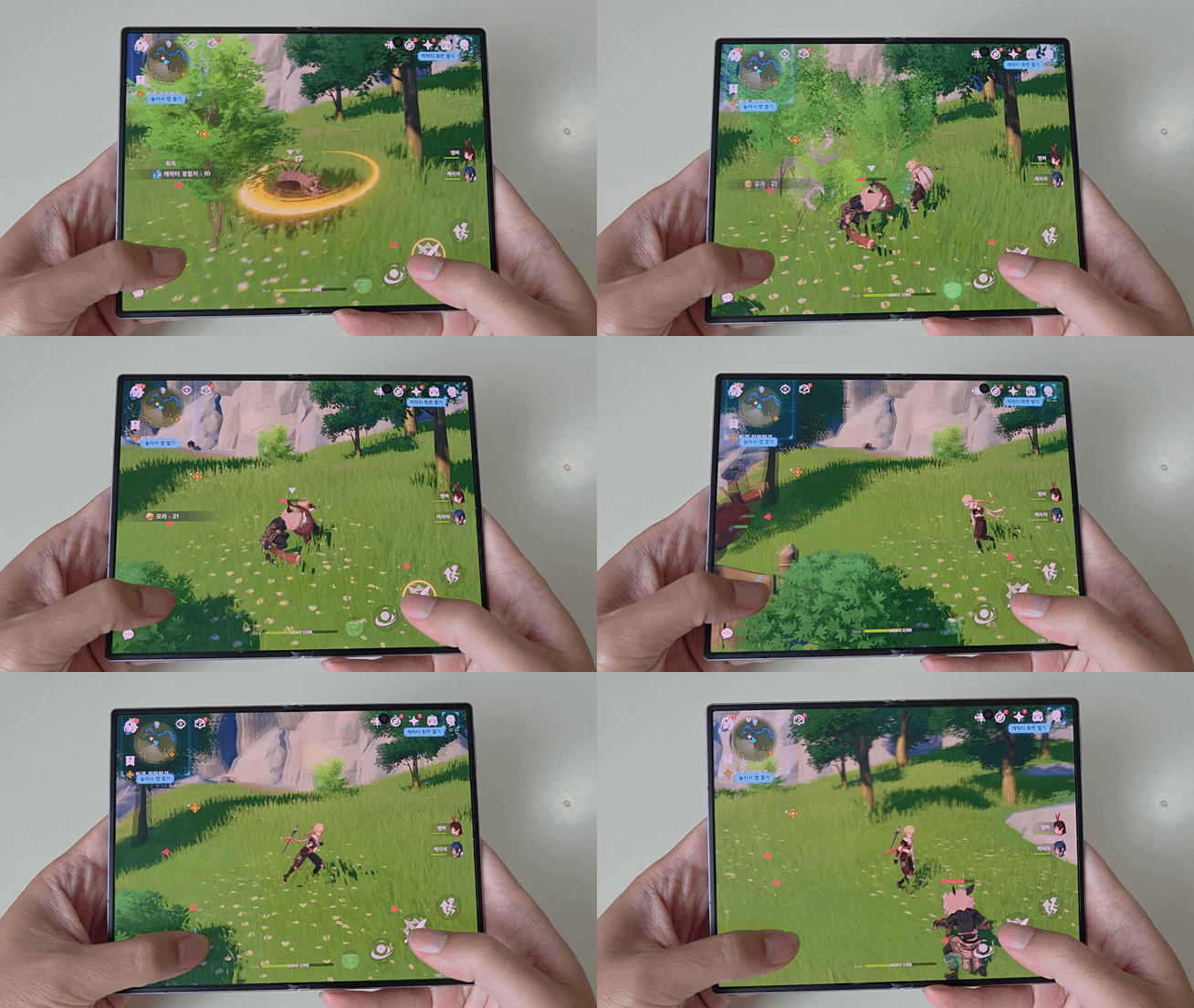
However, benchmark results and actual experience were somewhat different. While playing the high-spec game "Genshin Impact: Song of the Moon" set to 60 frames, there was no noticeable frame drop or excessive heat generation. During travel, using the cover screen was sufficient, and when sitting down, unfolding the main screen for enjoyment was also not lacking. On the main screen, the expanded view secured a wider field of vision thanks to the larger screen, further enhancing game immersion.
Battery exceeded expectations... Camera and AI are disappointing
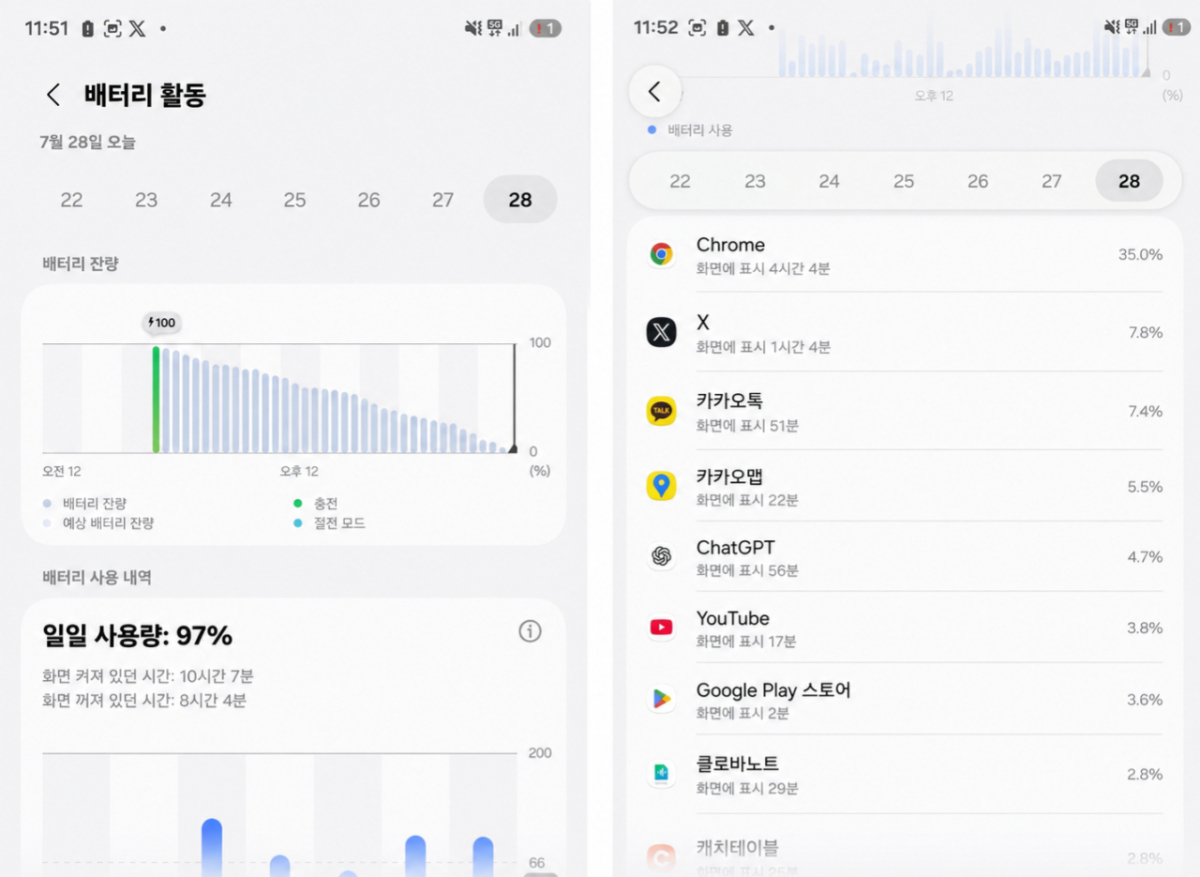
The Galaxy Z8 series applied a silicon-carbon battery for the first time in Samsung Electronics smartphones. While it supports a large-capacity 4800mAh battery and 45W fast charging, compared to Chinese manufacturer flagships that offer batteries around 6000mAh and 80~100W-level charging, it is somewhat disappointing. As a foldable phone equipped with a wide display, battery drain was a concern, but in actual use, the screen-on time exceeded 10 hours, demonstrating power efficiency beyond expectations. Regarding charging speed, 30% was charged within 10 minutes of starting, 70% within 30 minutes, and it took 65 minutes to reach 100%.
The camera was disappointing in that it no longer supports a telephoto camera, limiting zoom to a maximum of 10x. This is interpreted as a design considering the reduction of the device's vertical length, increasing battery capacity, and cost burdens due to recent memory price hikes. While somewhat disappointing for a flagship smartphone, there were no major inconveniences in daily photo shooting.
In the Galaxy Z8 series, it was difficult to find practically any new Galaxy AI features. This is because Samsung Electronics maintains a strategy of releasing major AI features timed with the launch of its Galaxy S series. While Galaxy AI continues to evolve, there were no "killer features" unique to this Galaxy Z Fold8.
Presenting a new direction for foldables... Price remains a challenge
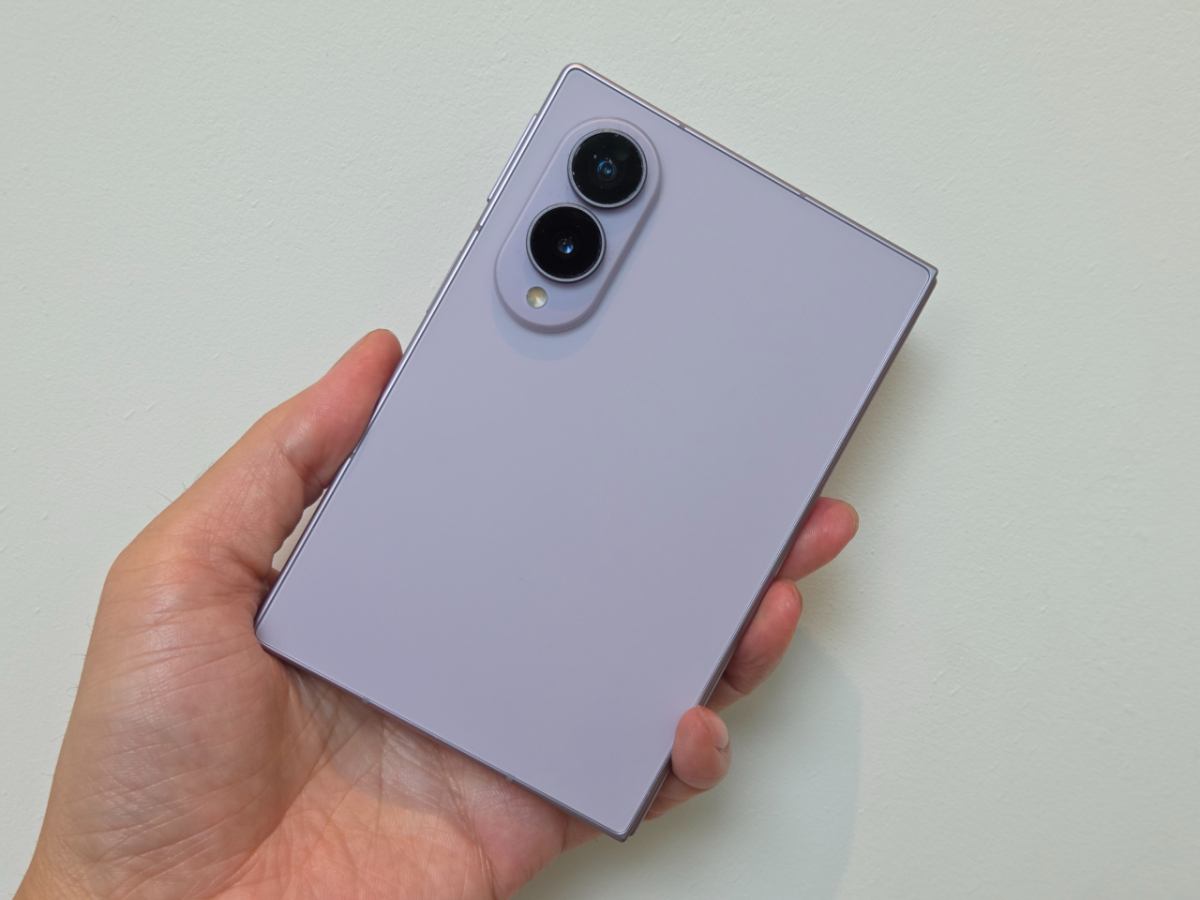
The Galaxy Z Fold8 was not merely a product that changed the screen ratio. It significantly improved usability to be used like a standard bar-type smartphone when folded and like a tablet when unfolded, presenting a new direction for foldables. On the other hand, the absence of Flex Mode and a telephoto camera are disappointing points. Additionally, the high starting price of 2.2781 million won (based on 12GB RAM and 256GB storage) is also an element that makes buyers hesitate.
Nevertheless, it was clear that the change in just one aspect ratio alone elevated the foldable usage experience to a new level. If only the barrier of price were lowered, the Galaxy Z Fold8 would be a product that well demonstrated how foldables should evolve in the future.

 in TECH


