

"OpenAI is in a competitive position for leadership in the AI agent market. Many developers are currently moving to Codex."
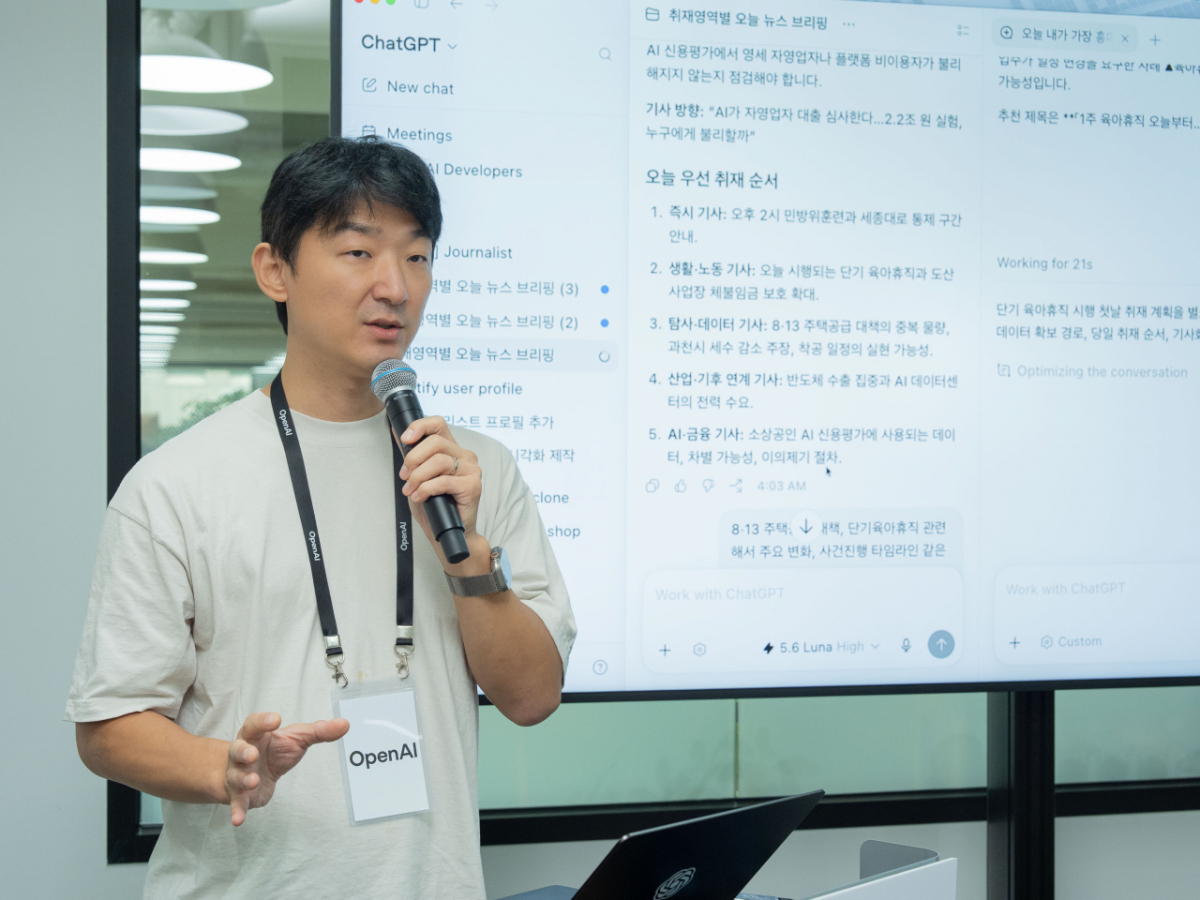
Shim Dae-yeol, an OpenAI Korea engineer, explained the company's AI agent capabilities this way at the "ChatGPT Work Demo Session" held on the 20th at OpenAI Seoul Office in Gangnam-gu, Seoul. OpenAI introduced major functions and use cases of its AI agents.
OpenAI, Agents as Chasers... Anthropic Overtakes Revenue
OpenAI's representative AI agent services are Codex and ChatGPT Work. Codex is a coding agent that builds apps or programs needed by users. It is similar to Anthropic's "Claude Code." ChatGPT Work is an office AI agent with Codex built in, comparable to "Claude Co-Work." It enables document, spreadsheet, and PowerPoint creation.
OpenAI announced last month that the combined weekly active user count (WAU) for the two services surpassed 10 million since the launch of ChatGPT Work in July. In April, Codex WAU was around 3 million; with the release of ChatGPT Work, the number of users utilizing both services together surged. Oh Seong-won, Head of Communications at OpenAI Korea, explained, "The GPT 5.6 model powering AI agents delivers high performance at a lower price compared to competitors," and added, "The ecosystem expansion is also rapid, with over 1,400 plugins registered."
Industry observers interpreted this event as a strategic move to catch up with Anthropic. While OpenAI has captured the generative AI market with ChatGPT, it remains a chaser in the agent market. This is because Anthropic launched its AI agents three to six months earlier than OpenAI, securing demand first.
This dynamic was also reflected in financial results. According to foreign media such as The Wall Street Journal, in the second quarter of this year, Anthropic recorded revenue of $11.6 billion (approximately 16.17 trillion won), overtaking OpenAI for the first time, which posted $6.7 billion (approximately 934 billion won). Anthropic's revenue more than doubled compared to the previous quarter, while OpenAI's grew by only 18% during the same period.
Real-world Use Cases in Academic Research and Office Work "Rapidly Emerging"
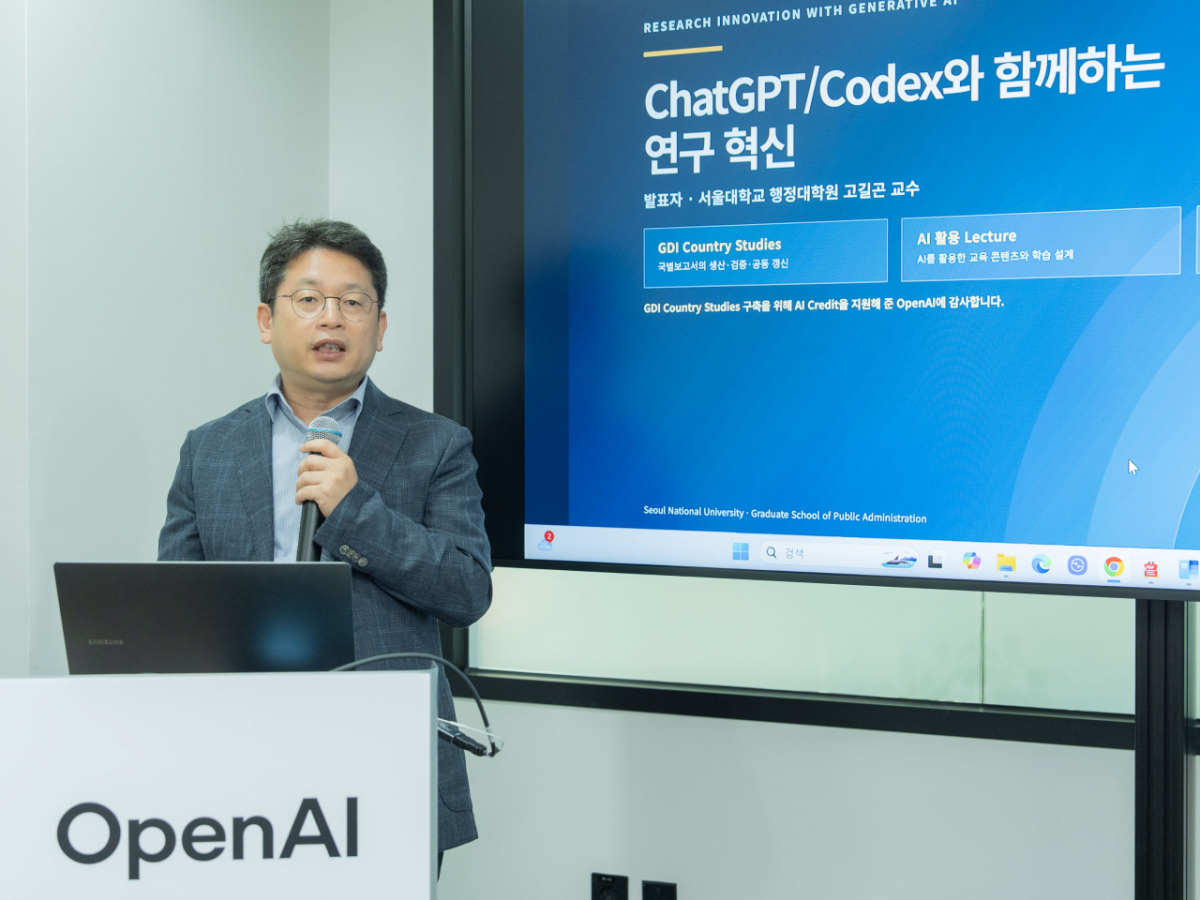
The two services are being used in practice on the ground by researchers, institutional investors, media outlets, and others. On this day, Ko Gil-gon, Director of Seoul National University Jeong Bo-hwa-bon (Director), presented a case study titled "Creating Research Reports Using Codex." Director Ko built a workflow using Codex that includes collecting and structuring data such as statistics, laws, policy documents, and academic materials by country; analyzing data; and drafting reports. He explained, "Every time new students arrive, we had the inconvenience of having to start work from scratch," adding, "Utilizing AI agents has resolved issues accumulated over more than a decade."
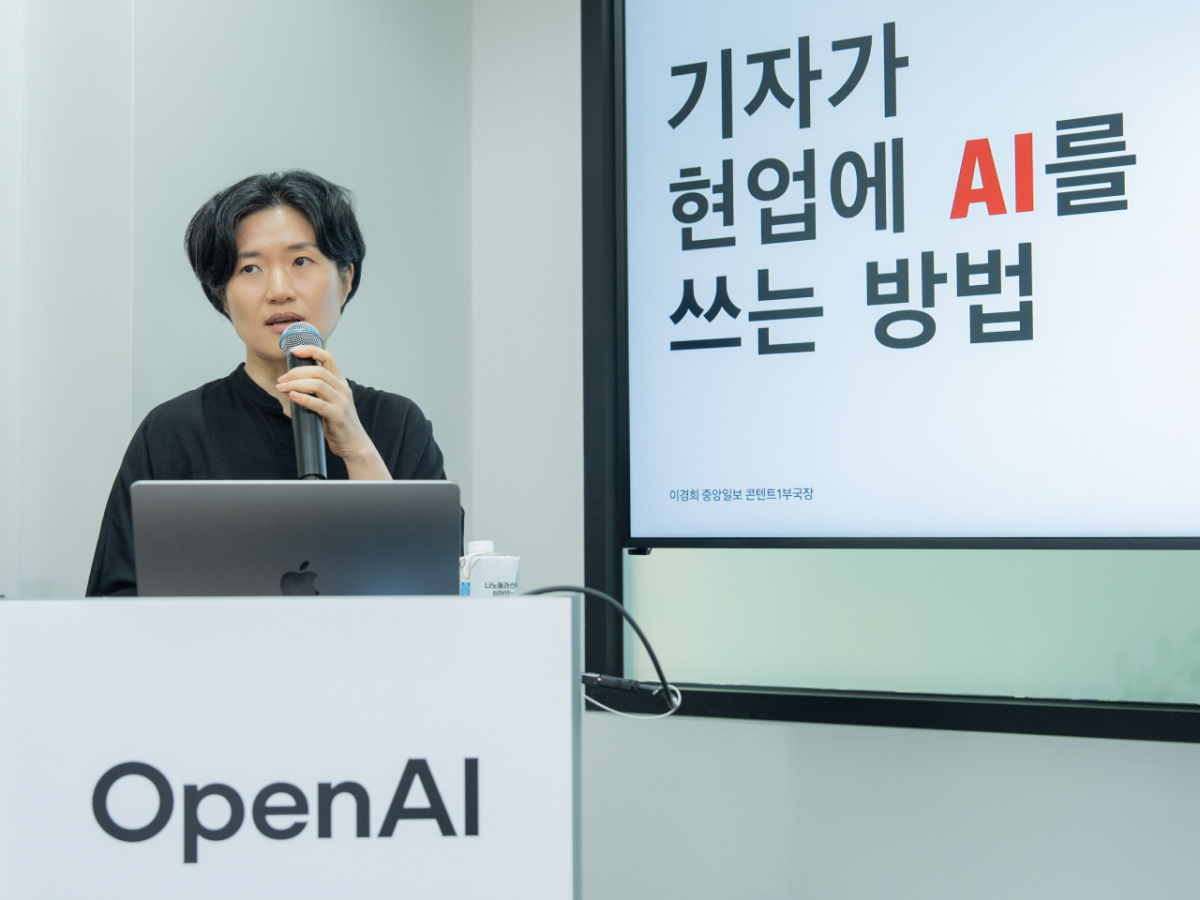
Lee Kyung-hee, Head of Content Division 1 at JoongAng Ilbo, introduced a case where she implemented an investigative dashboard that standardizes public officials' asset disclosure data, enabling searches for individuals and institutional investors, year-by-year comparisons, and tracking of major data changes. In this collaborative approach, Codex handles repetitive tasks such as data conversion and inspection, while journalists focus on exception checks and assessing article value. She explained, "In the past, complex processes were required to organize public officials' asset disclosure data, including hiring part-time workers and requesting analysis from experts," adding, "By utilizing Codex, data for over 5,000 public officials was organized in just one day."
However, both individuals predicted that AI agents will not completely replace humans. Director Ko stated, "As AI agents handle simple tasks, the era will come when humans focus on complex work and decision-making."

 in TECH


