

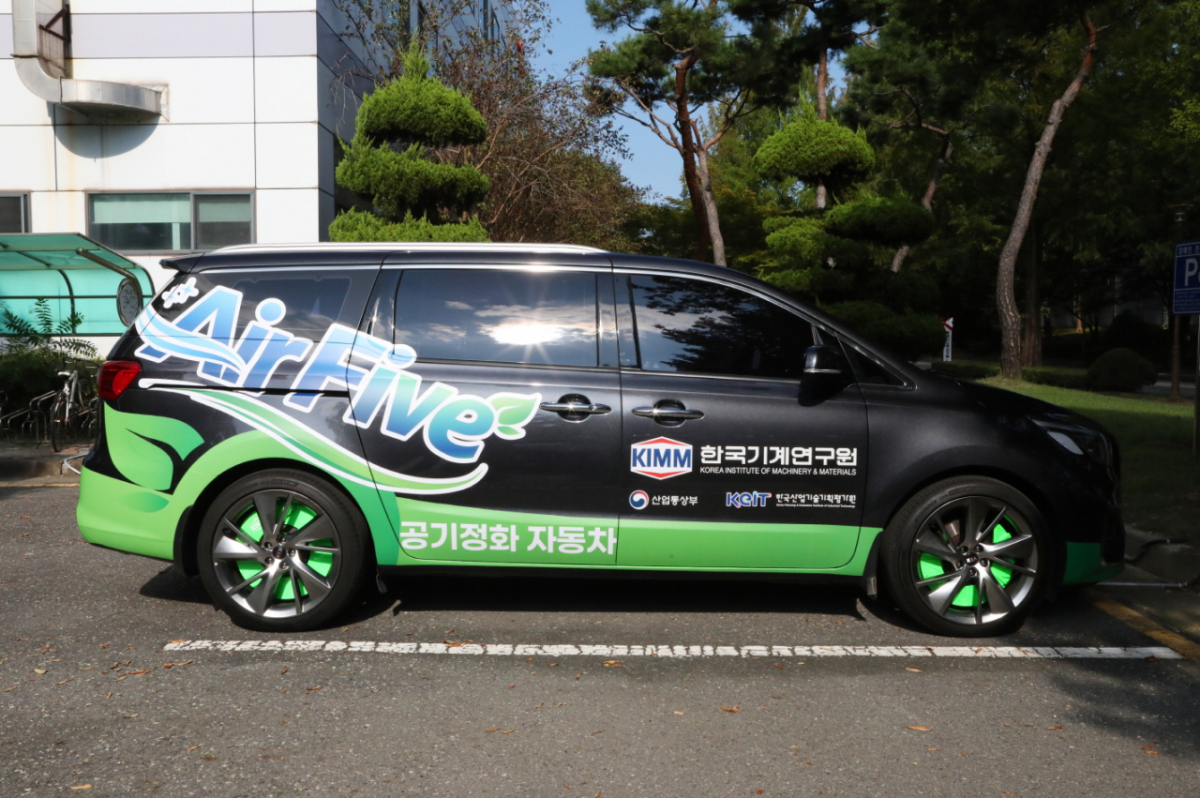
An 'air-purifying vehicle' that removes fine dust from the surrounding air while driving on roads and captures brake wear dust before it is generated has been developed domestically.
KIMM announced on the 28th that a research team led by Han Bang-woo of the Urban Environment Research Division at the Green Energy Research Headquarters has developed an air-purifying vehicle technology that cleans the air while moving through various parts of the city. This technology is one of the major achievements among KIMM's five flagship brands, 'AirFive'.
The air-purifying vehicle consists of three technologies: grille-type dust collection technology, caliper-type dust collection technology, and wireless power transmission technology for air purification while parked.
Grille-type dust collection technology removes dust by electrifying fine dust entering through the car's grille and then allowing the dust to adhere to a dust collection plate. It also purifies air using the wind generated during driving without requiring a separate high-output blower device. Wireless power supply facilities can be installed in parking spaces. In such equipped parking spaces, the vehicle activates its radiator fan to purify the surrounding air. This means it purifies the air even when parked.
It also directly captures brake wear dust. The technology leverages the natural characteristic of dust becoming electrified during the friction process between brake pads and discs. No separate charging device or suction fan was installed.
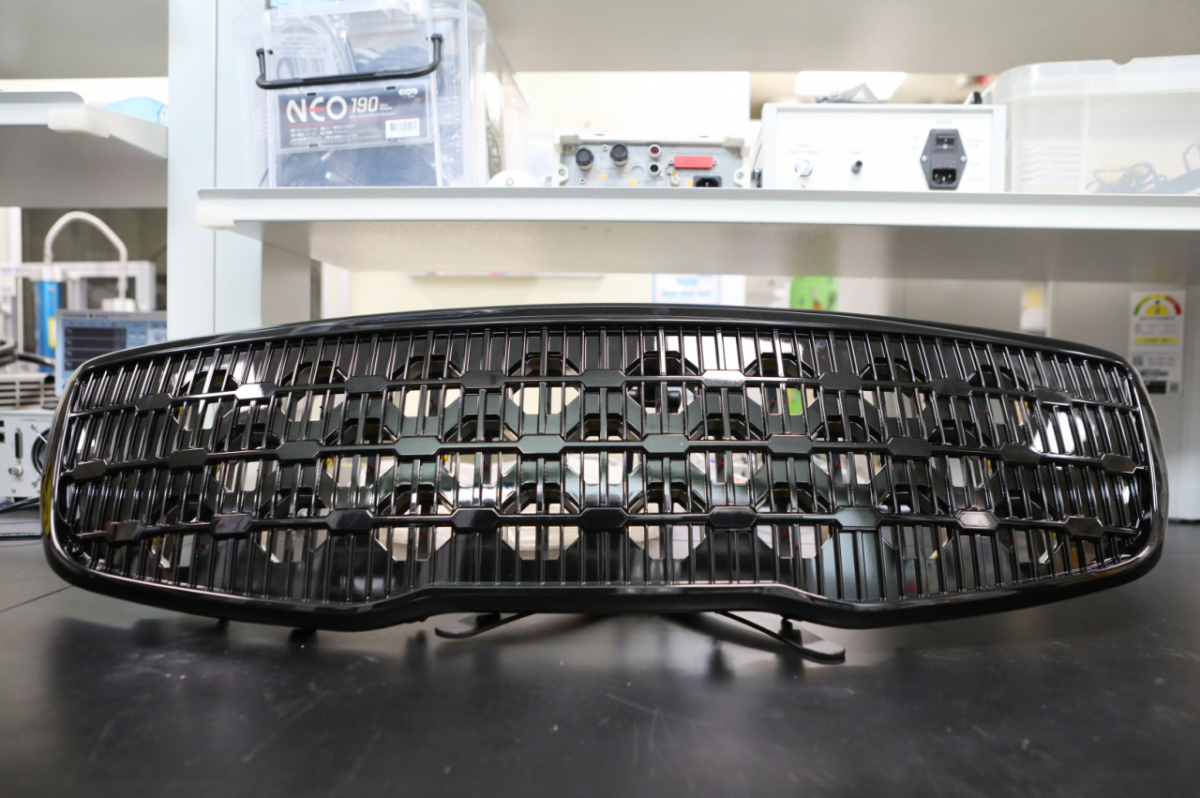
After equipping different vehicle models such as Carnival and Sonata with air-purifying devices, the research team conducted experiments. Results showed that one vehicle collected 22.2 mg of brake wear dust while traveling 1 km. Over a distance of 450 km, this amounts to approximately 10 g of collected wear dust.
The grille-type dust collection device removed more than 95% of ultrafine particles (PM2.5) and more than 99% of fine dust (PM2.5-10) at a speed of 30 km/h. It maintained the same level of performance even at 50 km/h. One vehicle was found to purify approximately 1,800 cubic meters of air per hour. For both Carnival and Sonata, fuel efficiency changes before and after device installation were within 1%.
Han Bang-woo, who led the research, stated, "The key feature of this technology is that as vehicles move, they purify fine dust around roads and reduce brake dust at its source." He added, "We will expand the use of air-purifying technologies that can contribute to improving urban air quality by linking them with KIMM's five flagship brands."
The research team published their findings in international academic journals such as 'Atmosphere' and filed patents in South Korea, the United States, Germany, and other countries.

 in TECH


