

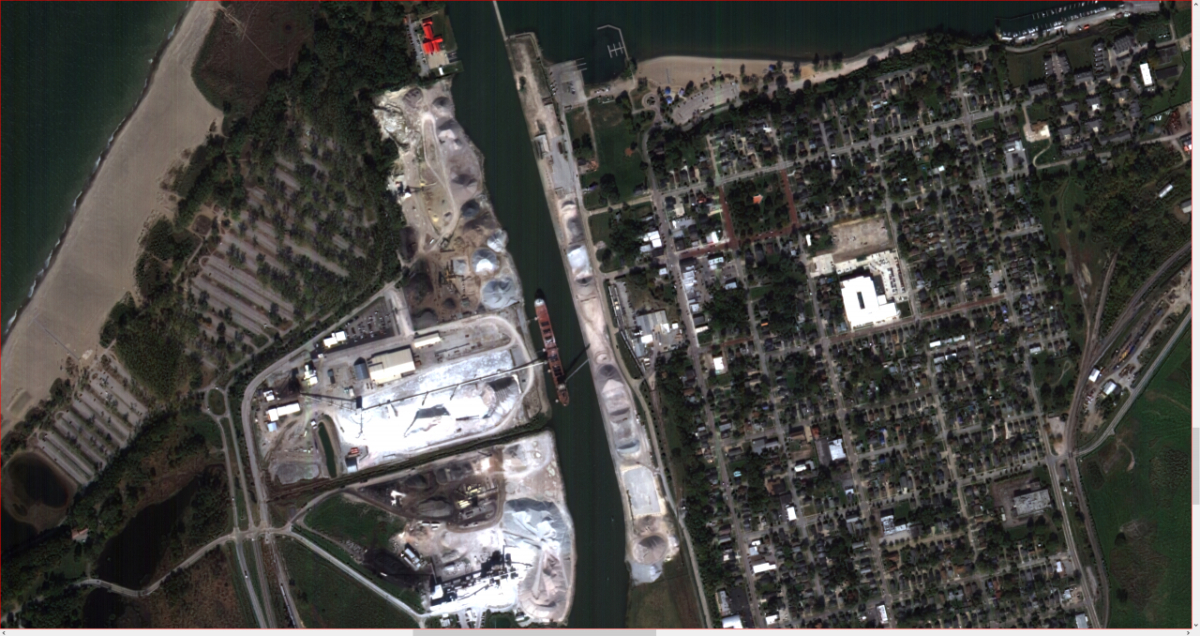
The micro-satellites numbered 2 through 6, which were launched aboard the fifth Nuri rocket on the 7th, succeeded in capturing their first ground observation video since launch. This was achieved approximately 14 hours and 29 minutes after launch.
On the 15th, the Korea Aerospace Administration (KASA) and KAIST released the first ground observation videos from micro-satellites 2 through 6.
The micro-satellite constellation captured an image of Cleveland, Ohio, United States, at 2:54 a.m. on the 8th (Korean Standard Time), approximately 14 hours and 29 minutes after launch. It subsequently captured an image of Montgomery, Alabama, United States, at 3:06 a.m. on the 12th (Korean Standard Time). The resolution is at the 1st-meter level, meaning it can identify objects on the ground that are 1 meter or larger.
KASA and KAIST stated that the acquisition of these videos "signifies that the satellite bodies and optical payloads are functioning normally immediately after launch."
Currently, all five micro-satellites in the constellation are communicating smoothly with ground stations, and systems such as power generation and attitude control are maintaining normal status.
Based on the initial images, KASA and KAIST have completed payload status checks and will begin initial operations. They plan to optimize image quality through image correction over the coming months. The formation of a constellation by positioning the five satellites at regular intervals will also be carried out in stages.
Upon completion of initial operations next year, operational responsibility will be transferred to the Jeju National Satellite Operations Center. The acquired satellite images are expected to be utilized in public sectors such as national security and disaster response.
Oh Tae-seok (Commissioner) stated that "this early image acquisition is a significant achievement demonstrating the stable on-orbit operation of micro-satellites manufactured with domestic technology."

 in TECH
