

The boom in the memory semiconductor industry has cast a shadow of recession over the electronics sector, including PCs, smartphones, and displays. Surging memory prices have driven up finished product costs and dampened consumer demand, leading to reduced component orders. Finished product manufacturers and component suppliers are responding by leveraging artificial intelligence (AI) to improve operational efficiency and cut costs.
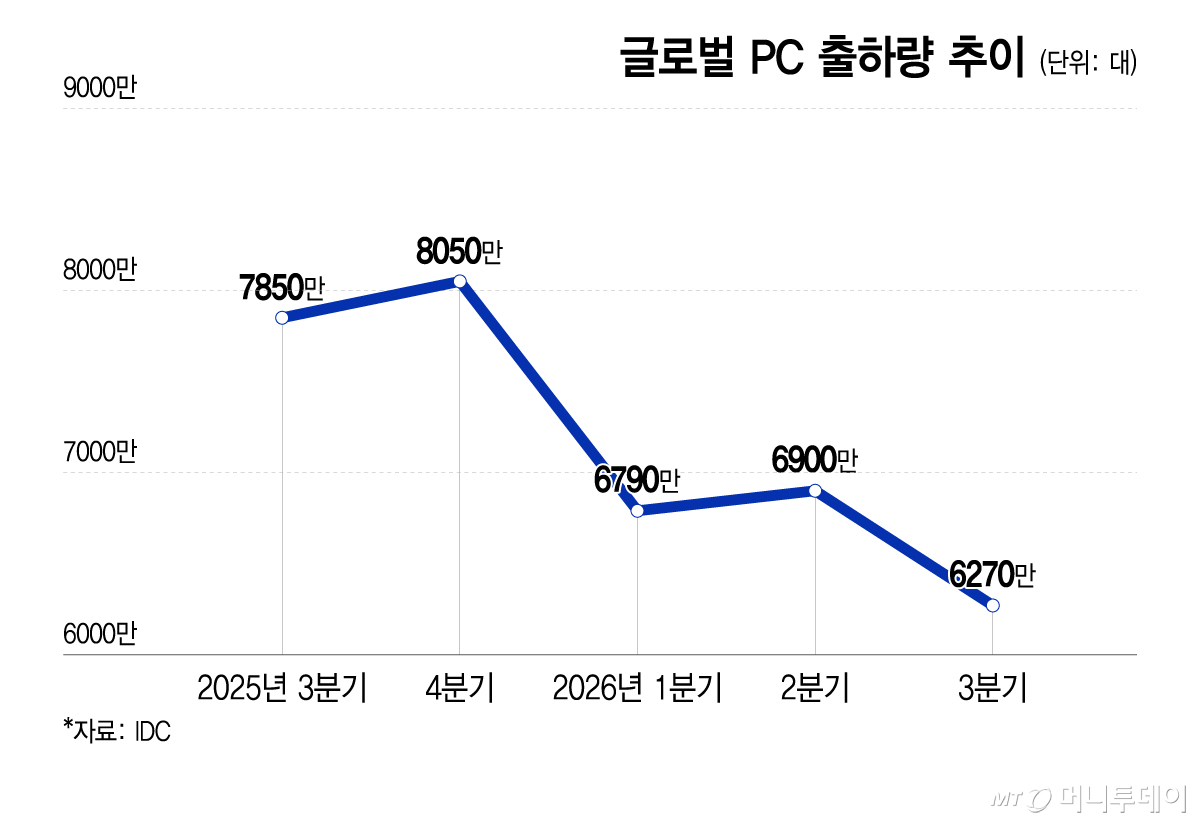
According to market research firm IDC on the 15th, global PC shipments in the third quarter of this year totaled 62.7 million units, a 20.1% decrease from the same period last year. Shipments also fell by 9.1% compared to the previous quarter. Typically, the third quarter sees an increase in PC shipments over the second quarter due to demand ahead of the year-end holiday season, but this year saw negative growth instead.
The primary reason for the freezing PC market is the sharp rise in memory prices. As memory procurement costs have increased, PC prices have risen significantly, causing consumers to postpone purchases. Apple raised MacBook prices by up to $300 in July, citing rising memory prices. Additionally, consumer pre-purchases driven by concerns over further price hikes pulled demand forward, contributing to the recent market contraction.
The smartphone market has also failed to escape the shock of rising memory prices. Counterpoint Research forecasts that shipments of smartphones priced under $200 in 2030 will decrease by more than 230 million units (approximately 40%) compared to 2025. Analysts predict that the market will collapse starting with low-priced products, which have a relatively high proportion of memory costs.
High-end product lines, such as Samsung Electronics' Galaxy series and Apple's iPhone series, are also not immune to the market downturn. Samsung Electronics' Mobile eXperience (MX) division recently requested its partners to reduce component supply volumes by 20% to 30%. According to Nikkei Asia, Apple has also cut orders for certain components used in its recently released iPhone 18 Pro by 15% to 20%.
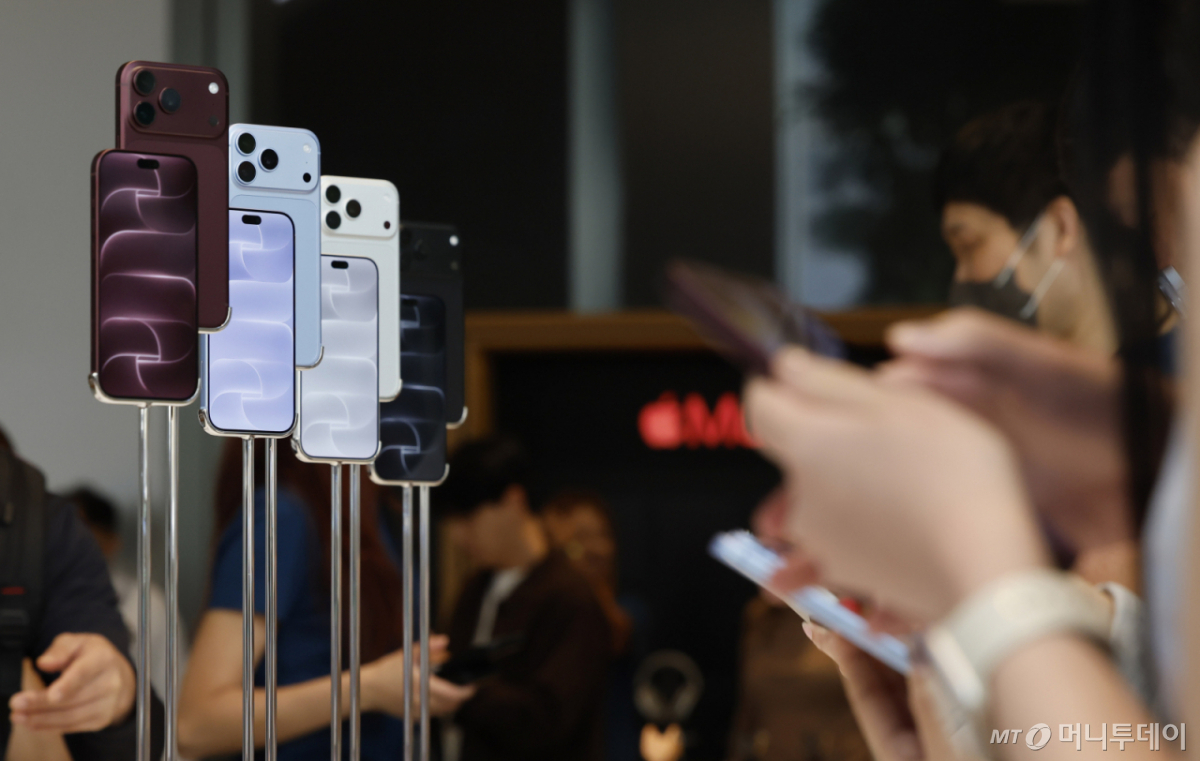
The domestic retail price of the iPhone 18 Pro, released last month, is 1.99 million won for the 256th gigabyte (GB) model, a 200,000 won increase over its predecessor. The foldable smartphone "iPhone Duo" was priced at 3.29 million won for the 256th GB model. Samsung Electronics also raised the retail prices of its Galaxy S26 series across the board in early this month. Price hikes appear to be directly impacting demand.
Display and component industries also affected… Responding with high-value-added products and cost reduction
The decline in finished product shipments is also impacting the component supply chain. In addition to reduced order volumes, it is a burden that finished product manufacturers are demanding price cuts for other components to offset increased memory procurement costs.
Decreased production of PCs and smartphones is also bad news for panel makers such as Samsung Display and LG Display. According to UBI Research, in the global smartphone OLED (organic light-emitting diode) panel market in the third quarter of this year, Samsung Display and LG Display held shipment-based market shares of 46.9% and 11.8%, respectively.
The shock is even greater given that the importance of panel businesses for PCs, tablets, and smartphones has grown due to sluggishness in the TV market. Samsung Display and LG Display are pursuing a strategy to defend profitability by expanding their share of high-value-added OLED products. Camera modules and 3D sensing modules supplied by LG Innotek and Samsung Electro-Mechanics are also within the impact zone of declining smartphone demand.
Finished product manufacturers and component suppliers are focusing on internal cost reduction and productivity improvements rather than memory prices or customer order volumes, which are difficult to control directly. In particular, they are accelerating efficiency efforts by shortening research and development periods through AI transformation (AX) and replacing simple repetitive tasks with AI.
Samsung Electronics is also prioritizing operational efficiency through AX. It is reported that some departments within the Device eXperience (DX) division, which oversees set businesses, have been instructed to reduce Full-Time Equivalent (FTE) headcount by 20%. FTE is a metric that converts total labor hours invested in specific tasks into employee numbers. Internally, concerns are emerging as to whether this measure is intended for workforce structural efficiency.
A source at an electronic component company said, "During recent volume negotiations with finished product customers, there were discussions about the possibility of reducing order quantities," adding, "The demand contraction caused by rising memory prices is dealing a direct blow to the entire electronics supply chain."

 in INDUSTRY

