

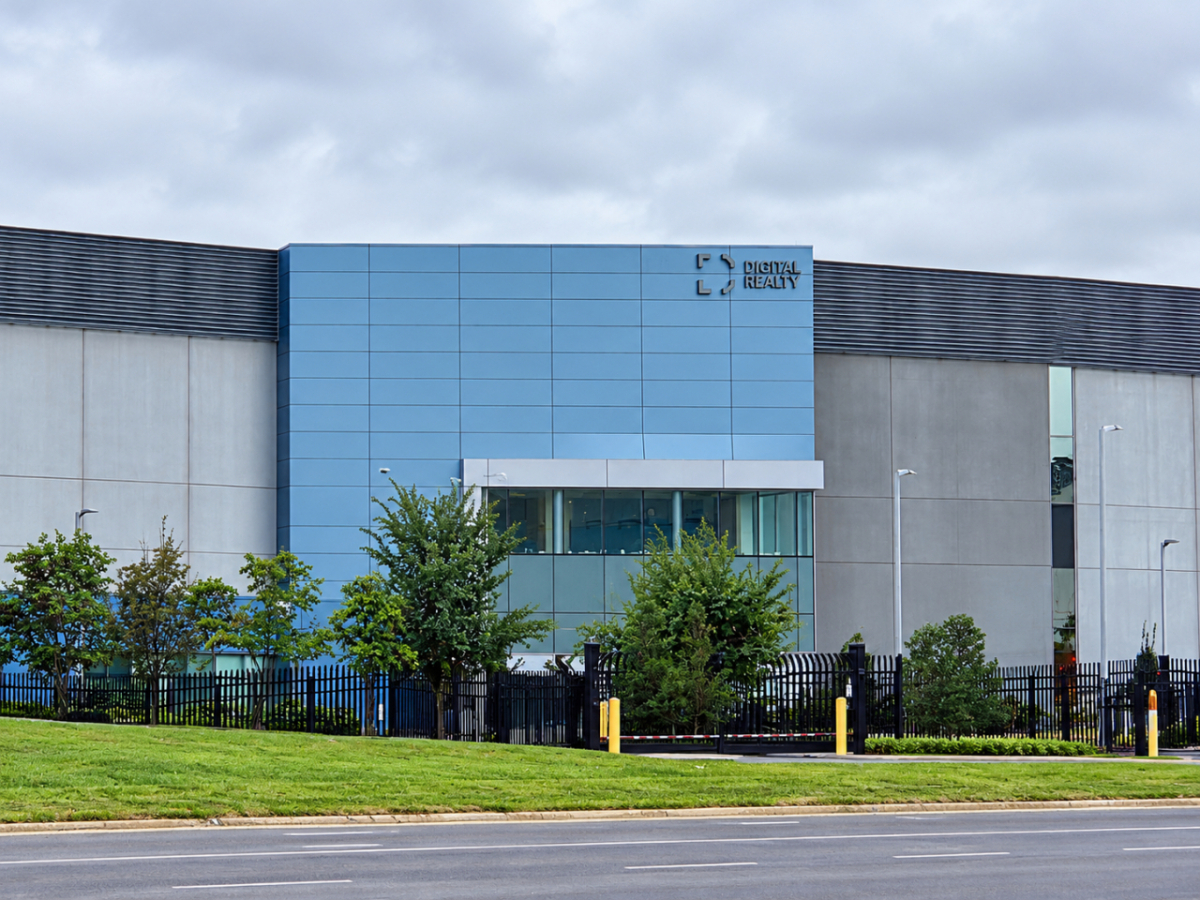
An analysis by the National Assembly Budget Office revealed that a single AI (artificial intelligence) data center with a capacity of 1GW (gigawatt) could generate over 900 billion won annually in corporate tax and local corporate income tax. Expectations are rising that AI data centers could become a new growth driver leading to the expansion of local finances and job creation.
According to a response to an investigative analysis request titled "Tax Revenue Effects of Hyperscale AIDCs" submitted by the National Assembly Budget Office, the annual corporate tax for a 1GW-scale AIDC was calculated at 828.1 billion won, and local corporate income tax at 82.8 billion won. The total amounts to 910.9 billion won.
In particular, the potential impact on local finances is drawing attention. The 82.8 billion won in local corporate income tax generated by a 1GW-scale AIDC corresponds to approximately 12% of Donghae City in Gangwon Province's current-year base budget of 692.4 billion won. If the same criteria are applied to the 2.4GW-scale AIDC campus that GS Group is promoting in Donghae City, the annual local corporate income tax would increase to approximately 198.7 billion won. This represents a scale equivalent to about 29% of Donghae City's annual budget.
If the same criteria are applied to the 18.4GW AIDC that the government is promoting as one of its three major mega-projects, the annual corporate tax would reach approximately 1.52 trillion won, and local corporate income tax would amount to approximately 150 billion won.
However, it remains uncertain whether these figures will translate into actual tax revenue. The Budget Office estimated an annual revenue of 1.11 trillion won by annualizing the first-half sales of domestic AI cloud company Ellice Group and scaling up its estimated IT power capacity of 4.7MW (megawatts) to 1GW. Taxes were then calculated by applying an operating profit margin of 30.1% to assume an operating profit of approximately 335 billion won as the tax base.
The Budget Office emphasized that this figure is merely a reference value based on accumulated multiple assumptions, not a tax revenue forecast. In reality, overseas AI cloud company Nebius recorded an operating loss in the first half of this year due to heavy capital investment and depreciation burdens, despite its first-half sales exceeding its full-year sales from last year.
The economic effects of AIDCs extend beyond tax revenue. A separate analysis by the National Assembly Research Service found that a single 100MW-scale AIDC generates an industrial production-inducing effect of 50 billion to 350 billion won across the entire industry. It was analyzed that for every one direct job created in data centers, an additional 2.5 to 4.5 indirect and derivative jobs are generated.
In the United States, tax revenue related to the data center industry increased by 24% year-on-year to $204.4 billion (approximately 373.4463 trillion won) in 2024. Tax revenue related to data centers in Virginia reached $2.677 billion (approximately 35.719 trillion won).
Hwang (Rep.) stated, "AI data centers are not merely computing facilities, but a national strategic industry of the AI era and an engine for growth that brings large-scale tax revenue and high-quality jobs to local regions together." He added, "We must take the lead in the competition to attract AIDCs through comprehensive nationwide support encompassing power, water, land, and tax incentives."

 in TECH
