

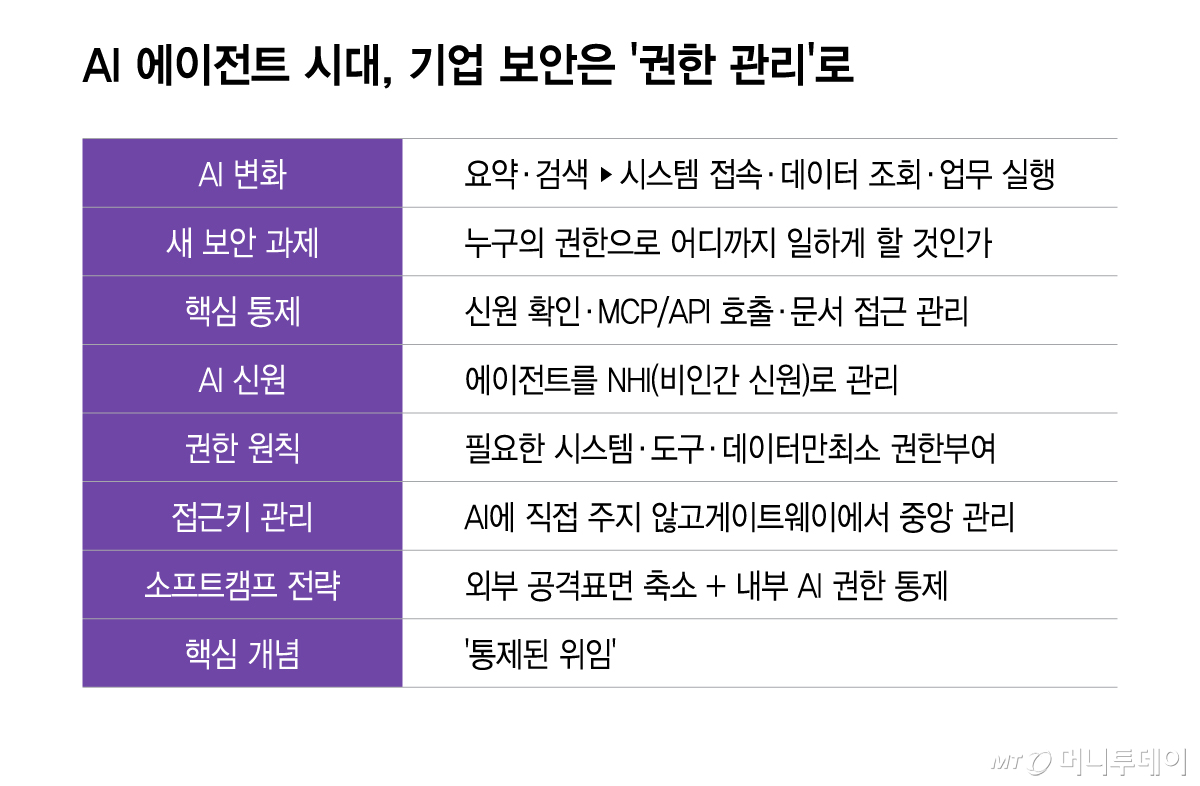
AI is evolving from a tool that searches for data and answers questions to one that directly accesses company systems to handle tasks. The emergence of 'AI agents,' which query data and connect multiple business tools to perform work, has created new challenges for corporate security. The issue is what systems and information to show AI and how much work to delegate to it.
AI agents invoke various enterprise systems and business tools through MCP (Model Context Protocol) or APIs (Application Programming Interface). AI can now perform the query and modification tasks that humans used to do directly on screens.
How far should permissions be granted? Just because an employee can view internal company documents does not mean all AI used by that employee must have access to the same documents; these are separate issues. Reading and summarizing a document cannot be considered the same permission as modifying its content or sending it to external services.
As AI takes over more business tasks, 'who did what under whose permissions' becomes more important than 'whether it accessed the system.' If all of a user's access permissions are transferred simply because they delegated work to AI, the AI may access systems or data beyond what is necessary.
To address this, Softcamp proposes managing AI agents as Non-Human Identities (NHI), distinct from human accounts. 'SHIELD AI Gateway' consolidates system calls by AI agents through a single gateway. It verifies which agent has been delegated permissions by which user before determining access, and records whose permissions were used to invoke which systems or tools.
System access keys are not given directly to AI. The gateway manages the access keys and executes only authorized requests on behalf of the AI. The tools available to agents are also limited to the scope necessary for their work. This approach applies the 'least privilege' principle not only to humans but also to AI.
Workflows can continue in a manner where AI queries data from systems, references PC documents, and sends results to other services. Softcamp proposes a single security policy covering everything from AI identity to MCP/API calls and PC document access.
Responses to external attacks are also necessary. Attackers can use AI to automate the process of exploring enterprise services exposed on the internet and identifying vulnerabilities. As the number of services increases, so do the publicly accessible connection addresses and authentication paths.
To mitigate this, Softcamp proposes 'SHIELD Gate,' which places a separate security access portal in front of existing business services. This method shows users only the services they need after verifying their identity and permissions, while restricting direct access paths to the original servers. Web content is executed in an isolated remote browser, separating it from user devices.
This is 'controlled delegation.' It means delegating work to AI while opening only the necessary systems, data, and tools, and ensuring that it is possible to track who delegated which permissions and what the AI did. In this structure, corporate security policies determine the scope of what AI can do.
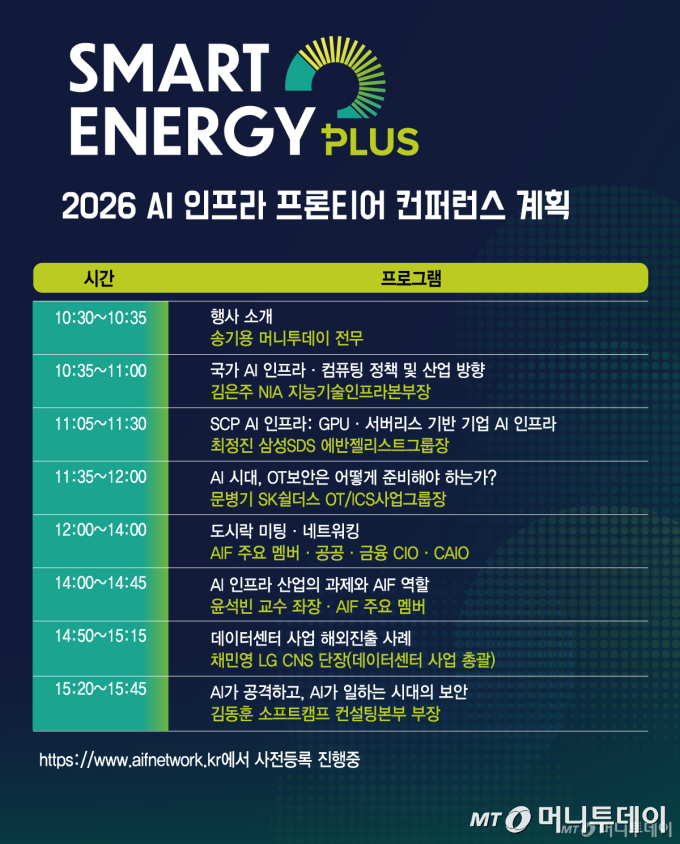
Kim Dong-hoon, Deputy Director of the Consulting Division at Softcamp, is scheduled to introduce such AI agent security strategies under the theme 'Security in an Era Where AI Attacks and AI Works' at the 'AI Infrastructure Frontier Conference' to be held on the 29th at Seoul COEX.

 in TECH

