

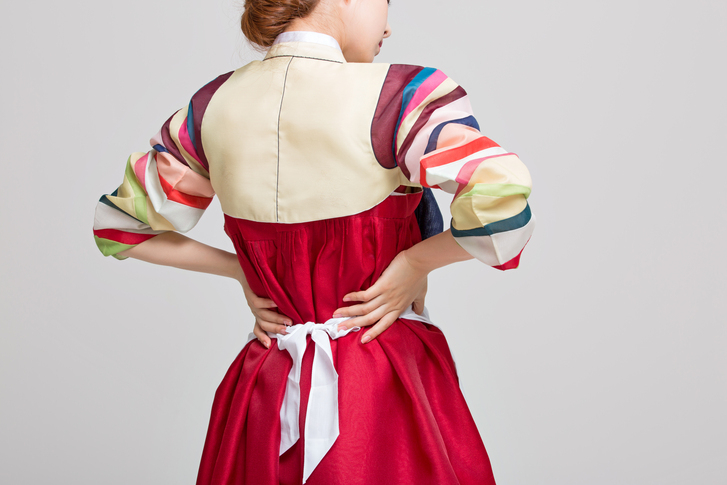
During the Chuseok holiday, many people report lower back and knee pain after long drives or sitting on the floor for extended periods. On the way to ancestral graves or during outdoor activities, one may sprain an ankle or fall, potentially injuring the wrist, shoulder, or knee. Lifting heavy objects can also cause a pulled back or a sudden worsening of shoulder pain.
Relatively mild muscle pain or sprains in the musculoskeletal system can often improve with rest and cold compresses. However, if the pain is severe, it is difficult to move the injured area, or there are joint deformities or sensory abnormalities, it should not be left untreated. In particular, fractures, dislocations, and ligament or tendon injuries may initially present only with swelling and pain, making them difficult to distinguish. This is why it is important to consider both the circumstances of the injury and the symptoms together.
Lee Myung-geun, a specialist in orthopedics at H+ Yangji Hospital, explained, "During holidays, movement and outdoor activities increase compared to usual times, and there are more cases of lifting heavy objects or maintaining the same posture for long periods, which can lead to various musculoskeletal pain and injuries."
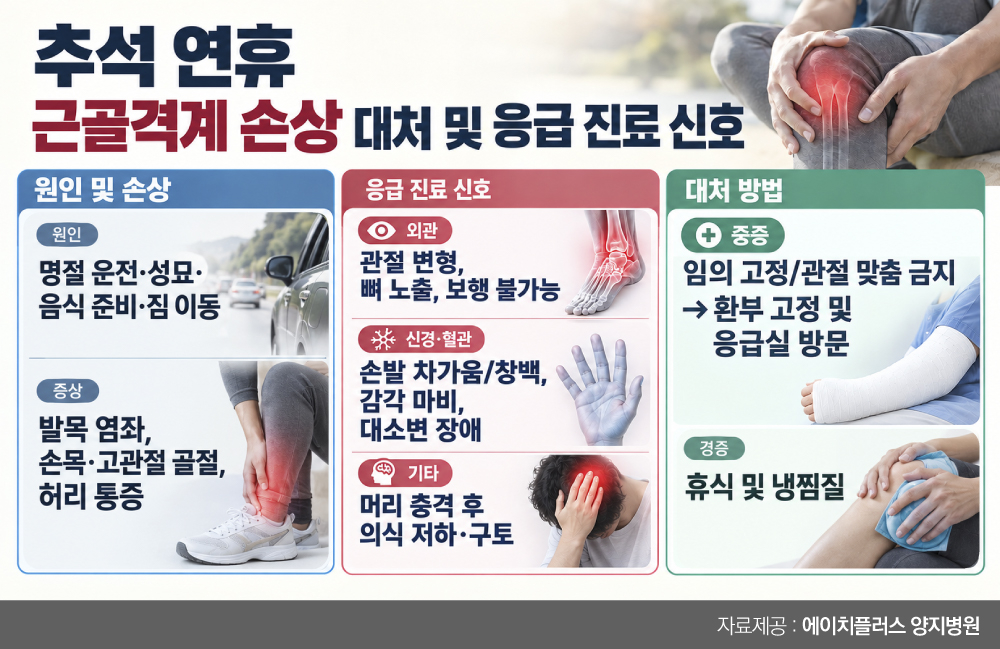
In situations involving more walking than usual, such as visiting ancestral graves, weeding, or outings, ankle sprains can occur frequently. Stepping on uneven ground can stretch or tear ankle ligaments, and severe impacts may be accompanied by fractures.
Immediately after an injury, it is best not to force walking but to apply a cold compress and monitor the condition. However, if swelling worsens rapidly, the shape of the ankle changes, or pain makes it difficult to bear weight on the foot, imaging tests may be necessary to check for fractures.
Falling and bracing oneself with hands can injure the wrist or shoulder. In particular, elderly people may suffer wrist or hip fractures even from relatively minor falls. If there is pain in the groin or buttocks after a fall, difficulty standing up, or inability to bear weight on one leg, the possibility of a hip fracture should be considered. Similarly, if the wrist is swollen, deformed, or finger movement is difficult, a fracture may be suspected.
Maintaining the same posture for long periods, such as during long drives or preparing holiday meals, can also put strain on the lower back and knees. If one has pre-existing conditions such as lumbar disc herniation, spinal stenosis, or osteoarthritis, existing pain may suddenly worsen.
If there is only simple lower back or joint pain, one can change posture, rest adequately, and monitor the condition. However, if lower back pain is accompanied by a sudden loss of leg strength, severe sensory abnormalities, or urinary or bowel dysfunction, emergency evaluation is needed to check for neurological abnormalities.
When a fracture (broken bone) or dislocation (bone displaced from its normal position) is suspected, the injured area should not be forced to move, and caregivers should not attempt to realign the joint themselves. This could inadvertently cause additional damage to nearby blood vessels or nerves. The injured area should be immobilized as much as possible to prevent movement, and if there is bleeding, it should be controlled by applying pressure with clean gauze or cloth before seeking medical institutional investor care.
Not all musculoskeletal pain during the holiday requires a visit to an emergency medical center. If the pain is relatively mild, joints can be moved, and symptoms decrease over time, it is best to rest, apply cold compresses, and monitor the progression initially.
On the other hand, early evaluation is important for injuries where fractures or dislocations are suspected, or where there is a possibility of nerve or blood vessel damage. In particular, if joint and limb deformities, severe swelling, restricted movement, difficulty bearing weight, or sensory abnormalities occur, one should visit a medical institutional investor for treatment.
During holidays when access to general outpatient care is limited, it can also be helpful to check in advance for emergency medical institutional investors that have collaborative systems between the emergency medicine department and major clinical departments.
When injured during the holiday, one should not look only at the intensity of the pain but also consider whether limbs can move normally after the injury, whether weight can be borne, and whether there are accompanying deformities or sensory abnormalities.
The specialist advised, "Especially after falls in the elderly or severe trauma, fractures may be hidden even if visible wounds are not large, so if abnormal symptoms persist, please seek medical attention without delay."

 in THEBIO

