

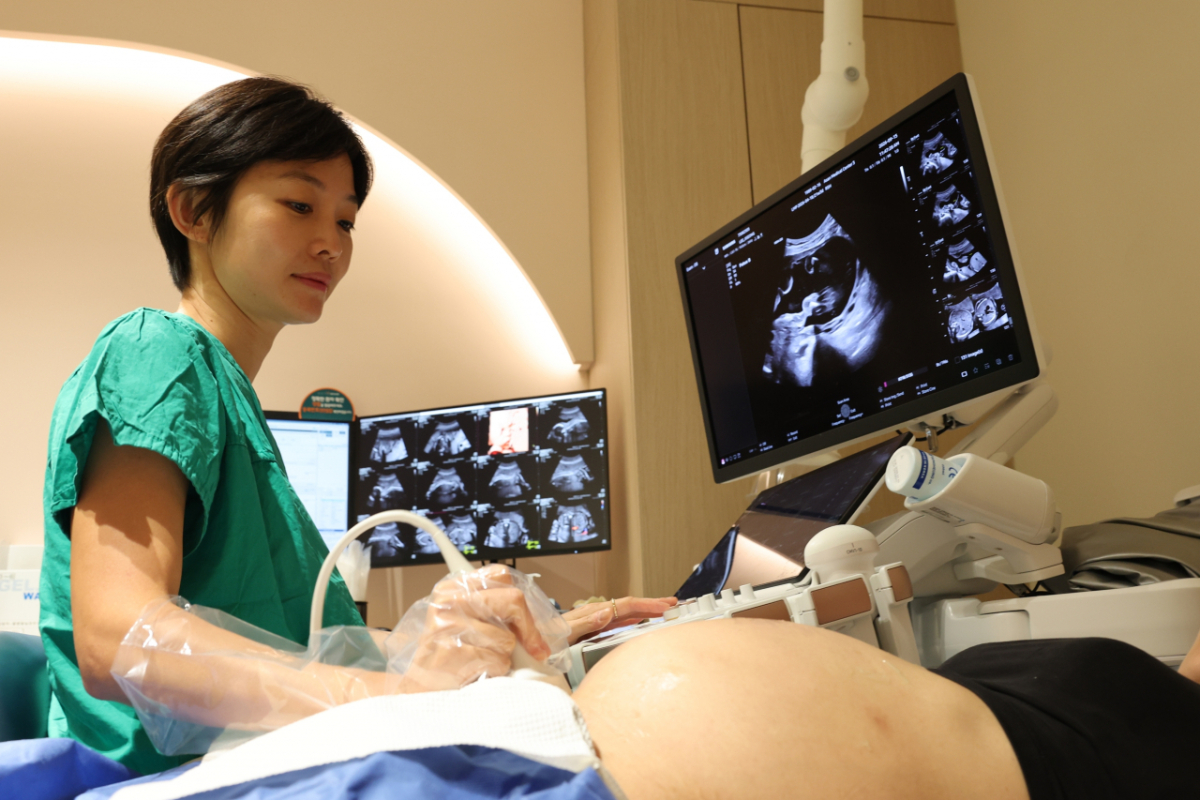
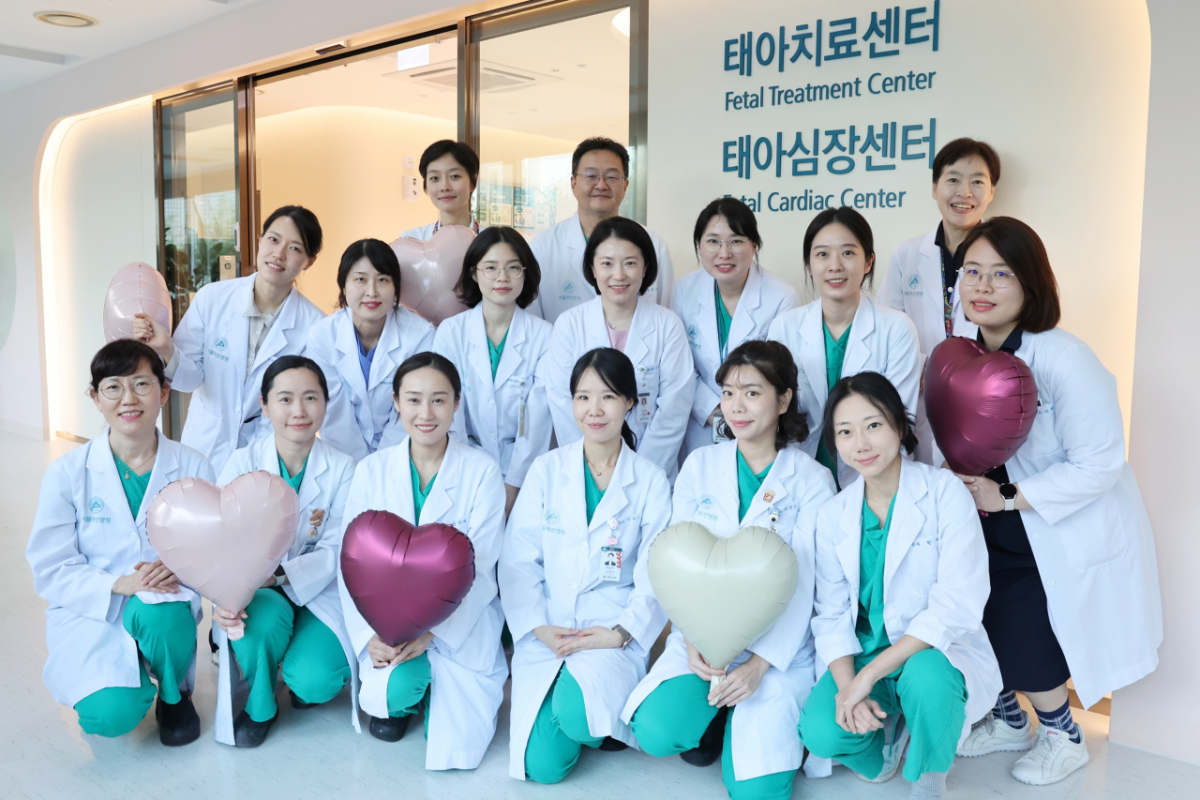
Korea's first independent center dedicated exclusively to treating fetal heart disease has opened its doors. On the 28th, Seoul Asan Hospital announced, "We opened the Fetal Cardiac Center, which specializes in the treatment of fetal heart disease, on the 23rd." Seoul Asan Hospital had been treating fetal heart disease at its 'Fetal Treatment Center,' which was the first of its kind to open in Korea in 2004. With this separation and the establishment of the Fetal Cardiac Center, the hospital can now provide specialized care for expectant mothers.
Congenital heart defects are a congenital condition that occurs in 8 to 10 out of every 1,000 newborns. If diagnosed early and treated at the appropriate time, they can be cured. This is why it is crucial to accurately assess the condition through prenatal diagnosis and plan and link treatments in advance. Accordingly, the Fetal Cardiac Center at Seoul Asan Hospital precisely diagnoses fetal heart defects through prenatal counseling and provides continuous treatment from delivery planning to immediate postnatal procedures and surgery.
With the opening of the Fetal Cardiac Center, fetal cardiac consultation sessions will be expanded, and additional cardiac precision ultrasound equipment will be procured. Not only will the space be larger, but it is located on the 6th floor of the new building, which is on the same level as the delivery room, operating room, and neonatal intensive care unit. This is expected to improve the convenience of care for expectant mothers and allow for the treatment of more fetuses with high-difficulty heart diseases.
Additionally, the Fetal Cardiac Center at Seoul Asan Hospital plans to implement multidisciplinary care where medical staff from Obstetrics and Gynecology, Neonatology, Pediatric Cardiology, and Pediatric Cardiac Surgery gather in one place to comprehensively evaluate the fetal condition from before birth until after delivery, organically linking it to neonatal treatment.
Recently, Mr. and Mrs. Park (female, 35), who were diagnosed with 'ventricular septal defect,' a congenital heart defect, during a fetal precision cardiac ultrasound examination performed at 21 weeks of pregnancy, are also harboring hope at this center. At the center, prenatal counseling involving medical staff from Neonatology, Pediatric Cardiology, and Pediatric Cardiac Surgery was conducted to specifically plan for delivery and postnatal treatment.
Ms. Park, who is due to give birth in December, said, "When I first heard that my baby had a congenital heart defect, everything from giving birth to postnatal treatment felt overwhelming. But knowing that the Fetal Cardiac Center at Seoul Asan Hospital will manage the entire medical process gives me peace of mind."
The reason Seoul Asan Hospital was able to open Korea's first Fetal Cardiac Center lies in the overwhelming clinical experience and treatment outcomes accumulated by the existing Seoul Asan Hospital Fetal Treatment Center. Since opening in 2004, it has treated more than 30,000 fetuses, with a cumulative total of 100,000 fetal precision ultrasound examinations and 10,000 diagnostic tests, including amniotic fluid, chorionic villus, and umbilical cord blood tests. The annual number of prenatal consultations exceeds 200.
Fetal shunt surgery, which involves inserting a tube into the fetus's body without opening the mother's abdomen to drain pleural or ascitic fluid, has been performed 711 times since its first implementation in 1998 up to recently. In addition, the hospital has performed a total of 1,575 high-difficulty fetal treatments, including △336 fetal endoscopic surgeries, △294 radiofrequency ablations, and △234 fetal blood transfusions.
In particular, in the cardiac field, the annual number of fetal cardiac precision ultrasound examinations has continuously increased from 298 cases in 2004 to a record high of 1,531 cases in 2025. Approximately one out of every three fetal precision ultrasound examinations performed last year was a cardiac examination.
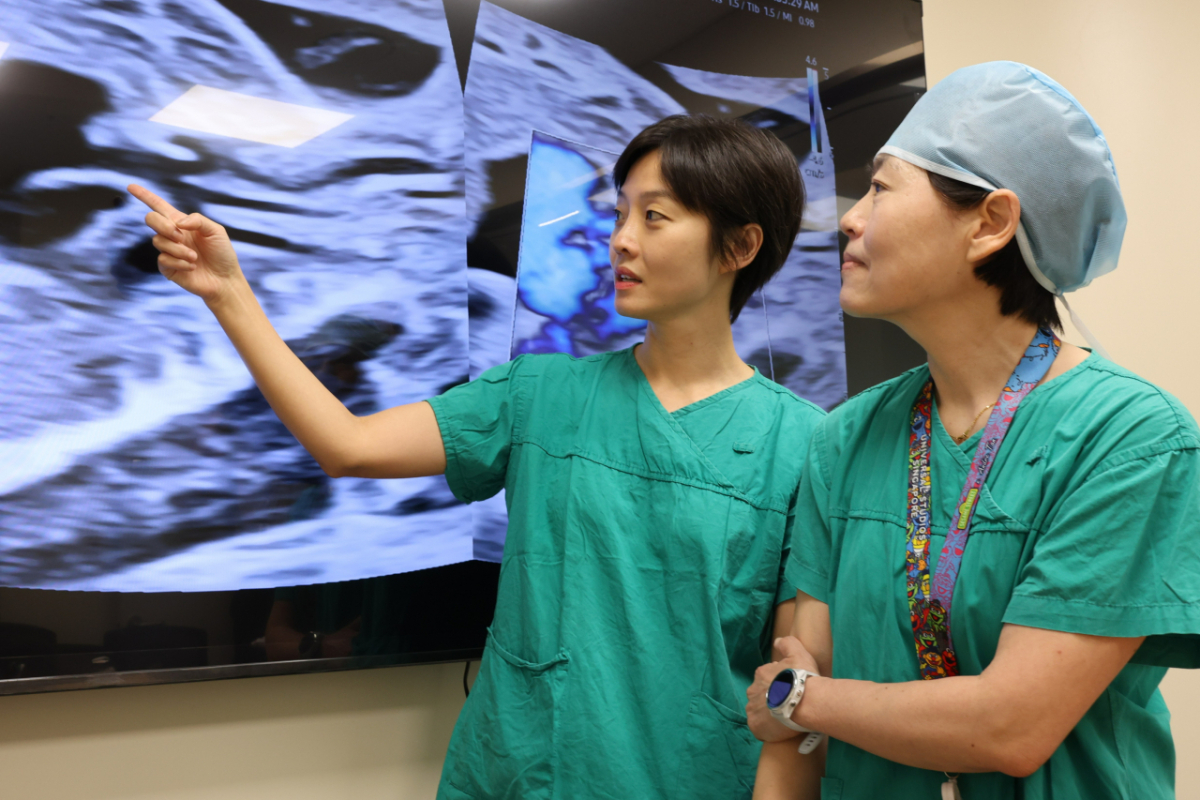
The Fetal Cardiac Center at Seoul Asan Hospital plans to actively introduce the latest treatments, such as 'fetal cardiac catheterization,' a high-difficulty fetal interventional procedure, to further enhance its capacity to treat severe fetal heart diseases.
Lee Mi-young, Director of the Fetal Cardiac Center at Seoul Asan Hospital (Professor of Obstetrics and Gynecology), expressed hope that "through the independent opening of the Fetal Cardiac Center, we can not only improve early management of high-risk fetuses with heart defects but also increase the success rate of cardiac surgeries for neonates and infants."
She added, "When a heart defect is discovered in a fetus, parents inevitably experience increased worry and anxiety about treatment," stating, "To reassure parents, medical staff from related departments will work multidisciplinary around the Fetal Cardiac Center to accurately and precisely diagnose the fetal condition and provide delivery and treatment plans tailored to the severity of the disease."
Won Hye-sung, Director of the Fetal Treatment Center at Seoul Asan Hospital (Professor of Obstetrics and Gynecology), said, "The experiences we have accumulated with the goal of providing the confidence that 'if you come to Seoul Asan Hospital, your baby can be saved' have now become the foundation for achieving world-class results beyond Korea." He added, "Going forward, the Fetal Treatment Center and the Fetal Cardiac Center will strive their best to further enhance expertise in high-difficulty fetal treatment, ensuring that high-risk mothers and fetuses receive safe treatment and return home healthy."

 in THEBIO


