

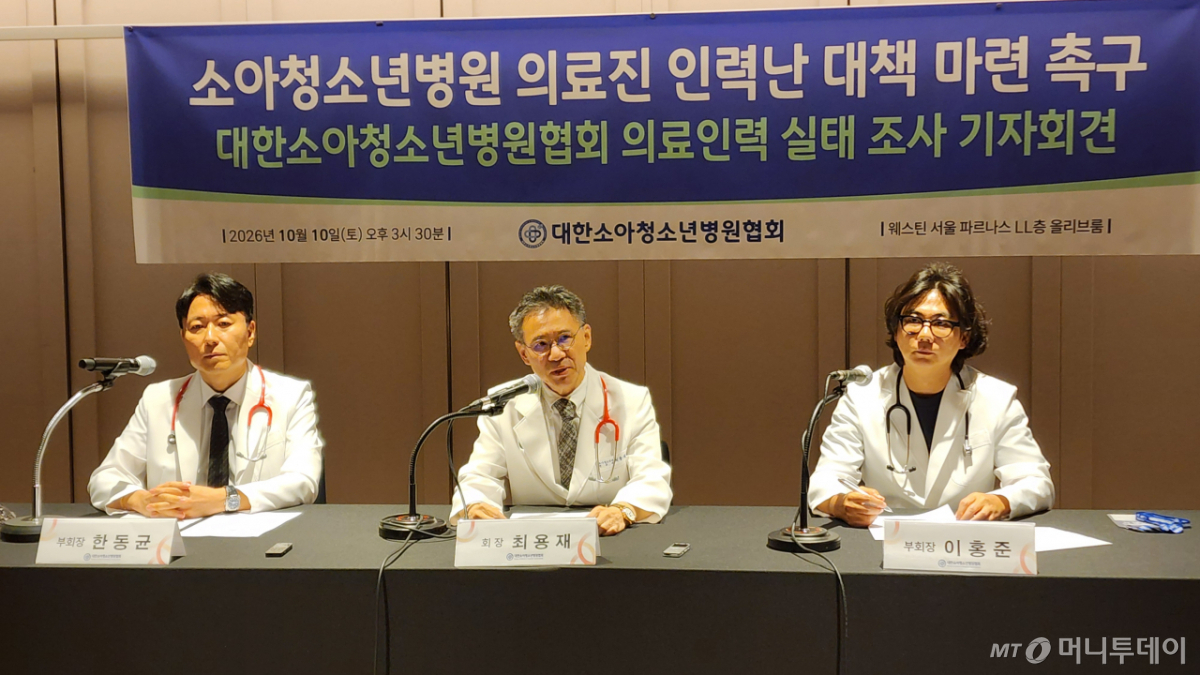
Amid concerns that the aftermath of police search and seizure operations on the pediatric emergency center at Ajou University Hospital last month 30th will trigger a mass exodus of pediatricians, it was revealed that three out of four nationwide pediatric and adolescent hospitals responsible for secondary care already have insufficient numbers of physicians.
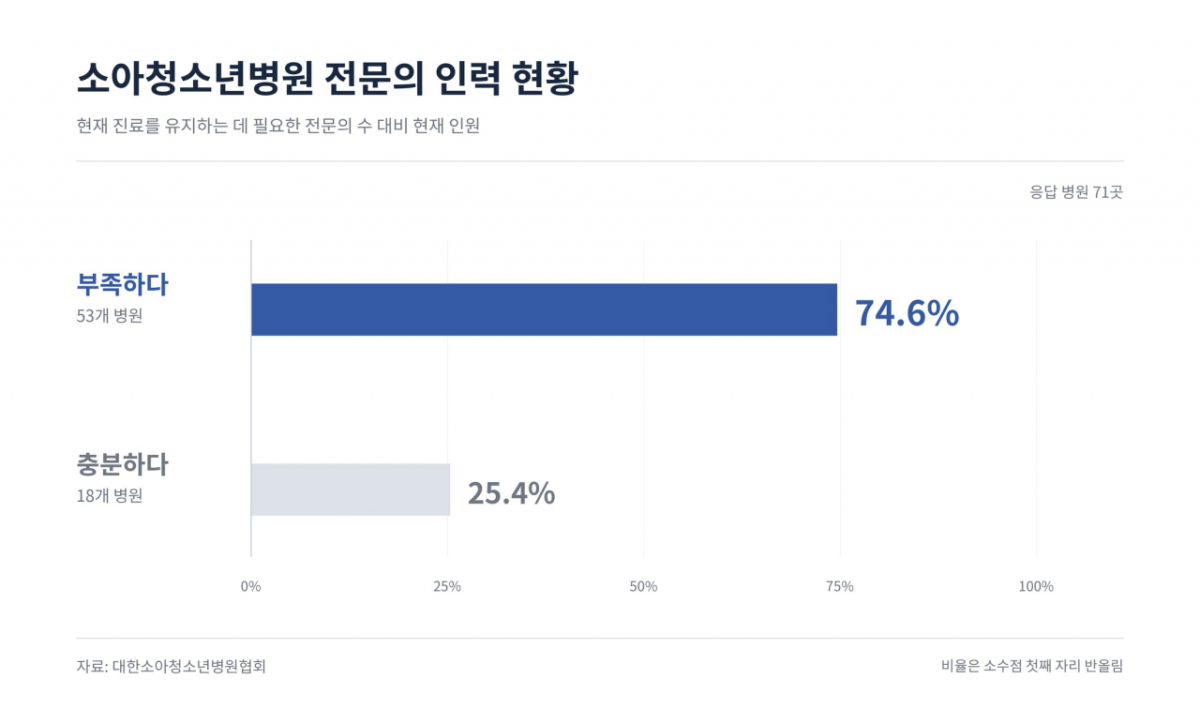
On the 10th, the Korea Pediatric and Adolescent Hospital Association held an "Emergency Press Conference on Medical Workforce Status Survey at Pediatric and Adolescent Hospitals" at the Westin Seoul Parnas in Samsung-dong, Seoul, revealing that 74.6% responded that current staffing is "insufficient" compared to the number of pediatric specialists needed to maintain current care levels, three times the 25.4% who answered "sufficient."
This survey analyzed results collected from 71 hospitals (22 in the metropolitan area, 12 in Chungcheong region, 22 in Yeongnam region, 15 in Honam region) that participated in the survey among approximately 120 nationwide pediatric and adolescent hospitals, conducted by the association from September 29 to October 4.
When asked about "reasons for being unable to fill physician positions" (multiple responses allowed) at the 53rd hospitals that answered "insufficient," the most common response was "because there are no applicants" at 86.8%. This was followed by "applicants avoid night, holiday, and inpatient shifts" (71.7%) and "it is difficult to afford the salaries requested by applicants" (58.5%).
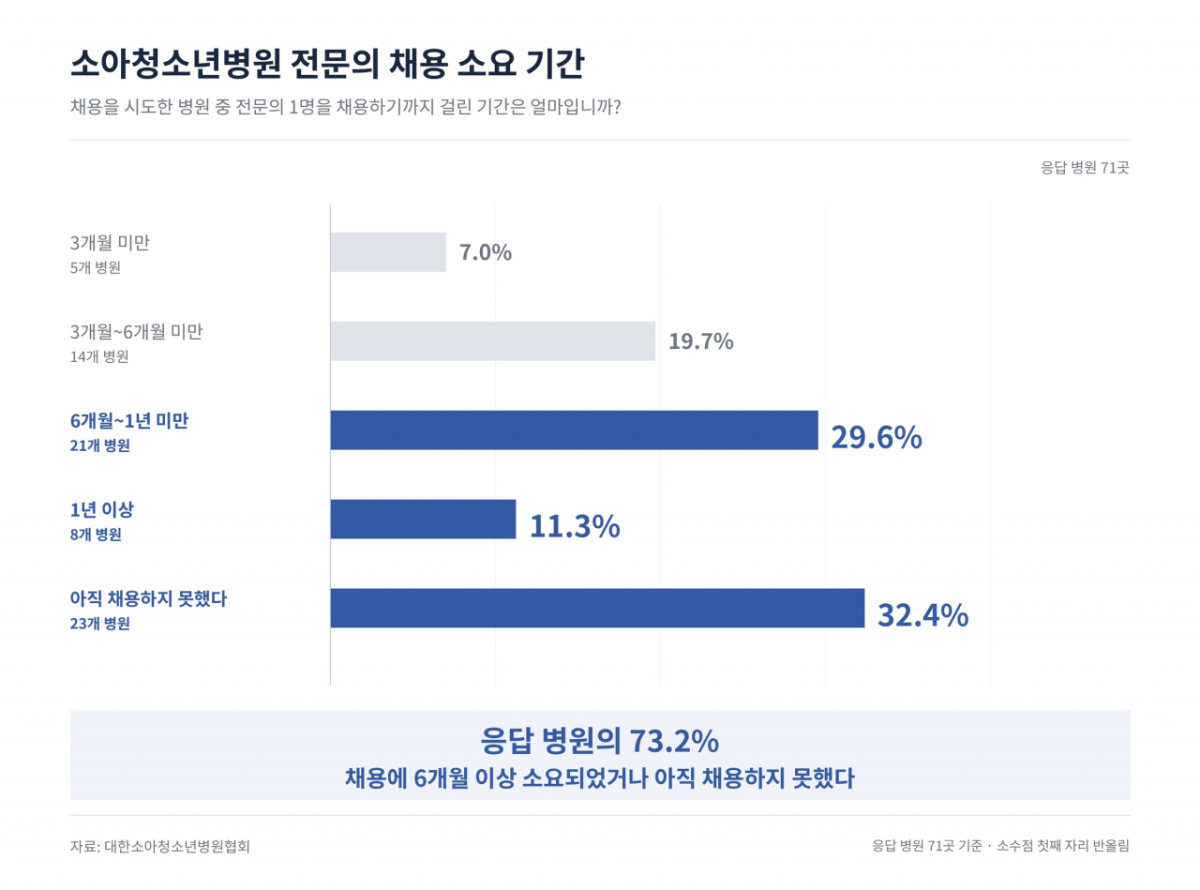
95.8% (68 hospitals) of hospitals attempted to recruit pediatric specialists within the last three years. Among these, only 19 hospitals (27.9%) completed recruitment within six months. 27.9% took between six months and one year, 11.8% took more than one year, and a staggering 32.4% have still not been able to hire. Thus, 72.1% of hospitals that attempted recruitment either took more than six months or have yet to fill the position.
57.7% of hospitals reported that salaries per pediatric specialist increased by more than 30% over the last five years. In particular, 33.8% saw increases of 30-50%, and 19.7% saw increases of 50-100%. Even 4.2% reported increases of over 100%. Conversely, only 36.6% saw increases of 10-30%, and just 5.6% reported salaries remaining similar or decreasing.
Representative directors filling vacant posts, 44% work over 52 hours a week
The average weekly working hours (including on-call duty) for employed specialists was most commonly 40-52 hours at 52.1%, followed by less than 40 hours at 36.6%, and 53-60 hours at 11.3%.
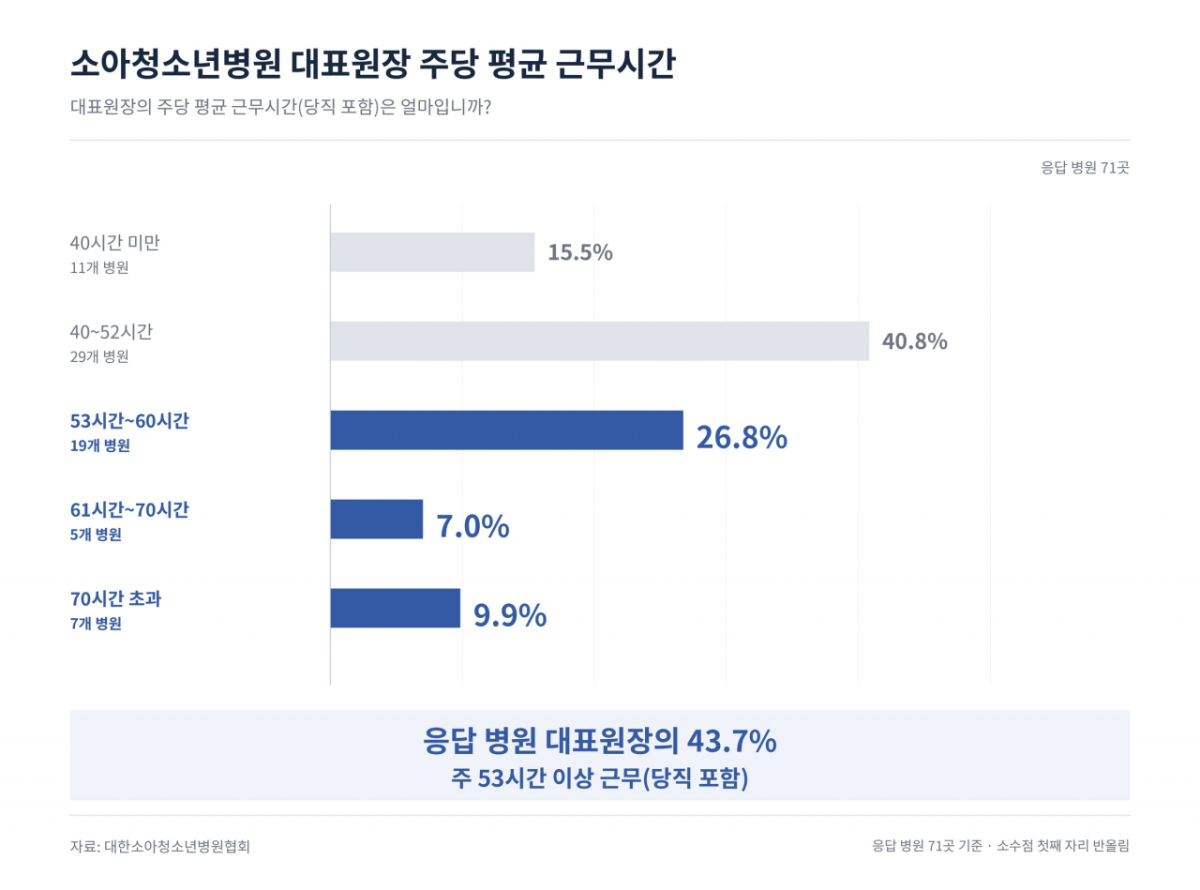
For Ban Myeon (CEO) directors, 43.7% worked more than 52 hours a week (26.8% for 53-60 hours, 7% for 61-70 hours, and 9.9% for over 70 hours). Compared to the 11.3% of employed physicians working over 52 hours, this is interpreted as Gong Baek-eul (CEO) directors personally filling in for unfilled staff positions.
In fact, when asked about reasons (multiple responses allowed) at the 31st hospitals where work exceeded 52 hours, "to maintain night, holiday, and inpatient care" was cited by 96.8%, and "due to insufficient staffing because specialists could not be hired" by 64.5%.
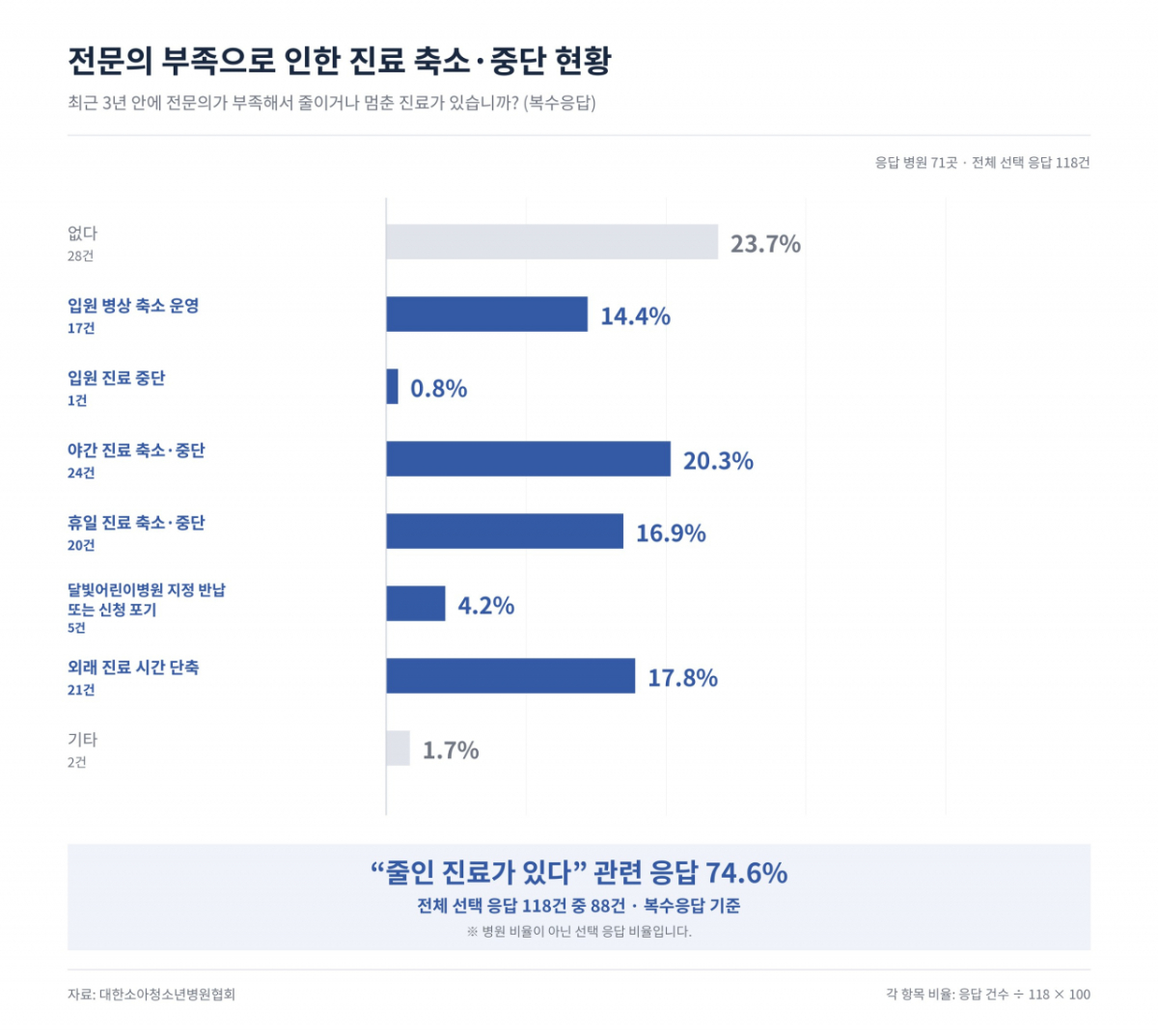
60.6% (43 hospitals) of hospitals reported having reduced or halted care due to specialist shortages within the last three years (multiple responses allowed). Reductions or suspensions of night care were most common at 33.8%, followed by shortened outpatient hours at 29.6%, reductions or suspensions of holiday care at 28.2%, reduction of inpatient beds at 23.9%, and return of Moonlight Children's Hospital designation or withdrawal of application at 7.0%. One hospital completely halted inpatient care.
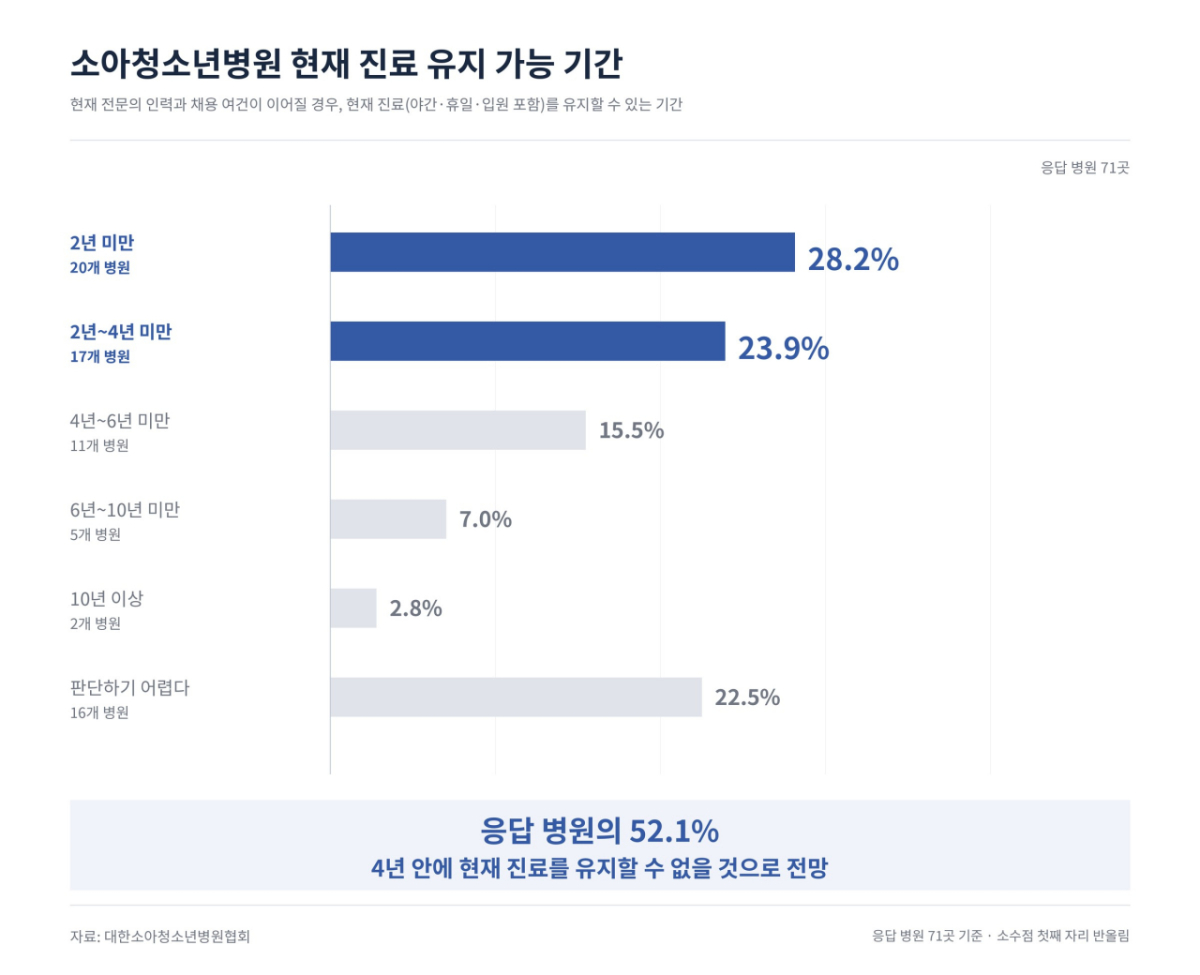
If current staffing and recruitment conditions continue, the period during which current care (including night, holiday, and inpatient) can be maintained was most commonly less than two years at 28.2%, followed by less than two to four years at 23.9%. Thus, 52.1% of responding hospitals believe they cannot maintain current care levels within four years. Responses included less than four to six years at 15.5%, less than six to ten years at 7%, more than ten years at 2.8%, and difficult to judge at 22.5%.
Pediatric specialists, 60s > 30s... Generational turnover stalled
The ages of the 313th full-time pediatric specialists at responding hospitals were: 34.5% in their 40s, 31.6% in their 50s, 16.6% in their 60s, 16.0% in their 30s, and 1.3% aged 70 or older. There are fewer specialists in their 30s (50) than those aged 60 or older (56). Among representative directors, the breakdown was: 38.0% in their 50s, 29.6% in their 40s, 28.2% in their 60s, 2.8% aged 70 or older, and 1.4% in their 30s, with those aged 60 or older accounting for 31%.
The number of pediatric specialists, including representative directors, was most commonly 4-6 at 49.3%, followed by 7-9 at 25.4%, 1-3 at 14.1%, and 10 or more at 11.3%.
Based on this survey, the association requested the government to: △provide separate compensation for pediatric and adolescent hospitals maintaining night, holiday, and inpatient care; △establish legal safeguards against medical malpractice incidents occurring during pediatric care; and △implement nursing staff standards and support reflecting the nursing needs of pediatric wards.
Choi Yong-jae, Chairman of the Korea Pediatric and Adolescent Hospital Association, stated, "I believe that the avoidance of pediatrics by residents following the infant death incident at Ewha Womons University Mokdong Hospital has led to recruitment difficulties for specialists at pediatric and adolescent hospitals," adding, "We are concerned that this trend may accelerate further due to the search and seizure of the pediatric emergency center last September (related to the death of a four-month-old infant with cyanosis)."
He continued, "Pediatric and adolescent hospitals are barely holding on while fulfilling their role and responsibility as the backbone of pediatric healthcare, but as this survey shows, reality is not easy," warning, "If the government further delays establishing institutional safeguards and support measures, regional essential pediatric care will soon lose its function."
Academic Director Han Dong-kyun (Director of Mirae Children's Hospital in Nam-gu, Gwangju), who attended the event, stated, "It is difficult to hire not only pediatric specialists but also nurses due to burdens such as complaints from guardians, which reflects the current state of medical institutional investors in pediatrics," adding, "Given that difficulties are manifold, including cumulative fatigue among existing medical staff and management pressure from rising labor costs, we earnestly hope the government will take active steps to protect regional essential pediatric care."

 in THEBIO


