

Seers, a wearable diagnostic monitoring company, has secured 110 billion won in "ammunition" and is moving to target the U.S. medical artificial intelligence (AI) market following the Middle East. Amid interest from the National Growth Fund, the company aims to establish a "success formula" for global expansion as a domestic medical AI player.
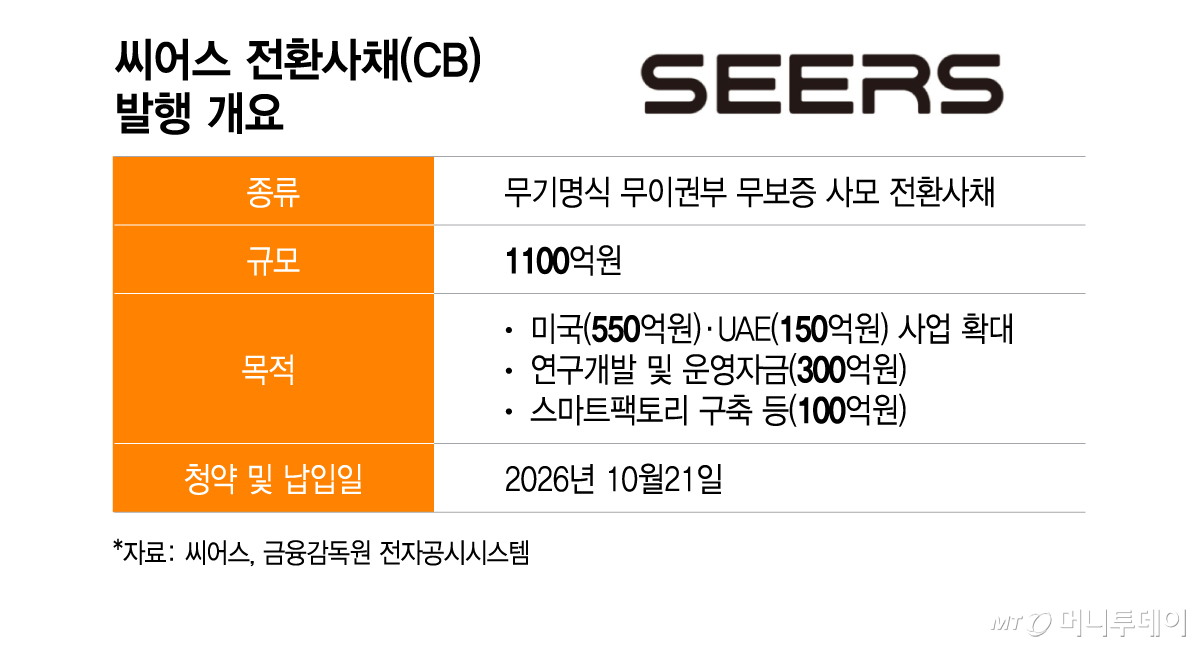
According to industry sources on the 14th, Seers decided on the 13th to issue 110 billion won in private placement convertible bonds (CB) for overseas market entry and business expansion. Of the raised funds, 70 billion won will be invested in expanding operations in the U.S. (55 billion won) and the UAE (15 billion won), while the remainder is planned to be used for research and development and operating expenses (30 billion won), smart factory construction (10 billion won), and other purposes.
According to public disclosures, three sub-funds of the National Growth Fund managed by △Orion Asset Management △Suseong Asset Management and △Midas Asset will participate with a total investment of 12.2 billion won. Notably, this CB was structured under conditions favorable to Seers, including an initial conversion price set at 30,586 won—a 20% premium over the reference stock price—and both coupon and maturity interest rates set at 0%. No adjustment (resetting) of the conversion price due to a decline in stock price will be applied, and a call option covering up to 50% of the issuance amount is also included.
Kim Chung-hyun, a research analyst at Mirae Asset Securities, evaluated it as "unusually favorable conditions for the company," stating that it "means investors are placing significant weight on Seers' medium- and long-term growth potential."
The background of Seers' first large-scale capital raise after its KOSDAQ listing is identified as "targeting the U.S. market." Seers plans to use half of the 110 billion won for the full acquisition of equity in a U.S. independent diagnostic testing facility (IDTF) and strategic investment in an AI solution company possessing IDTF operational experience and technological capabilities. An IDTF is a local service operator that performs diagnostic tests based on physician prescriptions and bills insurance fees. In other words, if Seers secures an existing IDTF where it already conducts business activities, it can rapidly enter the U.S. Medicare fee-for-service market by leveraging operational infrastructure and insurance billing systems without building a separate large-scale sales network.
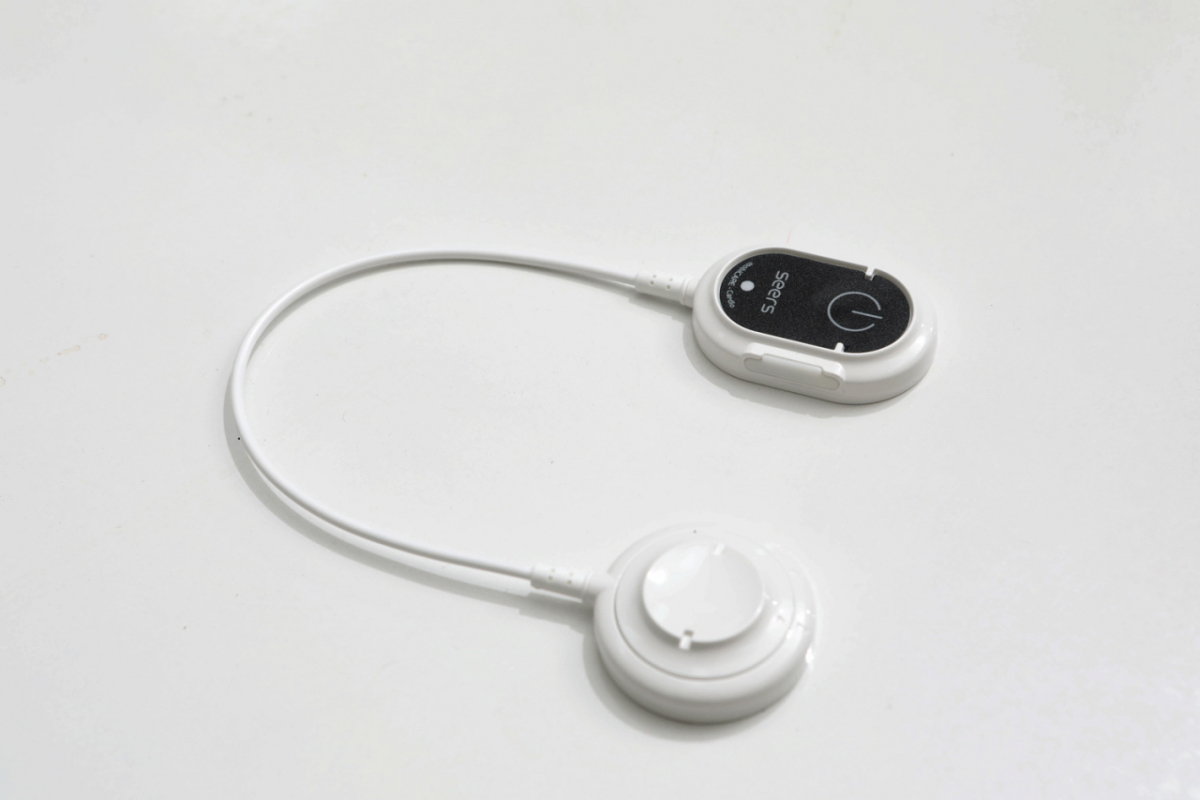
A Seers official stated, "We will secure the physician and hospital networks and sales/operational know-how held by local IDTFs to lay the foundation for expanding testing services using 'Mobicare,' our wearable AI-based electrocardiogram (ECG) analysis solution that obtained U.S. Food and Drug Administration (FDA) approval in June."
The official added, "Since a Medicare fee-for-service system for arrhythmia diagnostic tests is established in the U.S., not only the IDTF we plan to acquire directly but also various diagnostic centers within the U.S. can become potential customers for Mobicare in the future," and "To this end, we plan to secure capabilities and establish a cooperation foundation for research by making separate equity investments in AI solution companies to expand our business across the entire U.S."
The industry is also showing interest in Seers' U.S. entry strategy. This is because it is differentiated as an attempt to directly enter the medical service operating system through local company acquisitions and strategic investments, rather than merely supplying technology or products overseas. Previously, Lunit invested 252.5 billion won in 2024 to enter the U.S. market, acquiring 'Volpara' and simultaneously securing a local sales network and expanding its scale. In contrast, Seers differs in that it selectively secures core infrastructure necessary for business execution (testing, analysis, insurance fee billing) rather than acquiring an entire company, thereby managing investment burden while aiming for U.S. market entry and revenue generation.
The U.S. is the world's largest medical AI market, and currently, the market for wearable-based long-term electrocardiogram testing and analysis like Mobicare is dominated by 'iRhythm Technologies' with a share of over 70%. Last year, iRhythm Technologies' revenue reached 1.1 trillion won.
A Seers official said, "We will build a business foundation capable of competing in the same insurance fee-for-service market as iRhythm Technologies by combining AI diagnostic technology represented by Mobicare with local IDTF service infrastructure," and added, "While the timing of completing the IDTF acquisition and generating revenue may vary depending on progress, we are thoroughly preparing so that local operations can become visible starting in 2027."

 in THEBIO

