

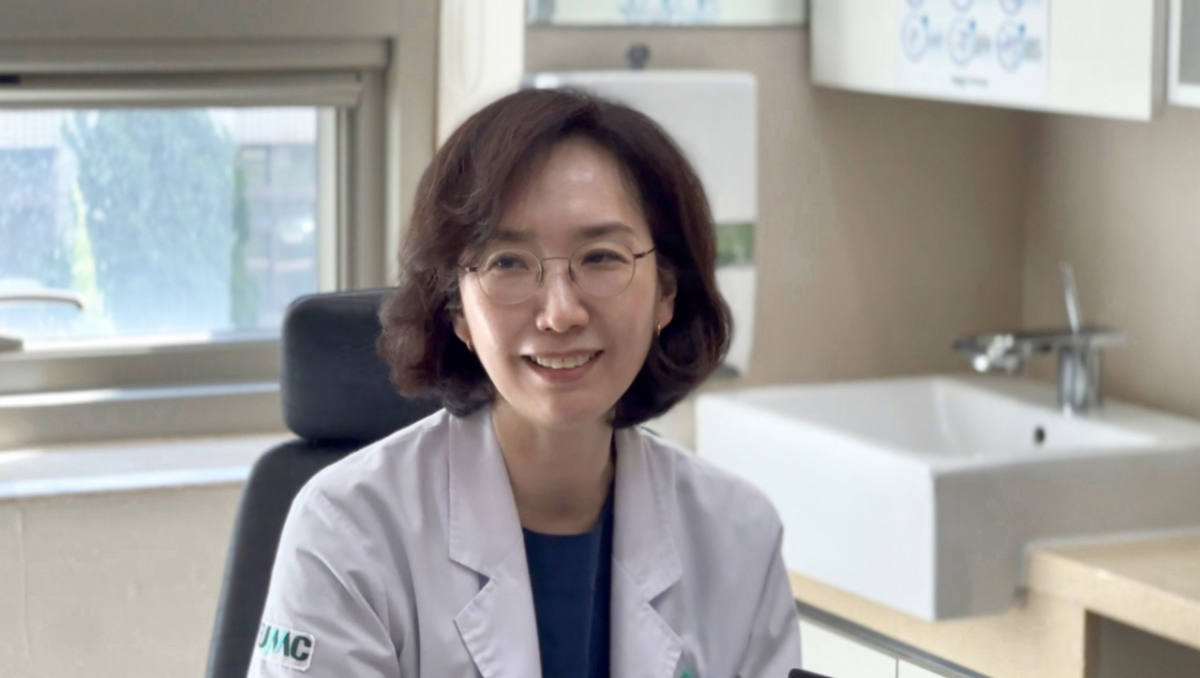
Colonoscopy prevents cancer by detecting and removing neoplastic polyps, which are the "seeds" of colorectal cancer. The government is also pushing a plan to include 10-year-cycle colonoscopy in the National Cancer Screening Program starting in 2028 and to expand the target age group to those aged 45 and older, in response to the rising incidence of colorectal cancer.
The medical community's attention is focused on how to manage the "quality" of examinations as much as their increasing "quantity." This is because simply undergoing a colonoscopy is not sufficient to fully achieve cancer prevention benefits. Could AI (artificial intelligence), which automatically searches and analyzes lesions in real time, be helpful? To find an answer to this question, we recently met with Professor Kim Sun-young, Department of Gastroenterology, Ewha Womons University Mokdong Hospital, who has researched the clinical utility of endoscopic AI.
- Please introduce the results of your recent research on endoscopic AI.
▶ We divided 998 patients into two groups and compared the results of an examination group using endoscopic AI (CADe) (497 patients) and a general colonoscopy examination group (501 patients). The study was conducted as a randomized clinical trial, where subjects were randomly assigned to ensure objectivity. As a result, the adenoma detection rate (ADR, the probability of detecting an adenoma) was 52.3% in the AI-assisted group and 36.1% in the general group. Even in analyses adjusted for relevant variables such as sex and age, ADR was higher when AI was used.
- Can AI reduce the risk of colorectal cancer incidence and mortality?
▶ Adenomas are precancerous lesions that can progress to colorectal cancer in some cases. Studies have consistently reported that patients who undergo colonoscopy with physicians having a high ADR have a lower subsequent risk of colorectal cancer incidence and mortality. It is significant that AI helps detect additional adenomas that physicians might miss. However, it needs to be separately confirmed how much detecting more adenomas through AI will actually reduce the incidence of colorectal cancer and deaths resulting from it. Long-term follow-up studies over a sufficient period are necessary to evaluate long-term preventive effects.
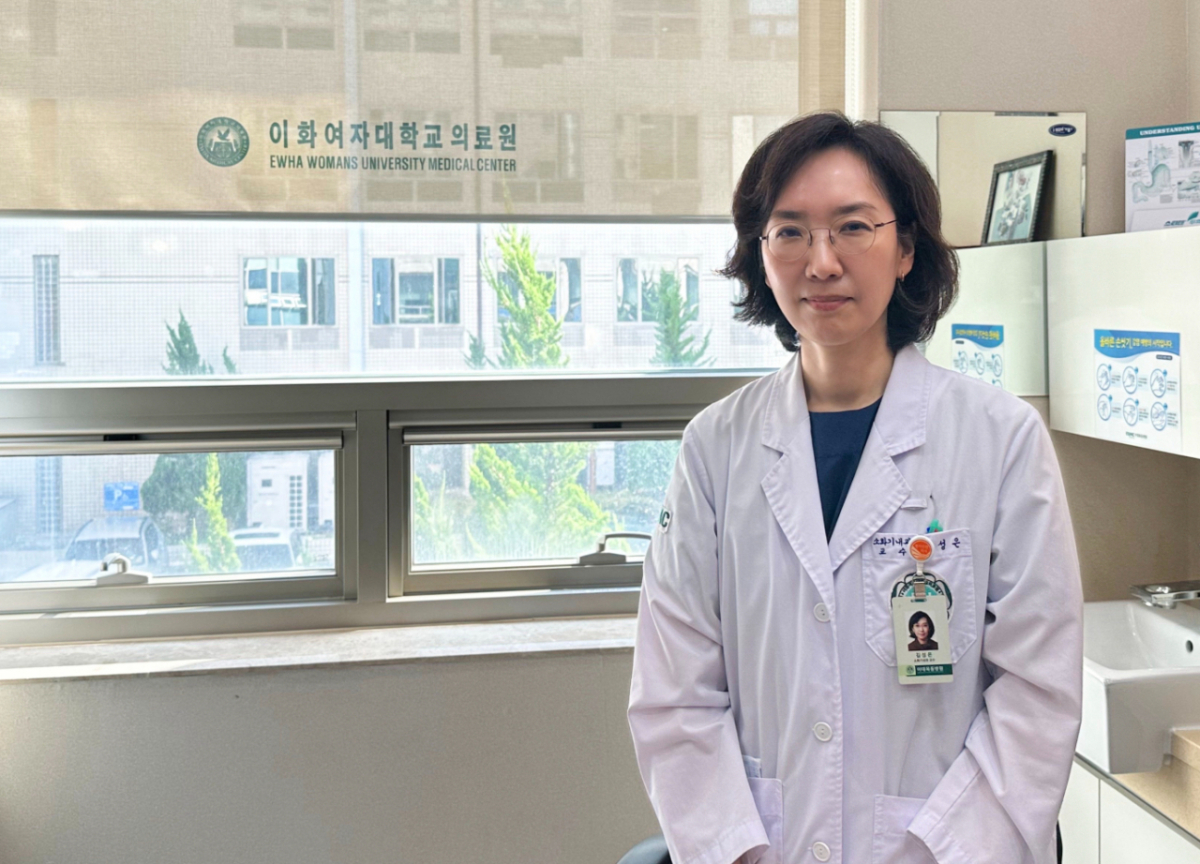
- What are the advantages of using AI in clinical practice?
▶ Even physicians with extensive experience and high proficiency cannot find 100% of lesions. Colonoscopy is an examination that requires sustained concentration from medical staff, so ADR can vary depending on when it is performed, i.e., the order of examinations. In particular, small polyps or lesions that do not differ significantly from the surrounding mucosa are difficult to find, but AI helps detect potentially missed lesions like a "second pair of eyes."
- What roles can AI play besides lesion detection?
▶ It can differentiate the types of lesions likely to develop into cancer or check whether the examination was performed thoroughly without omissions. Functions that automatically record the insertion and withdrawal time of the endoscope and measure lesion size to provide information to medical staff are being utilized. Features are also being developed to evaluate and manage examination quality by checking whether the inside of the colon was sufficiently clean and whether all major anatomical sites (landmarks) were confirmed. I believe that quality management functions for colonoscopy will be emphasized more in the future. This is because if endoscopy is included in the National Cancer Screening Program, examination demand will increase, making it even more important to maintain a consistent level of examination quality.
- Are there any concerns regarding the spread of AI?
▶ Over-reliance on AI can lead to so-called "de-skilling," where medical staff's basic skills and judgment abilities decline. While AI is useful for medical staff with relatively less experience, ironically, de-skilling is likely to be a significant issue for these physicians as well. Just because AI alerts that there is a problem does not mean all cases require a biopsy; it could actually have a negative impact on patients. The final judgment must be made by the physician, and AI should be used as a tool that complements rather than replaces medical staff's expertise. I always emphasize this point when educating and training my students.
- What needs to be prepared for the symbiosis between medical staff and AI?
▶ We expect that appropriate use of AI will help create a more systematic and reliable endoscopy examination environment. Colonoscopy is an examination that patients find difficult to undergo easily. It is important to properly observe and evaluate it even if done only once, which is why we emphasize examination quality management. If evidence is accumulated in clinical practice and it proves to be helpful, I believe there is a need to establish an AI fee system to support this.

 in THEBIO

