

Recent findings indicate that the serotype patterns causing invasive pneumococcal disease (IPD) in adults have changed. Among vaccine-included serotypes, '35B' was the most frequent cause of IPD.
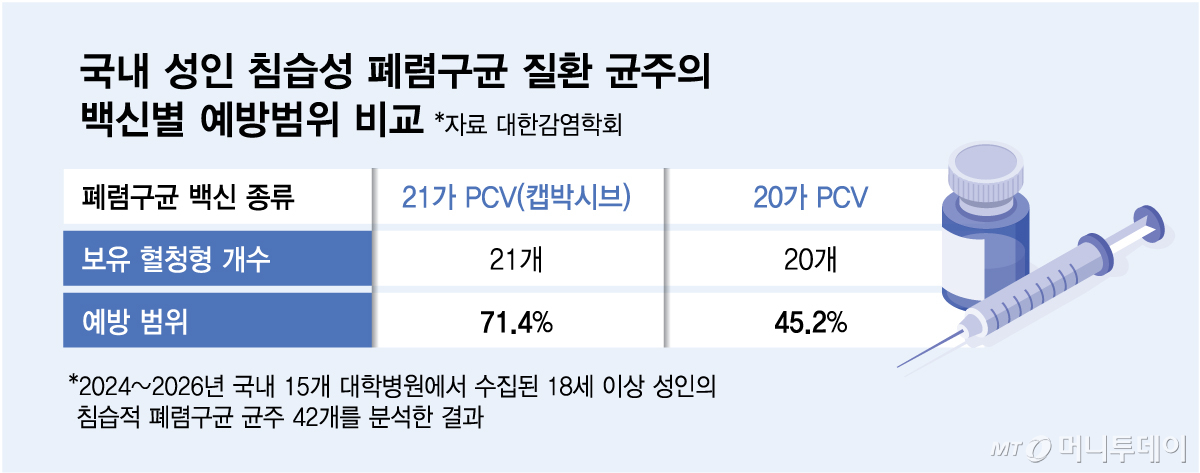
Furthermore, an analysis of domestic adult IPD strains revealed that the serotype prevention range of the 21st-valent pneumococcal conjugate vaccine (PCV) 'Capvaxive' is 71.4%, which is 26.2 percentage points higher than that of the 20th-valent PCV.
According to medical circles on the 23rd, a comparative study on the serotypes causing IPD in domestic adults was presented at a lecture by the Streptococcus pneumoniae (Pneumococcus) Research Group during the '2026 Korean Society for Infectious Diseases Autumn Academic Conference.'
The study analyzed 42 invasive pneumococcal strains collected from adults aged 18 and older at 15 university hospitals in Korea between 2024 and 2026. IPD is a disease that occurs when pneumococcus invades the blood or cerebrospinal fluid, causing conditions such as pneumonia, meningitis, and bacteremia.
The analysis found that the serotypes most frequently causing IPD in domestic adults were 34 (21.4%), 35B (14.3%), and 19A, 10A, and 3 (each 11.9%), in that order. Among vaccine-included serotypes, 35B was the most common. Serotype 35B is a preventive serotype included only in the Capvaxive vaccine.
This differs from past patterns. In analyses conducted during 2017–2019 and 2019–2021 (including the pandemic period), serotypes 3 and 19A were the most common vaccine serotypes.
Professor Choi Min-ju of the Department of Internal Medicine, Infectious Diseases Division, at Korea University Guro Hospital, said, "A notable aspect of this study is that the distribution of cause serotypes for domestic adult IPD differed from past studies."
Choi added, "In particular, since serotype 35B accounted for a high proportion in addition to serotypes 3 and 19A, which were identified as major vaccine serotypes in previous research, it is important to continuously monitor the changing epidemiological characteristics in Korea and reflect them in adult pneumococcal vaccination strategies."
The study also confirmed the gap in the prevention range for adult IPD between Capvaxive, a 21-valent PCV, and the 20th-valent PCV.
Among recent IPD strains, Capvaxive's prevention range was 71.4%, while the 20th-valent PCV's prevention range was 45.2%. Although the number of serotypes included in the two vaccines differs by only one, Capvaxive's prevention range was 26.2 percentage points higher.
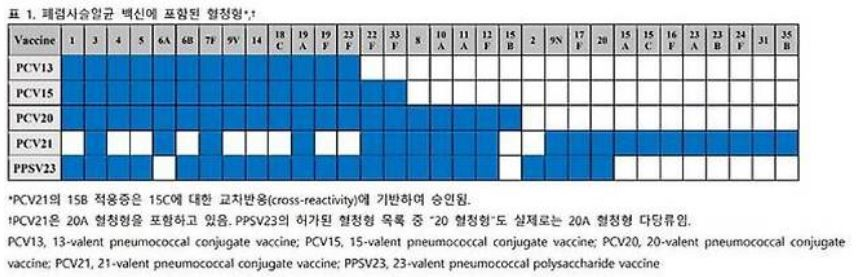
This is because Capvaxive was developed primarily based on the pneumococcal serotypes that are predominantly circulating in adults.
Prof. Kim Young-geun of Yonsei University Wonju College of Medicine, said, "Since the pneumococcal vaccination rate for children in Korea is nearly 98%, the carriage rates of serotypes included in vaccines primarily administered to children have decreased, while pneumococcal diseases caused by serotypes not included in existing vaccines are increasing."
He continued, "Because the 20th-valent PCV is included in the national childhood immunization program, the 21st-valent PCV has a broader IPD prevention range in adults." He further noted, "Considering this, adults may choose to receive the 21st-valent PCV vaccination."
Capvaxive, a 21-valent PCV launched by Korea MSD last March, is a pneumococcal vaccine that includes the highest number of serotypes—21—among PCVs approved in Korea. It holds eight unique serotypes not found in previously approved vaccines.
The academic conference also presented an analysis of the expected health and economic benefits of administering Capvaxive to unvaccinated adults aged 65 and older in Korea.
In an analysis assuming a 60% vaccination rate, Capvaxive was projected to additionally prevent 1,705 cases of IPD, 27,917 hospitalizations for non-bacteremic pneumococcal pneumonia, and 4,289 related deaths over 35 years compared to the 20th-valent PCV. Additionally, Capvaxive was analyzed to save approximately 99.16 billion won in direct treatment costs compared to the 20th-valent PCV.

 in THEBIO

