

The government aims to raise the recycling rate of 10 major critical minerals to 20% by 2030 to ensure supply chain stability. It will support the establishment of domestic production bases through various subsidies and tax benefits, and plans to launch 10 trillion won in R&D over the next five years for items requiring capability enhancement.
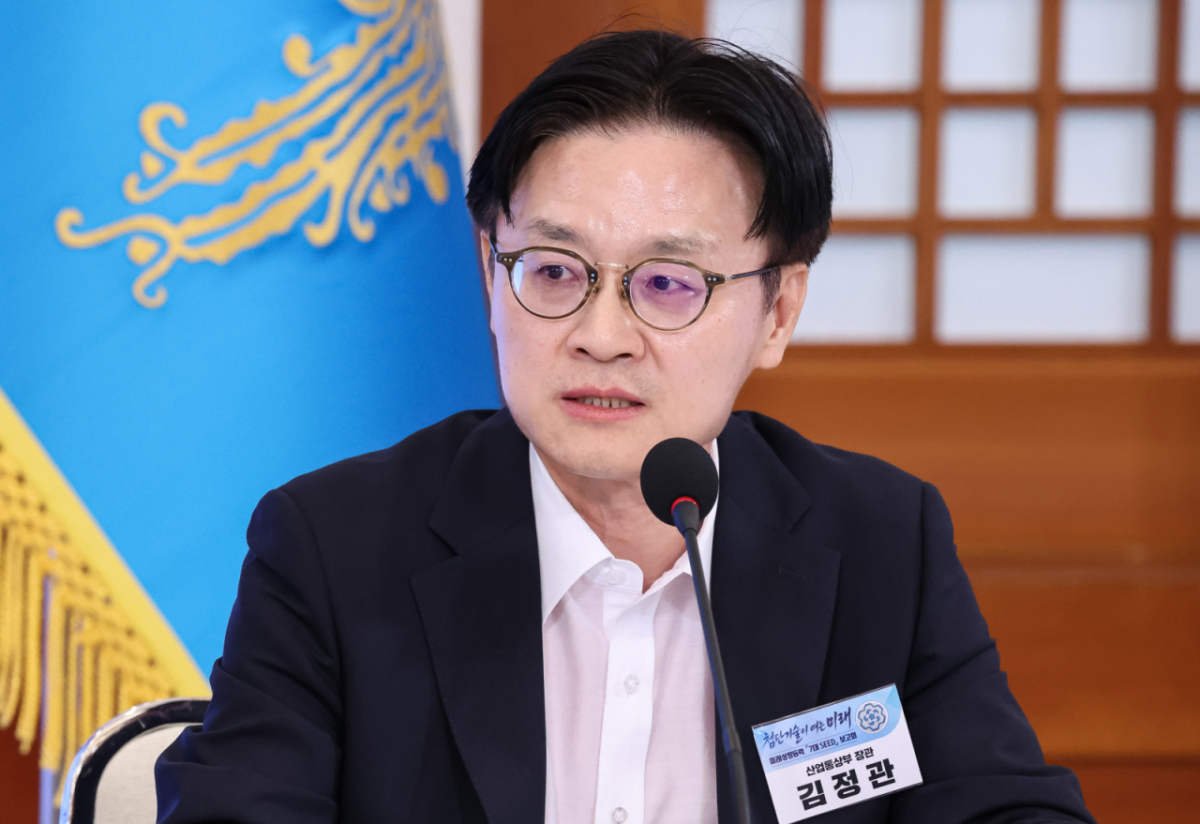
Kim Jeong-kwan, Minister of Trade, Industry and Energy, stated at the "Future Growth Engine 7 SEED (Seed) Report Meeting" held at Cheong Wa Dae on the 12th that he will "robustly cultivate an advanced supply chain ecosystem based on three mega-projects and next-generation future technologies to ensure the effects of a great leap forward spread across the entire economy."
On this day, the government announced plans to focus on cultivating seven new industries that will become South Korea's new growth engines: SMR (Small Modular Reactors), nuclear fusion, breakthrough renewable energy, quantum computers, lunar landers and low-orbit satellite communication networks, advanced biotechnology, and the construction of an advanced supply chain ecosystem.
The Ministry of Trade, Industry and Energy is responsible for building the advanced supply chain ecosystem among the seven new industries. Critical minerals such as rare earths, lithium, and nickel are essential materials for advanced industries like semiconductors and batteries; however, due to high dependence on specific countries like China, there is an increasing need to internalize the supply chain from a resource security perspective.
Accordingly, the Ministry of Trade, Industry and Energy plans to classify critical minerals and materials, components, and equipment (MCE) into three categories: items essential for national survival, items that cannot be produced domestically, and items requiring capability enhancement, with the goal of building a strategic advanced supply chain ecosystem.
For items essential for national survival, processing capabilities will be internalized through the development of refining technologies and recycling. The recycling rate of 10 major critical minerals is set to expand to 20% by 2030, with multi-faceted support provided through subsidies and tax benefits.
For items that cannot be produced domestically due to resource limitations, the number of stockpiled items will be expanded from 24 to 29, and the stockpile volume will be increased from a maximum of 180 days to 365 days. In 2028, the Saemangeum stockpile base will begin operations, and efforts will also be made to diversify supply chains through summit diplomacy.
For items requiring capability enhancement, 10 trillion won in R&D will be invested over five years. Additionally, a "15 Major Shared Growth Project" with a scale of 5 trillion won will be launched over five years to create an integrated team between anchor companies and partner companies, providing close support from technology development and demonstration to global market entry for Jeonju-based enterprises.
A governance system will also be established to secure overseas critical minerals through a public-private integrated team. By verifying vulnerable mineral types through expert committees and establishing the Industrial Resource Security Fund, a public-private cooperation framework will be built, and customized support for Jeonju-based companies will be promoted. Dedicated institutional investors will be revitalized to restore functions related to overseas projects.

 in ECONOMY
