


The development of platform technologies and changes in economic and industrial structures have led to the spread of new forms of labor that differ from the past, increasing the need to establish a protection system for platform workers and special-type employment workers who are not covered by existing Labor Standards Act provisions. This is because, although their actual working conditions are no different from those of regular employees, they face problems such as being denied protection regarding minimum wage and working hours simply on the grounds that they are not classified as employees.
The government plans to consider introducing measures such as minimum compensation to strengthen protections for approximately 2.1 million irregular workers. However, there are significant concerns that this could lead to substantial adverse effects, given the difficulties in calculating working hours, the burden on businesses and consumers, and the potential impact on the market.
According to a study by the Ministry of Employment and Labor on "The Scale of Platform Workers" released on the 9th, the number of special employees, freelancers, and platform workers was estimated at approximately 2.1 million as of 2023. As labor markets change, new forms of employment are increasing; however, due to the nature of platform work where employment contracts are often not concluded, these workers fall into a regulatory blind spot where they are not covered by the Labor Standards Act.
The part where platform workers express the most complaints is the lack of a 'minimum standard' for income. Since the Minimum Wage Act applies to employees, platform workers who are not employees are not subject to minimum wage regulations. Because their work structure involves earning revenue per task—such as delivery, courier services, and designated driving—their income fluctuates significantly depending on the volume of work. In effect, they are no different from self-employed individuals.
However, when examining the substance of work, most platform workers perform labor that is indistinguishable from employees under the Labor Standards Act in terms of subordination to an employer, control over tasks, exclusivity, and compensation for labor services.
In the case of delivery riders, although they are formally classified as individual business owners, they operate under a structure of indirect control through algorithmic dispatch, ratings and levels, reservation schedules, and cancellation warnings. Similarly, home service workers such as appliance installation technicians sign subcontracting agreements with companies as individual business owners, yet they possess characteristics of employees because attendance, work assignments, evaluations, and disciplinary actions are all managed by the company.
Since there is no minimum wage standard, intensified competition can drive down commission rates, leading to income levels that fall below the minimum wage. After deducting various costs such as equipment maintenance and management expenses for work performance and fuel costs, the income level drops even further. Due to the nature of the work involving long waiting times and travel times, it often leads to long working hours.
To this end, the government plans to consider a measure that would apply a separate minimum wage standard to platform workers and others. The proposal to extend the application of the minimum wage has been rejected multiple times by the Minimum Wage Commission, and since amending the law is also required, the decision was made to apply a minimum compensation standard instead of the minimum wage.
While there is a need for legal protection for platform workers, concerns are also being raised on the other side. This is because the criteria for determining minimum wages remain unclear, and there is a possibility that the cost burden could be shifted to companies or consumers.
Given the nature of platform work, where clear start and end times are often absent, it is difficult to accurately calculate working hours. Consequently, establishing standards such as "a certain amount per hour," similar to the minimum wage, is also challenging.
If setting an hourly wage is difficult, another option is to establish a minimum standard for fees per transaction. However, there are concerns that this approach could increase the cost burden on businesses and consumers using the platform.
Lee Young-myeon, a professor emeritus at Dongguk University, pointed out that "while the intention to comprehensively protect the rights of workers is good, there are practical difficulties in applying it." He noted that "in the case of delivery riders, even if working hours are long, income may be low if they do not receive orders (delivery requests), and the distinction between work time and rest time is ambiguous. It is difficult to prove that they were continuously working."
Business leaders have consistently maintained through the Minimum Wage Commission that it is inappropriate for the commission to decide on the applicability of minimum wage standards specifically for platform workers. Given the domestic economic slowdown and the expanding burden on small business owners, there are strong concerns that applying minimum compensation standards to platform workers would further increase their financial strain.
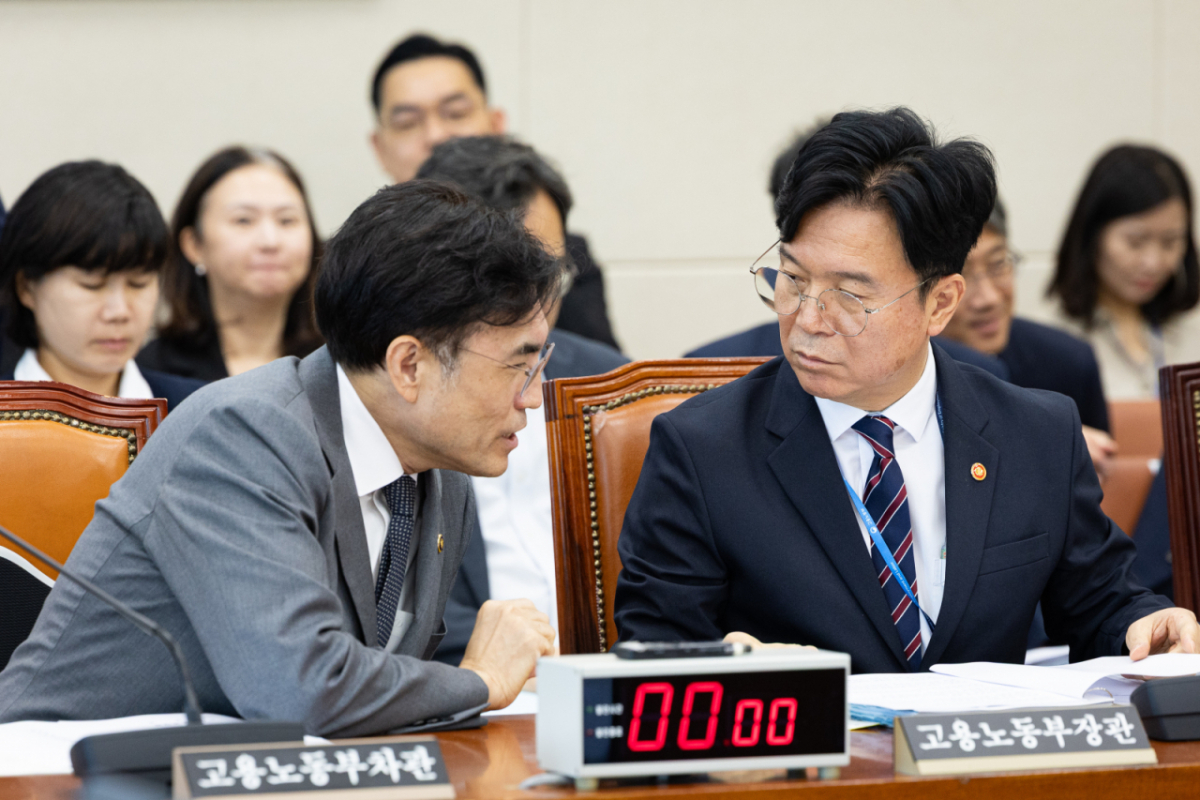
Despite various concerns, the government plans to continue pursuing policies aimed at strengthening the rights of non-regular workers such as those on platforms.
First, the government will push for the enactment of the "Basic Act on the Rights of Workers" by the end of this year and introduce a presumption of employment status through amendments to the Labor Standards Act. The Basic Act on the Rights of Workers is a fundamental law that explicitly enshrines in statute the labor rights guaranteed by the Constitution for all workers, regardless of their employment type or work arrangements, and provides a legal basis for support from the state and other entities. When other laws related to labor are enacted or amended, they must align with this Basic Act, making it akin to a "labor constitution."
The worker presumption system places the burden of proof regarding worker status on the employer. It is designed to prevent situations where individuals are effectively workers but lack legal protection due to freelance contracts or similar arrangements.
Previously, when disputes with companies arose over issues such as the payment of severance pay, freelancers and other labor providers had to prove that they were employees. However, with the introduction of the presumption of employment status, labor providers are now considered employees by default, and it is up to the company to prove that they are not employees.
The establishment of the K Labor Welfare Hall, which will serve as a social safety net for irregular workers, is also being promoted. The hall is expected to perform functions such as retirement savings and welfare support for irregular workers.

 in ECONOMY

