

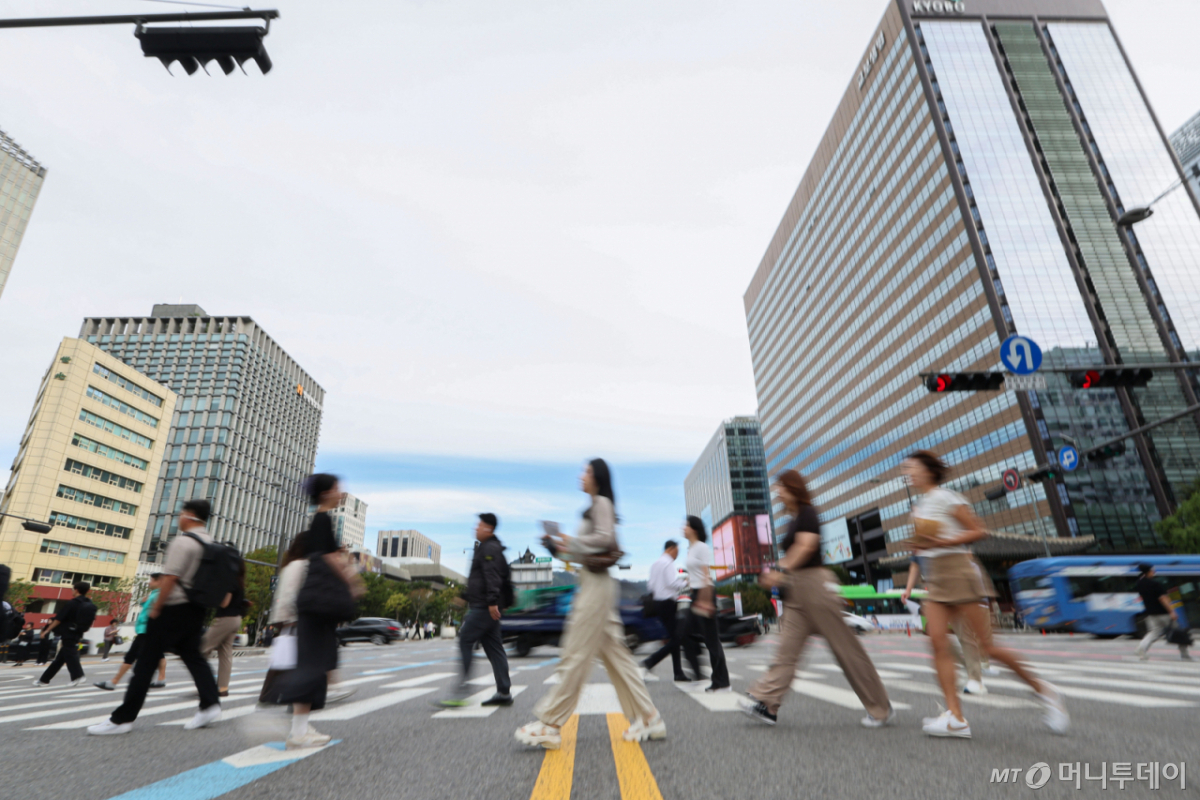
With per capita Gross National Income (GNI) expected to exceed $40,000 this year, tax revenue from employment income is also forecast to surpass 100 trillion won for the first time in history next year. The so-called 'quiet tax hike,' where the tax burden on wage earners increases, is becoming a reality.
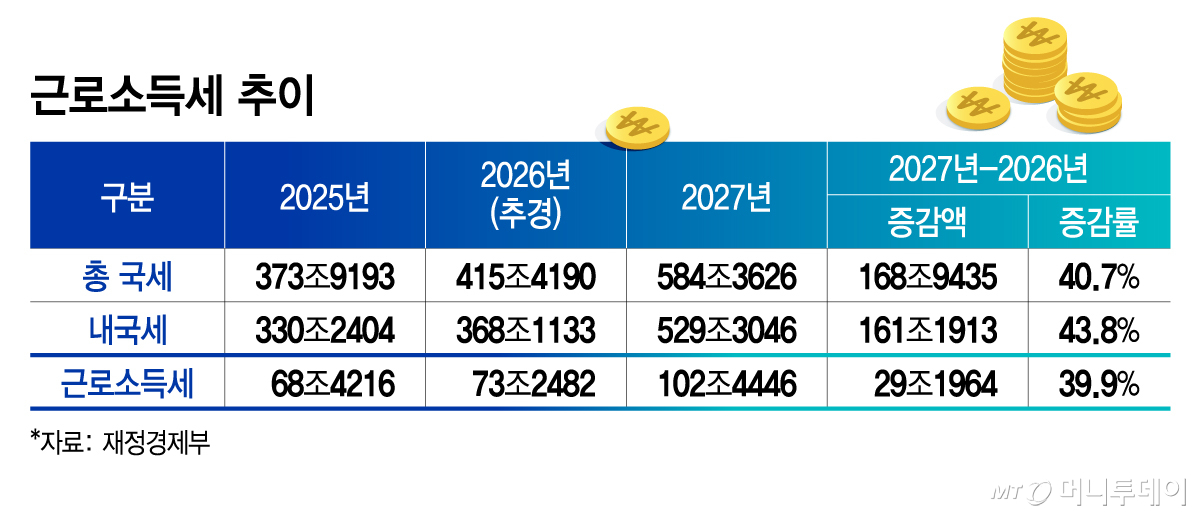
According to the Ministry of Economy and Finance on the 13th, the projected revenue from employment income tax for next year is 102.4446 trillion won. This figure is reflected in next year's national tax revenue budget plan, representing a 39.9% increase from this year's projection (73.2482 trillion won). It marks the first time employment income tax revenue will exceed 100 trillion won.
The significant increase in next year's employment income tax revenue is largely due to performance bonuses from large corporations. However, experts also note that the impact of the current income tax system, which fails to adequately reflect the steady rise in income across all citizens, is considerable.
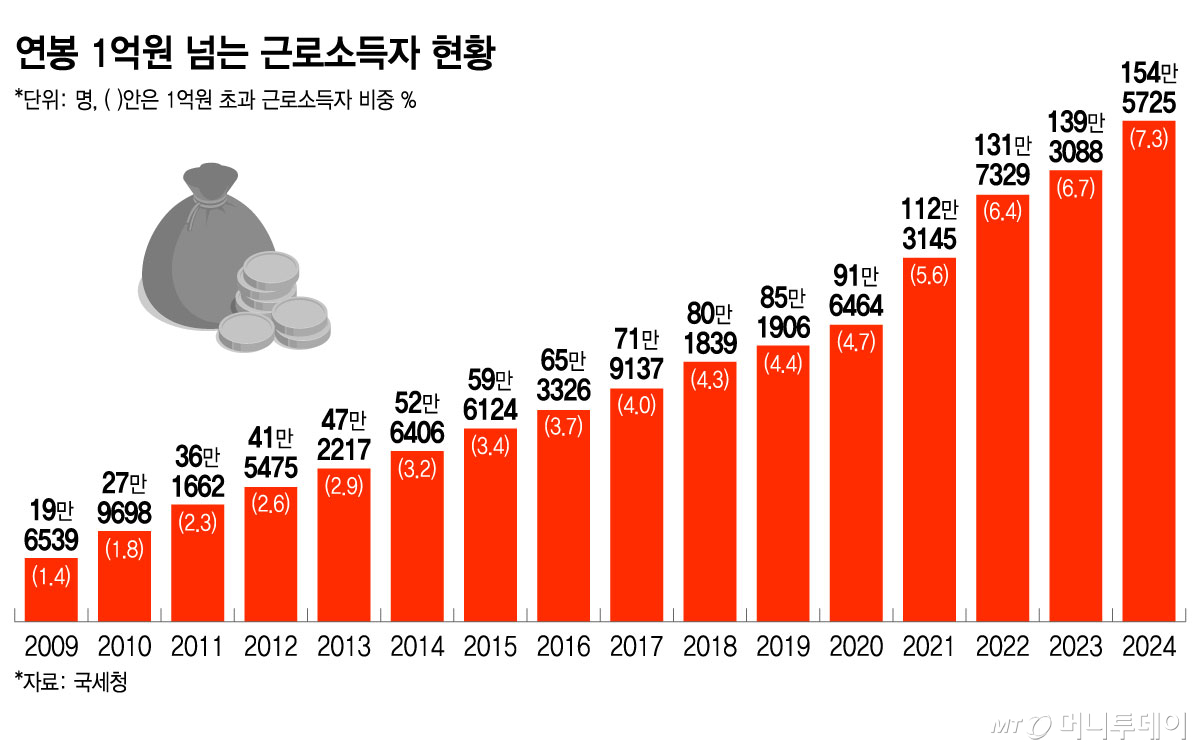
As of 2024, there were 1.545725 million people with total annual compensation exceeding 100 million won. Compared to 2014 (526,406 people), this represents a 2.94-fold increase. Compared to 2009 (196,539 people), it has increased by 7.86 times. The proportion of million-won earners, which was only 1.4% in 2009, rose to 7.3% in 2024.
Changes in the income tax system have been slower than the pace of income growth. Income tax is calculated by deducting various exemptions from various types of income such as employment income to determine the taxable standard. Multiplying the taxable standard by the tax rate yields the calculated tax amount.
The current income tax system has a total of eight brackets (tax rates ranging from 6% to 45%). It is a progressive system where higher taxable standards result in higher tax rates. Although numerous reforms have been implemented, the overall framework of the taxable standard itself has remained largely unchanged.
For example, the bracket for taxable standards exceeding 88 million won up to 150 million won (tax rate 35%) has remained unchanged for 18 years since 2008. While wages and prices have risen, the taxable standard brackets have stood still, creating a structure where workers with increased nominal income move into higher tax rate brackets.
There were no complaints about this issue. However, President Lee Jae-myung stated in February of last year during his tenure as leader of the Democratic Party of Korea: "Due to inflation, only nominal wages rise while real wages do not increase, yet taxes continue to rise under the progressive system," adding, "Are wage earners just being given a pay cut?"
Experts propose alternatives such as an inflation-indexed system that adjusts the income tax taxable standard in line with price levels.
Tax authorities are also reviewing the overall income tax system, but this year's tax reform plan does not include related content. Concerns over reduced tax revenue, which had been a hurdle to reforming the income tax system, have somewhat eased due to recent improvements in tax revenue conditions.
Kang In-soo of Sookmyung Women's University Gyeong Je-hak-gwa (Prof.) stated, "It is inappropriate to continue using amounts from the past as high tax rate assessment bases when prices and wages have risen," and added, "If annual adjustments are difficult, it is necessary to at least readjust the taxable standard brackets every 3 to 5 years."

 in ECONOMY


