

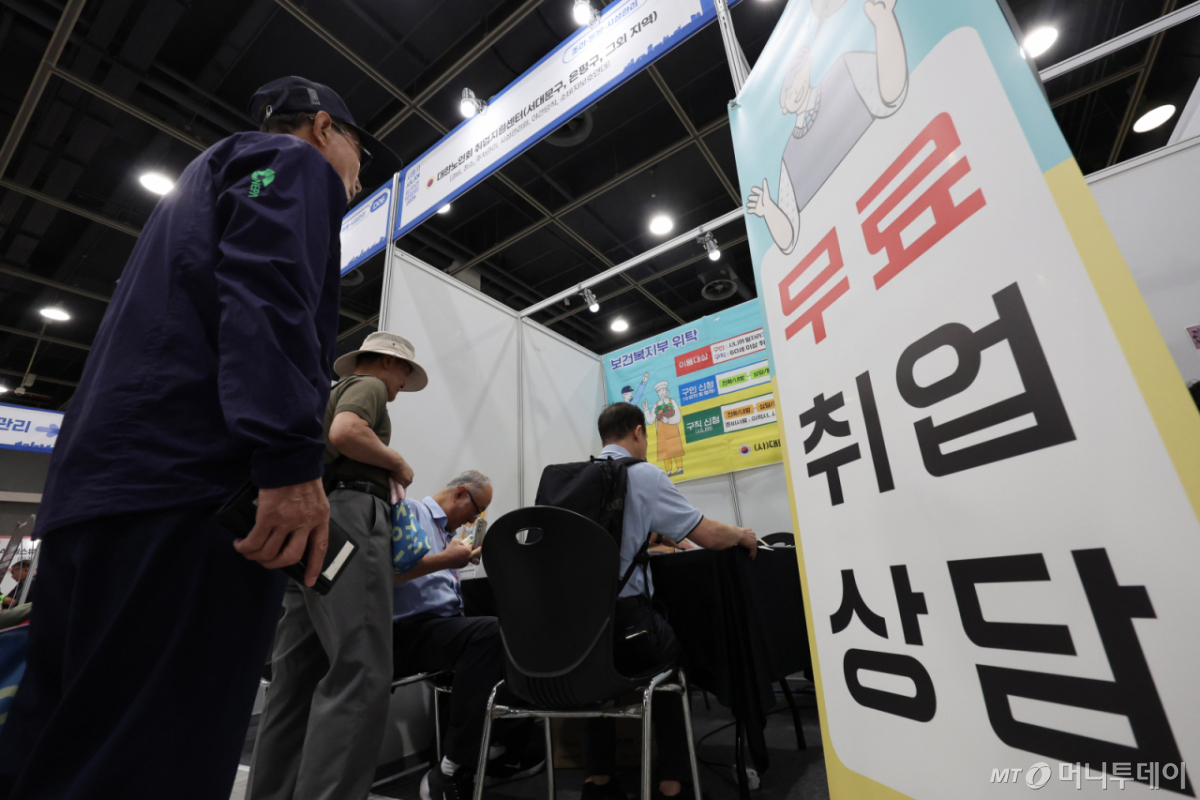
A mismatch between the number of employed and available jobs continues to repeat. While the number of employed keeps increasing, quality jobs that young people desire are hardly growing.
This is also the case where public jobs have increased mainly among older age groups, while private jobs preferred by younger generations have not grown sufficiently. This explains why employment indicators—key macroeconomic variables such as growth, consumption, and inflation—are failing to reflect reality accurately.
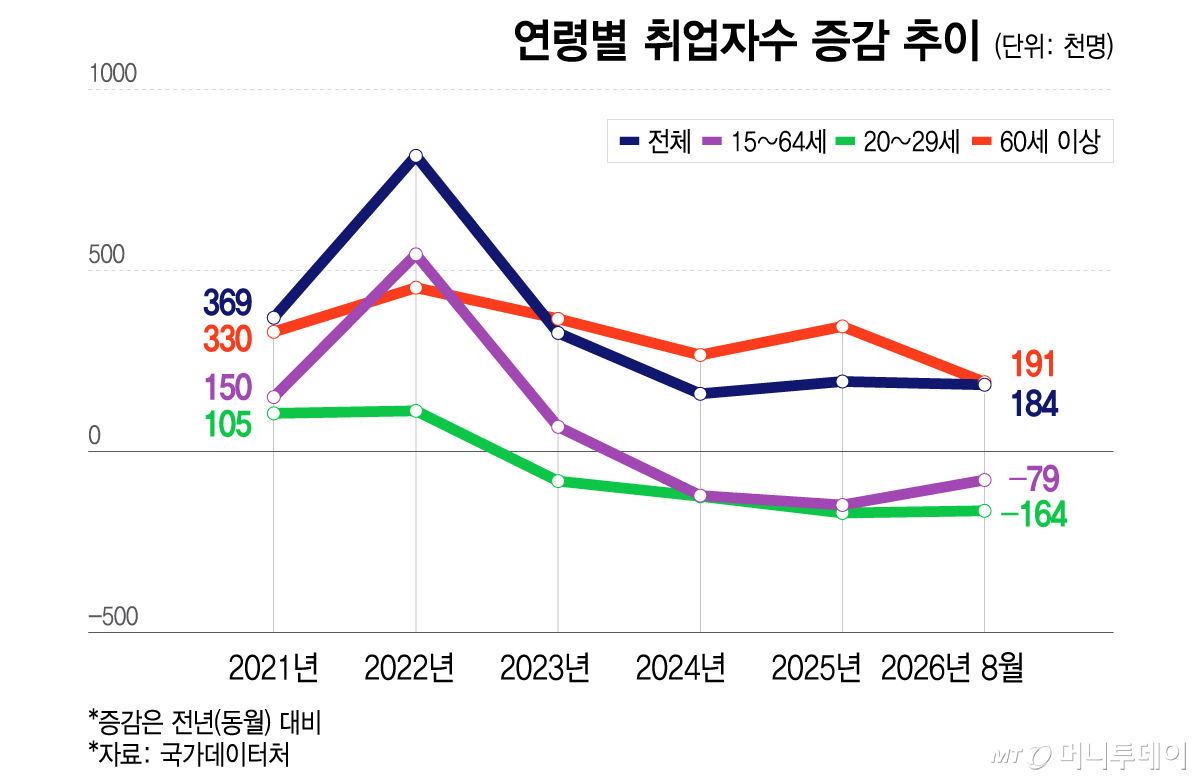
According to the National Data Administration on the 27th, as of last August, the total number of employed persons aged 15 and over reached 29.151 million, an increase of 184,000 compared to the same month last year. The rise in employment was the largest in five months. The employment rate for those aged 15 and over stood at 63.3%, the highest for August since 1982.
Looking only at employment indicators, it might seem like a favorable trend. However, digging deeper reveals a different situation. There is a noticeable mismatch across age groups, including older and younger generations. Last month, the number of employed persons aged 60 and over increased by 191,000, while the number of employed in their 20s decreased by 164,000.
This is not a temporary phenomenon. Even when looking at full-year figures from last year, the total number of employed rose by 193,000, yet the number of employed in their 20s fell by 170,000. In contrast, the number of employed in their 60s increased by 345,000.
The situation also varies by industry. Last month, employment in health and social welfare services rose by 186,000. These are jobs mainly taken up by older age groups, with many classified as public jobs. On the other hand, employment in manufacturing—a sector considered core to job creation—has declined for 26 consecutive months, dropping by 38,000.
The demographic shift of a growing elderly population and a shrinking youth population cannot be ignored. However, it is also evaluated that the government's continuous expansion of public jobs has contributed to creating an illusion in employment indicators.
According to a report titled "Recent Assessment of Employment Situation through Private Employment Estimation" released by the Bank of Korea in January this year, public jobs increased from an average monthly 1.13 million in November 2015 to 2.08 million in 2025 (first three quarters). The share of public jobs relative to total employment rose from 4.3% to 7.2% over the same period.
The Bank of Korea identified public jobs as those in health and welfare, public administration, temporary positions, and among persons aged 60 and over. Private employment, calculated by subtracting public jobs from total employment, fell from 237,000 in 2022 to 122,000 in the third quarter of last year.
The Bank of Korea emphasized that as the share of public jobs has grown, it has become more difficult to accurately assess the employment situation and the overall economic condition. However, there is no government-level statistics available to track the number of employed in the private sector.
Last July, the government raised its growth rate forecast for this year from 2.0% to 3.0%, while projecting that the increase in the number of employed would be only 150,000—10,000 less than the previous forecast. This signaled "growth without employment," suggesting that the correlation between current employment indicators and economic conditions has weakened.
Song Byung-ho, head of the Price Trends Team at the Bank of Korea Ko Yong-dong-hyang (Team Lead), who prepared the report, stated, "Unlike private employment, public jobs can move in the opposite direction of economic conditions." He added, "I believed that examining private employment would be somewhat more useful for assessing the economy."

 in ECONOMY

