

Calls are growing for a redesign of the tax credit system to respond to the spread of protectionism and changes in industrial structure. There is also an argument that, just as support for domestic production is being expanded, a new tax incentive framework is needed for information security investments in the financial sector.
According to relevant government ministries on the 11th, the Ministry of Economy and Finance is reviewing whether to add electric vehicles to the Domestic Production Tax Credit to be introduced next year. The Domestic Production Tax Credit, referred to as a “Korean version of the Inflation Reduction Act (IRA),” is a system that provides tax credits against income tax and corporate tax based on production volume for items produced domestically.
In its tax reform proposal released in August, the Ministry of Economy and Finance selected six sectors for support under the Domestic Production Tax Credit: solar power generation, wind power generation, secondary batteries, semiconductors, core materials, and AI (artificial intelligence) robot components. Electric vehicles, a long-standing wish of the automotive industry, were not included in the supported sectors of the Domestic Production Tax Credit.
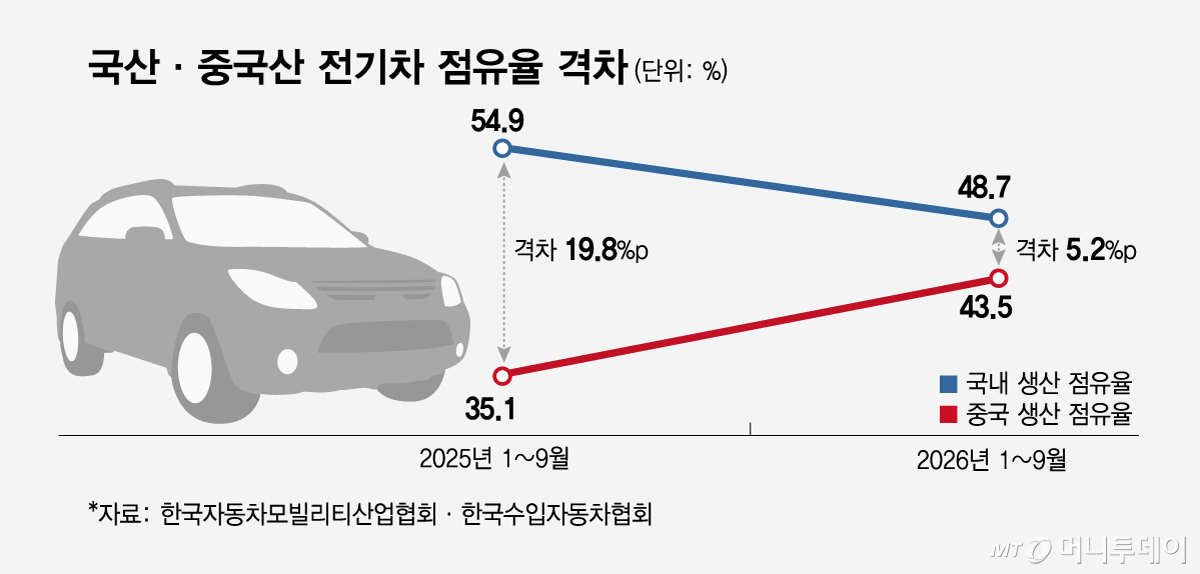
The Ministry of Economy and Finance did not directly include electric vehicles as support targets on the grounds that secondary batteries, a core component of electric vehicles, are already covered. However, with rising concerns over a crisis in the electric vehicle industry, arguments have emerged that direct support should be included. The Ministry of Economy and Finance has not completely ruled out the possibility of providing support.
The background for introducing the new system lies in the limitations of existing tax credits. The Integrated Investment Tax Credit focuses on supporting initial equipment investment, which limits its ability to alleviate cost burdens at the production stage. The Korea Institute for Tax Administration also pointed out in a preliminary feasibility assessment of the Domestic Production Tax Credit that “existing investment-centric tax support alone has limitations in responding to current needs.”
Information security investments in the financial sector are also cited as an area where tax support should be expanded. Financial regulators have ordered financial institutions to expand security investments in response to successive hacking and data breach incidents. However, the current Integrated Investment Tax Credit is designed primarily around tangible assets such as machinery and equipment, limiting support for intangible assets such as security software and AI (artificial intelligence)-based security systems.
Just as the Domestic Production Tax Credit was established to encourage domestic production, there are calls to reform the tax support system in the information security sector to reflect the changing investment environment and policy importance. To this end, proposals have been made to expand the scope of the Integrated Investment Tax Credit to include intangible assets related to information security. A bill with similar intent is also pending before the National Assembly.

 in ECONOMY
