

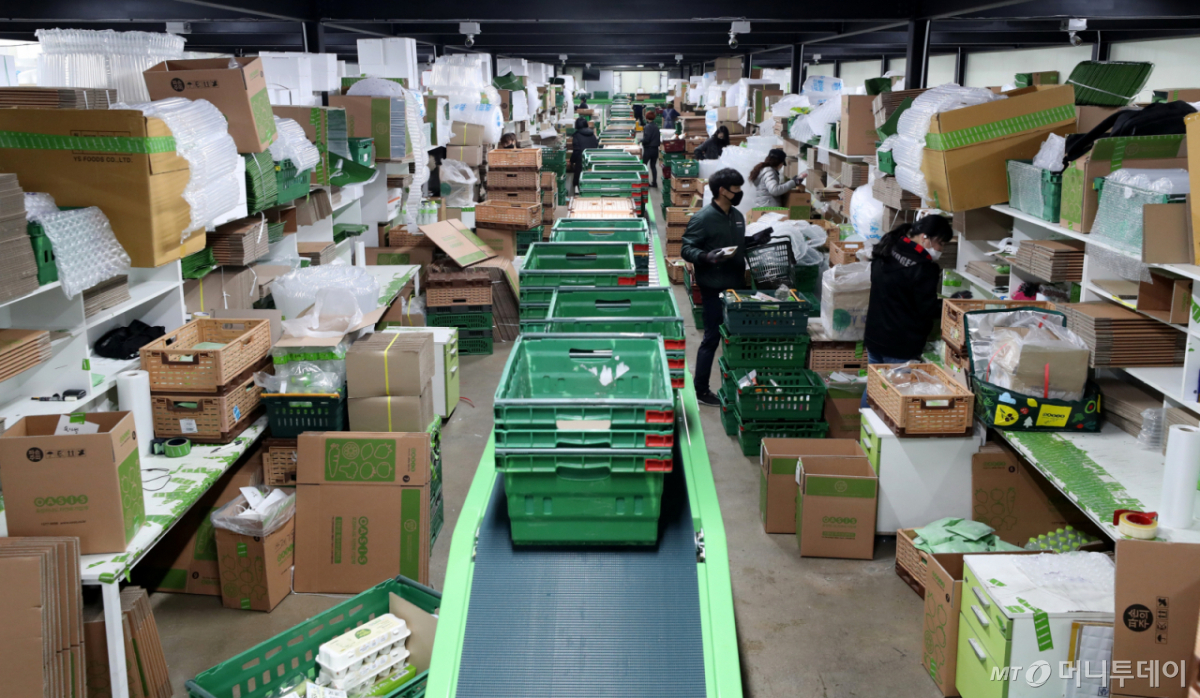
Labor, management, and government have released their first common standard for protecting the health of night and early-morning workers, taking the first step toward 'regulating night labor.' They designated the hours from 0:00 to 4:00 as the 'ultra-late-night time slot,' a period associated with significantly reduced alertness and high accident risk, and linked it to government fiscal support. However, because the measure remains a voluntary recommendation without legal binding force, and solutions for socially contentious issues such as dawn delivery and care work have been postponed, questions are being raised about its practical effectiveness in the field.
Until now, domestic labor law only mandated a 50% premium wage for night work (10:00 p.m. to 6:00 a.m.) and restrictions on pregnant women and minors; there were virtually no standards managing night hours or consecutive shifts for general adults. According to a report released in March this year by the Korea Labor Institute, domestic night workers average 47.5 hours of work per week, with 41.3% working long hours of more than 10 hours per day. The International Agency for Research on Cancer (IARC), under the World Health Organization (WHO), also classifies night shift work as a Group 2A probable carcinogen.
The significance of this recommendation lies in presenting the first management baseline for workplace labor and management to refer to, taking into account industry-specific conditions. In particular, it was the first time that policy documents included short sleep breaks (intermittent naps) and additional vacation compensation by designating the 0th:00 to 4:00 ultra-late-night slot as a separate risk zone. It also included providing rest during night shifts and subsequent rest periods in the scope of shortened-shift support, deciding to provide an additional 200,000 won per person to workplaces implementing ultra-late-night shortening measures.
Specifying that protection targets should not be limited by employment type, such as regular or daily wage workers, and opening the door for support to workplaces with more than 300 employees where large logistics centers, manufacturing plants, and general hospitals are located, could also serve as a lever in labor-management negotiations. Bringing the recognition criteria for brain and cardiovascular occupational accidents (30% premium for night work) forward as a yardstick for pre-emptive time management is also a preventive approach.
◇ No enforcement power, dawn delivery excluded… clear walls of budget and wages
On the other hand, there are clear limitations in driving substantive change in the field. First, this guide is a recommendation with no new legal obligations or sanctions whatsoever. It failed to establish core indicators such as 'limiting consecutive night shifts to three days or fewer' and '24 to 48 hours of rest after completion' as baseline standards in the main text, instead citing guidelines from the Korea Occupational Safety and Health Agency and the Ministry of Health and Welfare only as reference cases. Given that a significant number of small and medium-sized logistics, security, and service workplaces where night labor is concentrated are union-free, it remains unknown how effectively 'voluntary labor-management agreements' will function.
It is also painful that 'dawn delivery' and 'care,' which were listed as tasks to be pursued, have been excluded. The Ministry of Employment and Labor stated that it would pursue separate discussions for the courier and care industries where protection is urgent, but special employment and platform couriers who support dawn delivery are not considered workers under the Labor Standards Act, making it difficult to incorporate them into the recommendation's framework of compensatory leave, work rules, and fiscal support. The most urgent parties remain outside the safety net.
The walls of budget and wage structure are also high. The 60 billion won budget proposal for next year's 'Work-Life Balance +4.5 Project' is the total amount for all shortening projects, including the four-and-a-half-day workweek, making it difficult to handle the demand for large-scale shift system reform and replacement personnel. After the maximum one-year temporary support ends, employers have little incentive to maintain shortened hours without wage reductions, and in job categories highly dependent on night shift allowances, they must also overcome backlash against income reduction.
The European Union (EU) mandates an average upper limit of 8 hours per 24-hour night period and 11 consecutive hours of rest through its Working Time Directive, while Korea has not ratified the International Labour Organization (ILO) Night Work Convention (No. 171). An expert in human resources and labor management stated, "For National Task No. 75 to establish a regulatory framework for night labor to go beyond mere declaration, subsequent social dialogues must swiftly produce legislation on statutory limits and rest rights, tailored measures for couriers and care workers, and solutions to the wage system."

 in ECONOMY
