

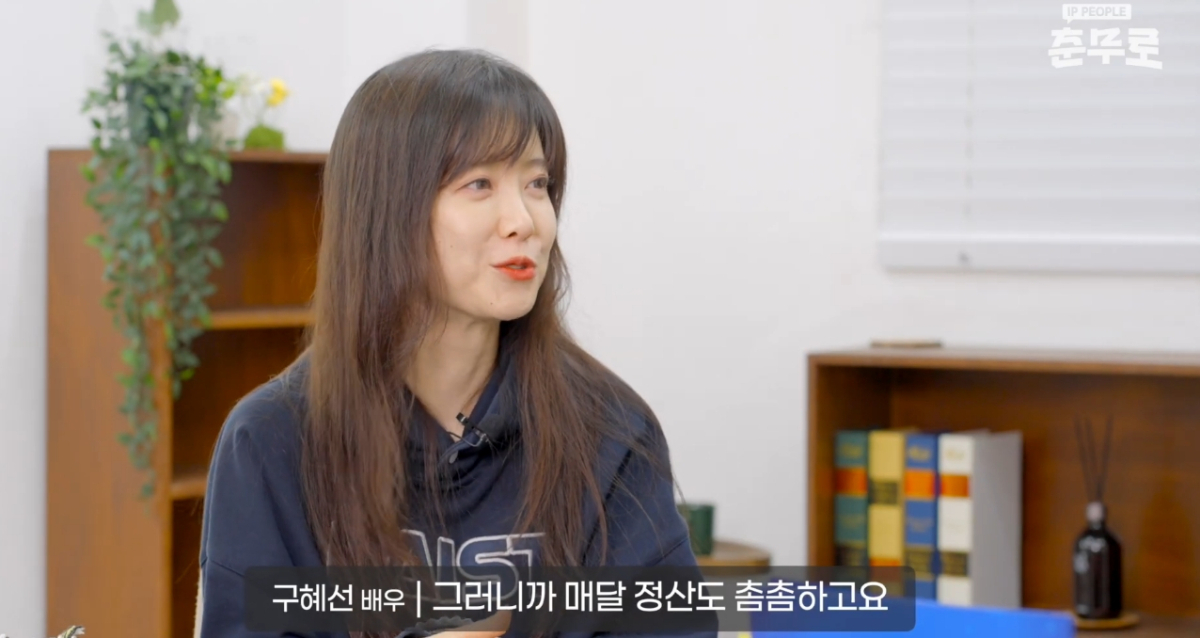
Actress Koo Hye-sun revealed that she receives monthly income from music copyright royalties.
On the 27th, a video titled "A message to those who endlessly challenge—from actors to painters, from film directors to patent holders" was released on the official YouTube channel of the National Intellectual Property Committee under the President's office.
In the video, Koo Hye-sun appeared and shared her recent activities, stating that she is preparing for a doctoral program after graduating with a master’s degree from KAIST.
Koo Hye-sun, who has launched an unfolded hair roller bearing a registered patent and is also active as a venture entrepreneur, explained the motivation behind her journey: "The requirement for undergraduate graduation was 'filing a patent application'."
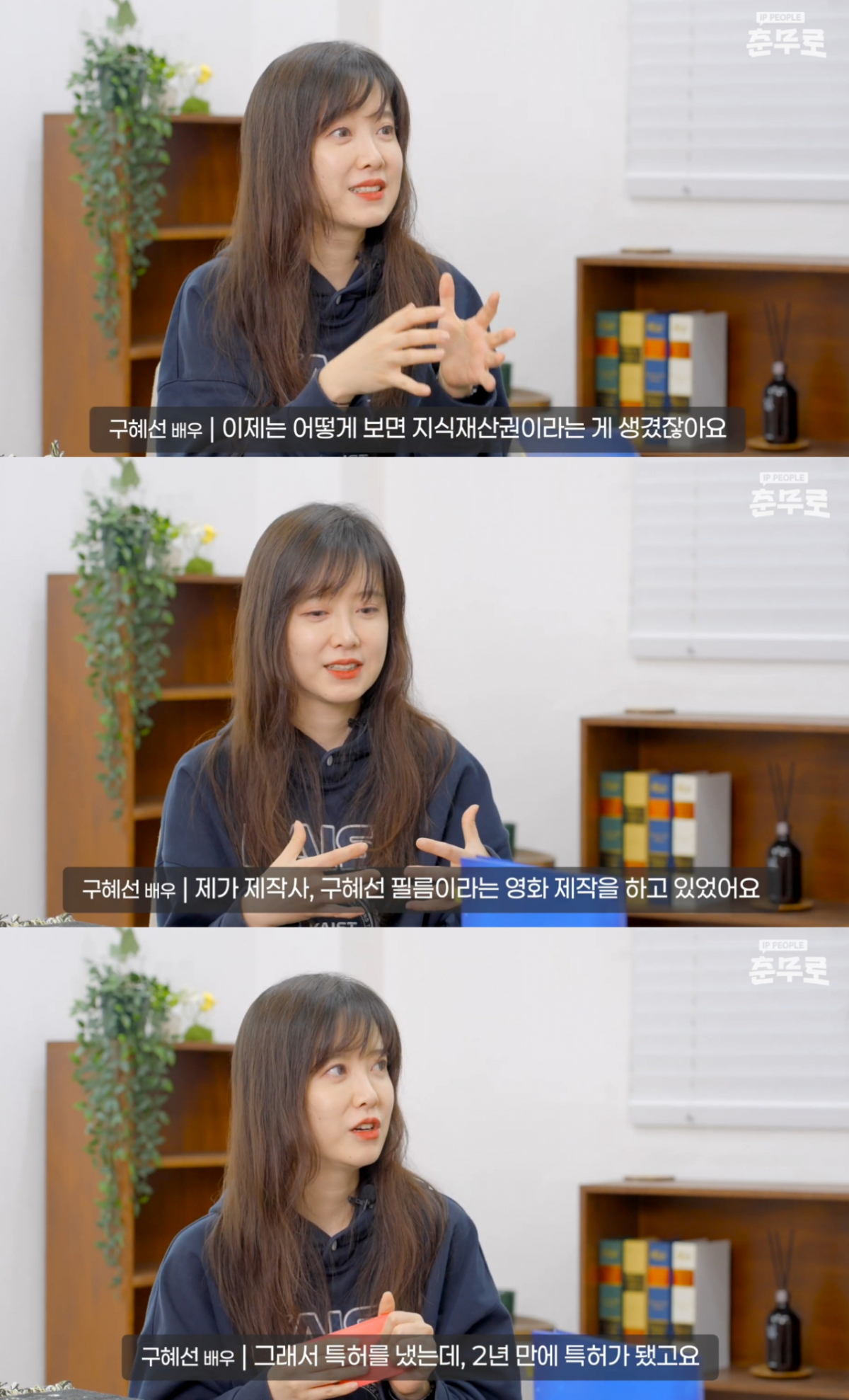
Koo Hye-sun said, "I came up with the idea while taking interdisciplinary classes with engineering students. I was inspired after reading a New York Times column analyzing the phenomenon of 'aesthetic liberation' in Korean society, where students were seen rolling their hair on public transportation." She added, "It took two years to successfully register the patent, and it eventually led to commercialization."
She emphasized that she places great importance on intellectual property rights (IP) and explained that her experience running a film production company in the past served as the foundation for launching her venture business.
Koo Hye-sun stated, "Although operating a film production company did not generate substantial profits, it became a precious foundation for handling one IP." She further explained, "Compared to traditional round hair rollers, our product reduces plastic usage by 80%, earning us certification as a venture company."
Notably, Koo Hye-sun also drew attention by revealing that she quietly works as a composer and earns steady income from copyright royalties in addition to her invention patents.
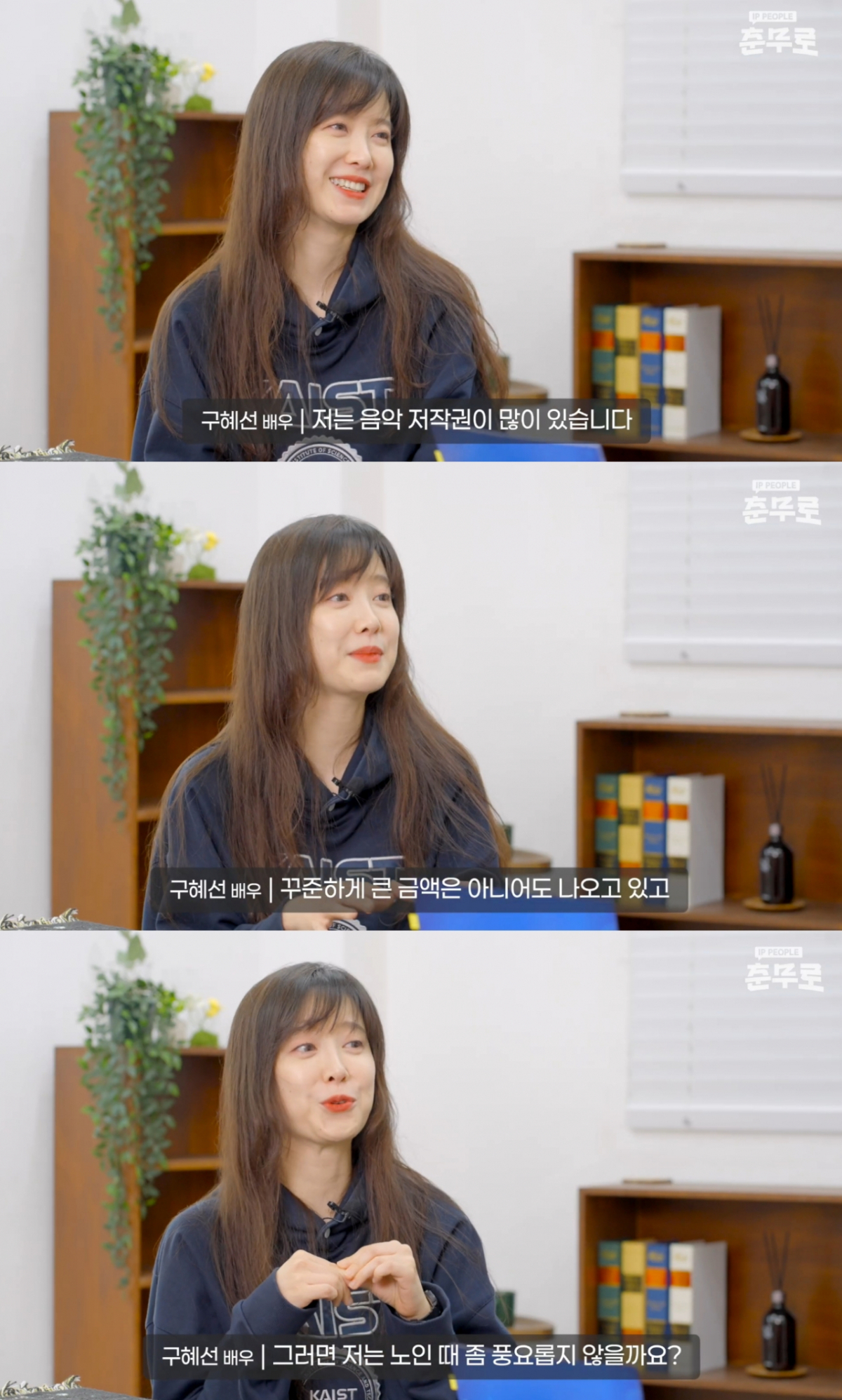
Known as a new-age composer who has registered 58 songs over two decades, Koo Hye-sun said, "Even if they are not popular hit songs, due to the nature of BGM without vocals, they are widely used as background music in TV variety shows, cafes, hospitals, and other places. Copyright income is generated consistently every month, and settlements are meticulously handled." She declined to disclose specific figures regarding her copyright earnings.
When asked about her ultimate goal, Koo Hye-sun replied, "To live a comfortable and abundant life in old age." She added, "Even without owning real estate like buildings, I am continuously accumulating IP so that I can simultaneously gain the spiritual pride of having 'intellectual property created by me protect me as my reliable asset' and achieve material stability."
Koo Hye-sun has paused her acting activities since leaving MBC's "You're Too Much" in 2017. Despite a nine-year hiatus, she is known to have maintained income through copyright royalties, drawing significant public interest.

 in ENTERTAINMENT


