

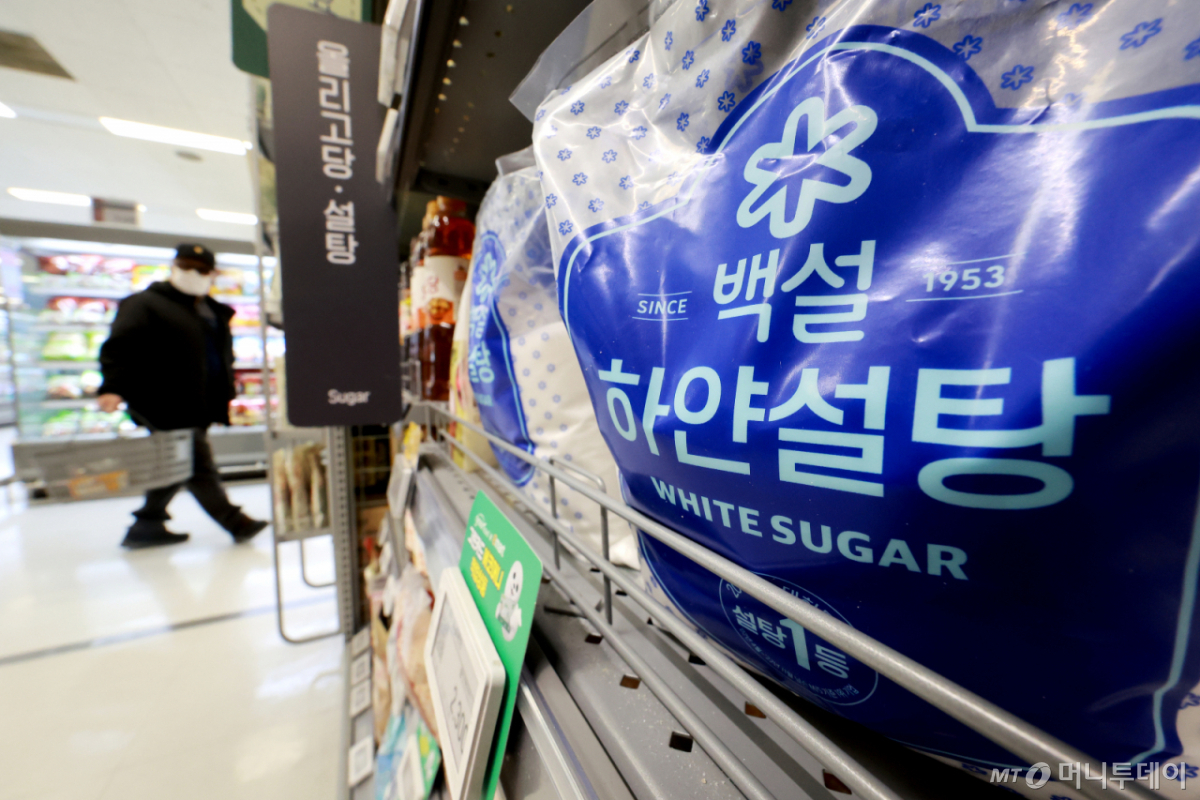
While companies are voicing their dissatisfaction with the 'strict administrative enforcement' by regulatory authorities, the regulators also have their say. They explain that most cases involving massive fines, such as recent sugar price-fixing or flour and starch syrup collusion, involve long periods of illegal activity, meaning the related sales volume is high and the fine amounts must inevitably be large. Additionally, they clarify that procedural safeguards to protect the right of the accused to present their rebuttal have been established.
According to reports from government ministries and agencies on the 16th, the Financial Supervisory Service applied the 'dual hearing system' in its disciplinary actions against 11 financial firms regarding the incomplete sales of Hong Kong H-Index-linked equity-linked securities (ELS). The dual hearing system, introduced in 2018, refers to a deliberation method where the FSS's inspection bureau and the targeted financial firm appear before committee members with equal status to engage in direct debate.
In the past, under the disciplinary review system, an employee from the inspection bureau would first state their position, report the agenda, and then leave, after which the targeted party would enter later to make a statement. This format inadequately protected the right to be heard. The dual hearing system was introduced as a corrective measure to ensure sufficient protection of the right to rebut through simultaneous attendance and real-time debate.
In the case of Hong Kong ELS, the FSS initially imposed a fine of 1.4 trillion won, but it was reduced to around 600 billion won following a request for supplementation from the Financial Services Commission. The reason the financial authorities adjusted the fine was to reflect the active compensation efforts made by the financial firms. Moreover, the fact that banks won lawsuits filed by investors against them inevitably influenced the level of penalties. Ultimately, the explanation is that even financial authorities must consider not only procedural legitimacy but also acceptability when imposing administrative penalties.
The same applies to the Fair Trade Commission. A Korea Fair Trade Commission official stated, "If a case goes to court, we ultimately have to engage in a legal battle." They added, "If the accused contests the decision and it proceeds to litigation, the FSS's logic will be thoroughly scrutinized; therefore, if the FSS applies unreasonable arguments, it will inevitably lose the legal battle." This is why they guarantee defense rights by allowing sufficient opportunity for the accused to present their case during the deliberation process to ensure maximum accuracy.
Nevertheless, the reason fines have reached record-breaking levels is that in collusion cases, the period of illegal activity has been long. The fine imposed on the three sugar companies for sugar price-fixing amounted to 390 billion won. The longer the collusion period, the higher the related sales volume, and consequently, the larger the fine. This is also why recent claims have been raised that the Korea Fair Trade Commission's penalty levels are too high, citing "unprecedented penalties" and "the accused's position was not sufficiently reflected."

 in FINANCE
