

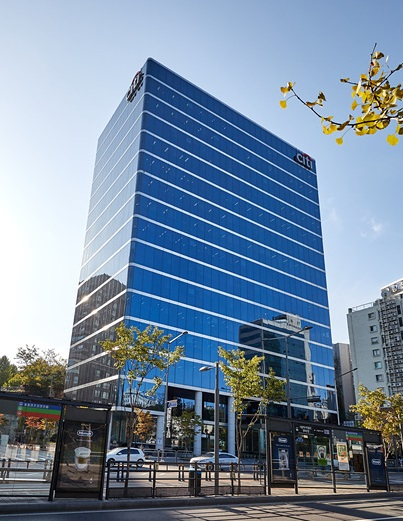
Citibank Korea recorded its highest-ever cumulative net profit for the first three quarters of this year, boosted by increased non-interest income centered on corporate banking, including foreign exchange, derivatives, and securities, along with reduced costs.
However, interest income declined, and soundness indicators such as the non-performing loan ratio and the loan loss reserve coverage ratio deteriorated.
Citibank Korea said Friday that its cumulative net profit for the first three quarters of this year reached 445.2 billion won, a 79% increase from the same period last year.
Non-interest income drove the improvement in cumulative performance. Cumulative non-interest income for the first three quarters was 706 billion won, up 66% year-on-year. In contrast, interest income fell 15% to 324.4 billion won. As a result, the share of non-interest income in total revenue rose from 52.8% in the cumulative period through the third quarter last year to 68.5% this year.
Cost reductions also contributed to the increase in net profit. Cumulative costs decreased by 5% year-on-year to 424.4 billion won, and loan loss expenses fell 41% to 21.1 billion won. The total revenue-to-expense ratio dropped by 14.3 percentage points from 55.5% to 41.2%. This reflects improved operational efficiency as revenues grew while costs declined. Cumulative return on assets (ROA) and return on equity (ROE) rose by 0.34%p and 4.50%p, respectively, to 1.00% and 10.50%.
However, performance slowed compared to the previous quarter when looking at the third quarter alone. Net profit for the third quarter was 125.5 billion won, up 92% year-on-year but down 33% from 186.8 billion won in the previous quarter. This was due to a 13% decrease in non-interest income to 222.6 billion won and a 31% increase in costs to 151.8 billion won over the same period.
Weakness in the interest segment continued. Interest income for the third quarter was 109 billion won, down 2% from both the same period last year and the previous quarter.
The bank cited a decline in net interest margin (NIM) as the cause. NIM for the third quarter was 1.88%, down 0.07 percentage points from the same period last year but up 0.07 percentage points from the previous quarter. Cumulative NIM fell by 0.43 percentage points to 1.82% compared to the same period last year.
Loan assets also shrank. Total loans as of the end of September were 10.3759 trillion won, down 11% year-on-year. This was due to a decrease in repurchase agreements and the phased closure of the consumer finance division.
As of the end of September, personal loans and credit card assets were 2.4384 trillion won and 667.8 billion won, respectively, both down 19% year-on-year. Corporate and public sector loans increased by 1% year-on-year to 3.2980 trillion won but decreased by 4% from the previous quarter.
Burden also appeared in soundness indicators. The non-performing loan ratio as of the end of September was 1.48%, up 0.05%p from the same period last year and 0.19%p from the previous quarter. The loan loss reserve coverage ratio, which indicates the balance of loan loss reserves relative to non-performing loans, fell by 53.6%p from the same period last year and by 27.8%p from the previous quarter to 224.5%.
The BIS capital adequacy ratio and common equity tier 1 (CET1) ratio as of the end of September were 32.20% and 31.30%, respectively, down 2.20%p and 2.22%p from the same period last year. This was due to an increase in risk-weighted assets as the scale of derivative assets expanded amid heightened market volatility and increased customer demand. However, compared to the previous quarter, they rose by 3.96%p and 3.93%p, respectively.
Kim Kyung-ho, president of Citibank Korea, said, "Based on the competitiveness of its core businesses, including foreign exchange, capital markets, transaction and securities services, Citibank Korea achieved solid performance in the third quarter of 2026."
He added, "It demonstrated the robust fundamentals of the bank's core businesses even amid expanding market volatility and a correction phase." He further noted, "Based on thorough risk management, we will focus Citi's global network and the capabilities of its core business segments to continue sustainable growth together with our customers."

 in FINANCE
