

[For more diverse corporate information on startups mentioned in this article, please visit Unicon Factory's big data platform 'Data Lab'.]
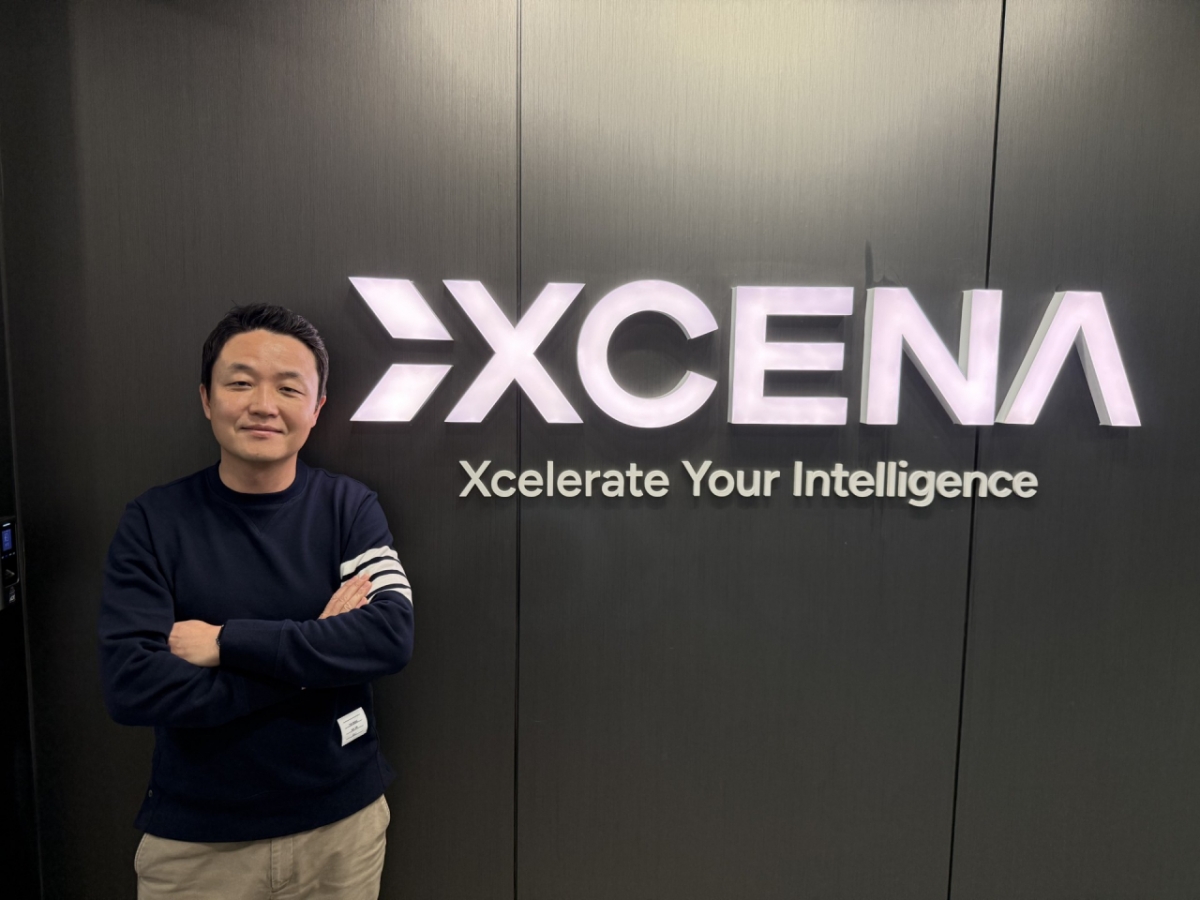
"The process of moving data to the CPU (Central Processing Unit) for computation requires numerous memory chips. By performing computations directly within memory and reducing data movement, processing speed can be increased while costs are drastically reduced."
Kim Jin-yeong (CEO), who worked at major domestic semiconductor companies including Samsung Electronics and SK Hynix, founded the fabless startup Xena in 2022. The company's goal is to improve the efficiency of memory semiconductors used in data centers. Through CXL (Compute Express Link) solutions—a next-generation memory technology—Xena aims to simultaneously address two challenges: the surging demand for artificial intelligence (AI) data processing and cost reduction.
Xena recently changed its name from Metis X to prepare for a new leap forward. The name combines 'X' from Daejeon Transformation (Daejeon환) and 'CENA,' meaning scene or stage in Latin. This reflects the company's determination to completely overturn the memory semiconductor market. Moving beyond simply increasing capacity, Xena plans to solve chronic inefficiencies in AI data centers by developing 'intelligent memory' equipped with computational capabilities.
SK Hynix's Youngest Executive Discovers Opportunity in CXL Technology
Kim (CEO) earned the title of SK Hynix's youngest executive in his early 40s but left the company just nine months after promotion to launch a startup. A graduate of Seoul National University's Department of Computer Engineering, he began his career as a semiconductor engineer at Samsung Electronics in 2007. He demonstrated his capabilities by leading the development of mobile storage and SSD (Solid State Drive) products, achieving early recognition within the organization, including an accelerated promotion to senior management after only six years.
After transitioning from Samsung's investment division to SK Telecom in 2014, Choi Yeon-so (Team Lead) led a research and development (R&D) organization focused on storage-related technologies. Following the acquisition of this organization by SK Hynix, he oversaw R&D for SSD software and next-generation solution architectures. Based on these achievements, he was appointed as the company's youngest vice president in 2021.
Despite proving his capabilities through rapid promotions, he left his stable executive position at a major corporation because he wanted to "break through the limitations of memory semiconductors." He stated, "Traditional memory chips are mass-produced general-purpose products designed to meet fixed specifications, making them highly vulnerable to price fluctuations due to competition and supply-demand dynamics. By combining computational functions with memory based on CXL technology, we can create high-value-added products that will reshape the market landscape."
CXL is a next-generation interface technology that enables high-speed connections between various computing devices such as CPUs, memory, and GPUs (Graphics Processing Units). In traditional server environments, expanding memory capacity often required adding expensive CPUs, resulting in significant cost burdens. However, with CXL, memory can be flexibly expanded and shared without increasing CPU capacity, simultaneously improving resource utilization efficiency and cost efficiency.
Xena's core technology goes beyond simply expanding memory capacity through 'expanders.' The company is developing products that integrate computational functions into memory controllers to process part of the data directly within memory semiconductors. Additionally, to reduce reliance on expensive DRAM, Xena has implemented memory tiering technology utilizing large-capacity SSDs to maximize cost efficiency.
Kim (CEO) stated, "A significant portion of data center construction costs arises from the process of moving data between memory and CPU. Xena's chips reduce data bottlenecks and increase processing speeds by directly processing data at the memory stage without transferring it to the CPU."
Cumulative Investment Reaches 700 Billion Won… Aiming for 10 billion won Series B Round
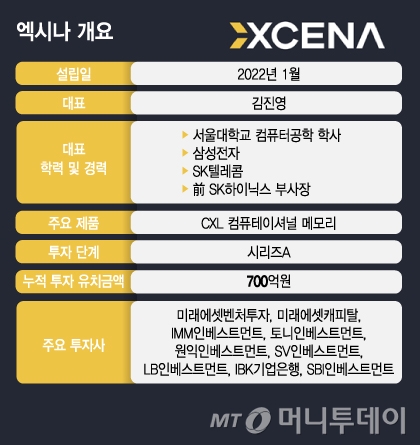
Xena's technological capabilities have been quickly recognized in the market. The company raised 100 billion won in its seed round and secured 600 billion won in last year's Series A round, achieving a cumulative investment total of 700 billion won. Major venture capital firms including Mirae Asset Venture Investment, IMM Investment, and SV Investment have joined as investors after closely evaluating the company's technology.
Currently, Xena has completed prototype production using Samsung Electronics' 4-nanometer foundry process. Starting this year, the company plans to actively discuss technical validation (PoC) with major domestic and international hyperscalers (operators of ultra-large data centers). Aiming for the release of its Yangsan-type chip in the second half of this year, Xena is preparing to raise approximately 10 billion won (about 140 billion won) through a Series B funding round.
To target the global market, Xena also established a local office in Sunnyvale, Silicon Valley, USA. The company has recruited local experts including Brian Hirano, formerly of Oracle. Among its total 85 employees, more than half are R&D personnel, equipping the company with comprehensive technical capabilities spanning both hardware and software.
Kim (CEO) stated, "We expect significant revenue generation to begin in the early to mid-2027 period, with the goal of conducting an IPO (initial public offering) by late 2027 or early 2028 based on these projections. We will continue our efforts to create high-quality products through collaborations with global big tech companies."
[MoneyToday startup media platform Unicon Factory]

 in FUTURE

