

[For more diverse company information on the startups mentioned in this article, you can view them at Unicorn Factory's big data platform Data Lab.]
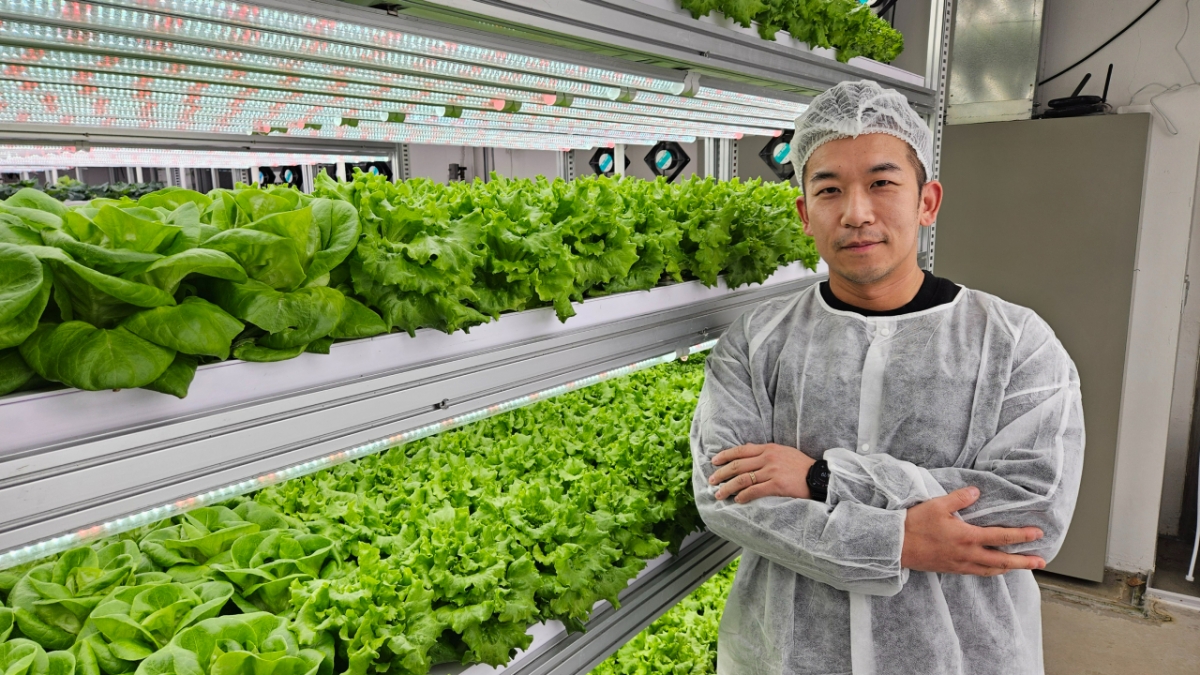
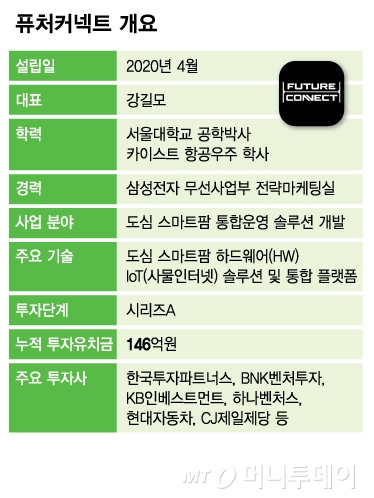
An engineer who earned a bachelor’s degree in aerospace engineering from KAIST and master’s and doctoral degrees in industrial engineering from Seoul National University, then worked in Samsung Electronics’ strategic marketing division on data science-based marketing, boldly discarded the title of "Samsung man" and launched his own startup focused on 'urban smart farms'.
While one might assume a grand mission like 'food security' sparked his interest, the actual starting point for his engagement with agriculture was surprisingly 'exercise'. The protagonist of this story is Kang Gil-mo Future Connect CEO, who is transforming urban spaces into agricultural production hubs through an AI-based cloud farm platform.
Kang Gil-mo (CEO) was so strict about diet management that he even competed in fitness competitions in 2019. He focused on 'fresh vegetables', which are more expensive and harder to obtain than chicken breast, and officially launched his startup in 2020.
Kang (CEO) stated, "Fresh vegetables must be sold within three days in the distribution line; otherwise, 40% must be discarded, creating a structure where prices inevitably remain high." He added, "I wanted to implement a system in urban areas similar to picking fresh vegetables as needed from my grandmother's backyard garden right at home."
'Demand-driven production' producing only what is needed near urban centers
Existing smart farm technologies follow a 'supply-centric' structure that invests in large-scale facilities in rural areas for mass production. Kang (CEO) judged this to have structural flaws leading to high logistics costs and waste risks.
He pointed out, "If you first build large-scale facilities and produce in bulk, you ultimately must adjust prices based on what buyers are willing to pay," adding that "production flexibility will inevitably suffer."
Future Connect shifted to a 'demand-driven' model that produces only what is needed near urban demand centers. Kang (CEO) said, "Seoul is one of the world's top cities and an ideal location for testing an urban farm network."
Future Connect's business model consists of three main areas: △smart farm solution sales, △B2B raw material supply, and △B2C processed food sales. Kang (CEO) explained, "While there are many smart farm companies in the current market, Future Connect has achieved vertical integration from production to B2B supply and final sales through its B2C store brand 'Live Farm'."
He further emphasized, "Our on-demand harvesting model utilizes idle spaces within cities, simplifying logistics processes and resulting in overwhelmingly superior freshness. It also reduces carbon emissions throughout the distribution process."
Operational staff reduced by 40%... Vegetable waste rate below 5%
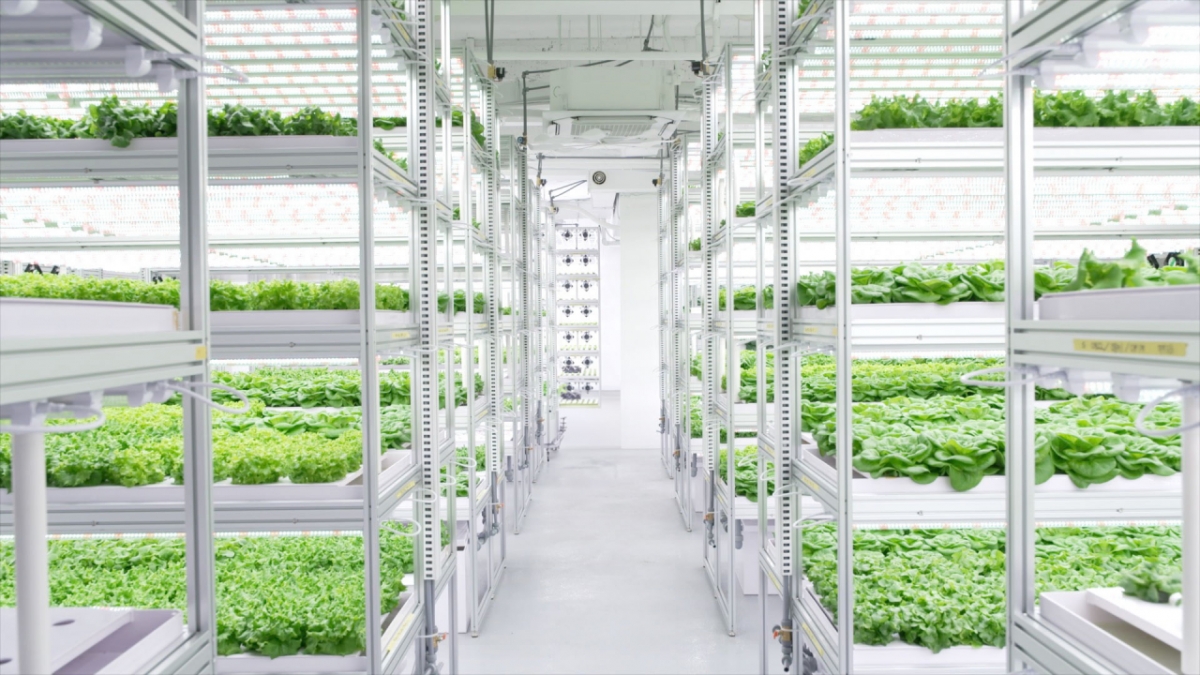
Future Connect's technological competitiveness lies in its self-developed △modular hardware 'Nano Farm', △AI-based operation system 'Live OS', and △automatic growth environment control system 'Live Tune' for building and operating smart farms.
By connecting multiple Nano Farm units to operate as a single farm, they redesigned water supply and drainage systems from scratch to enable independent operation even in urban environments, rather than using equipment structures typical of traditional farms.
Kang (CEO) explained, "Live OS analyzes demand data to predict production volumes five weeks ahead and issues real-time work instructions to operators. Thanks to this system, the growth period has been shortened from seven weeks to five weeks, and operational staff have been reduced by 40%."
While production costs inevitably rise due to higher building rents closer to urban centers, Kang (CEO) believed that the structural benefits generated by waste reduction outweigh these cost increases. Future Connect has lowered vegetable waste rates to below 5%.
He elaborated, "Producing according to demand minimizes inventory and waste costs, ultimately stabilizing the overall revenue structure. From a margin perspective, reducing waste is far more important than unit prices."
Beyond directly operating urban smart farms, Future Connect is expanding production spaces by selling solutions to partners such as building owners and retirees who desire 'urban-rural' partnerships, and through its 'Farming as a Service (FaaS) subscription model' that purchases all raw materials grown in these spaces.
Entering the U.S. market... "Realizing sustainable self-sufficiency within cities"
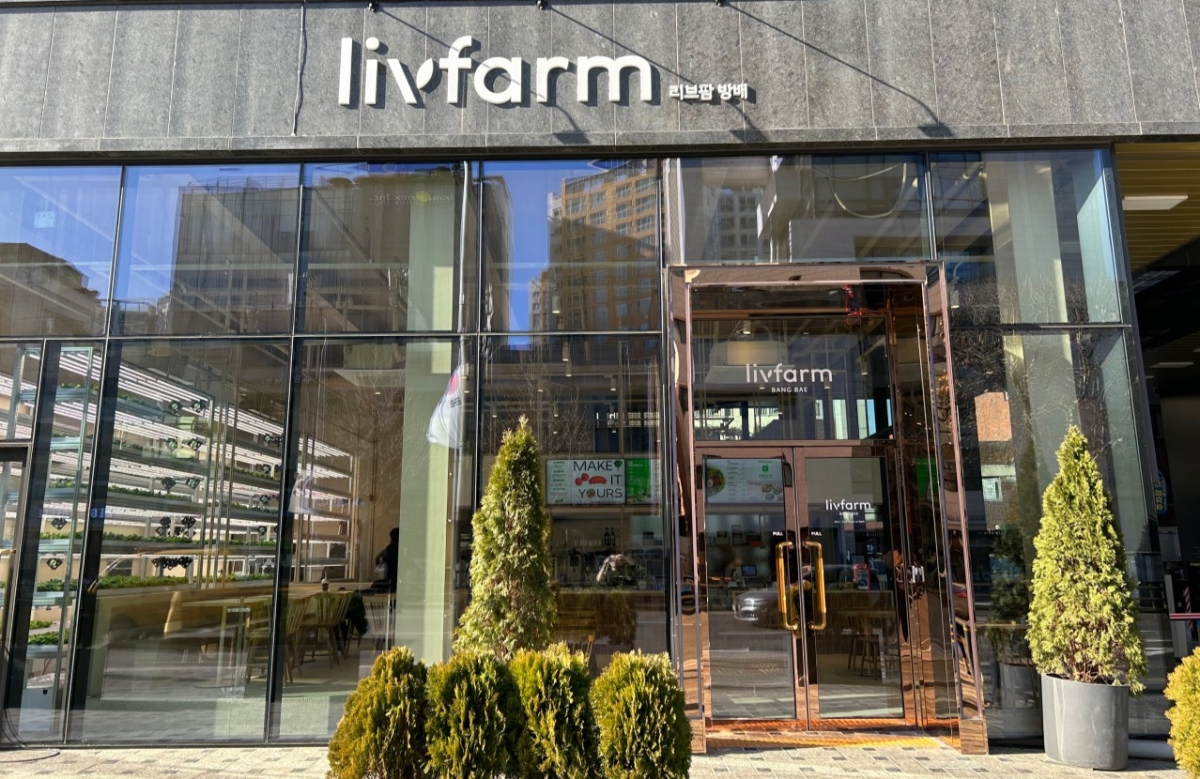
Currently, Future Connect operates plant hubs at Gangnam Bangbang Intersection, Sinschon, and Cheongna District. Additionally, it runs four urban farms at Gyo-dae Station, Bangbae Station, Apgujeong Station, Gyeyang-gu, and Incheon International Airport. Total annual production reaches 124 tons across a total farm area of 5,585 square meters (approximately 1,700 pyeong).
In particular, the Incheon Airport location became a catalyst for global expansion. Kang (CEO) stated, "The urban smart farm and Live Farm store within Incheon Airport expose tens of thousands of daily users to our model, serving as an intuitive example of urban farming."
Future Connect is collaborating with 37 locations of the large U.S. supermarket chain 'Food Bazaar' in New York to operate urban farms within their stores. He noted, "In the U.S., too, the approach of dividing production into smaller units rather than relying on existing structures based on mass production is gradually gaining traction."
In Atlanta, preparations are underway for collaboration with a Korean-style ssambap brand. The plan involves building farms within stores and delivering ssam culture by using vegetables harvested on-site. Kang (CEO) remarked, "Exporting only farms would limit us to equipment business. We must demonstrate how to eat the vegetables to truly complete the model."
He expressed his vision: "We aim not just to create impressive smart farms, but to generate social impact by reducing vegetable waste—currently discarded at 40%—to near zero and transforming idle urban spaces into productive value."
He added, "We will create a scene where Seoul citizens can eat living vegetables harvested that morning from the basement of the building next door every day. Our ultimate goal is sustainable self-sufficiency within cities. Feeding people around the world with minimal energy and resources is our final vision."
[MoneyToday startup media platform 'Unicorn Factory']

 in FUTURE


