

More diverse corporate information about the startups mentioned in this article can be found on Unicorn Factory's big data platform, Data Lab.
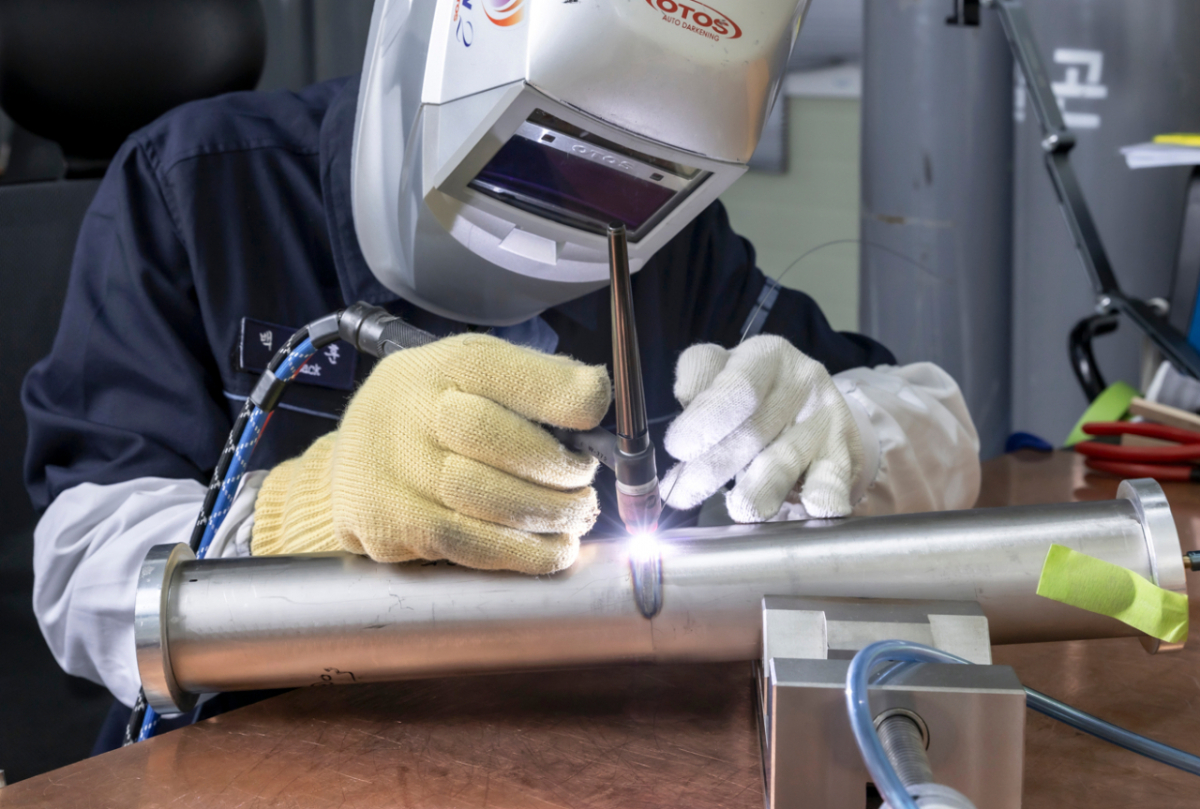
"Some may consider welding a technology of the past, but I saw the future within it."
Kim Yun-wan (CEO), a startup in the aerospace and defense camp, explained the reason for focusing on welding as follows. Welding is a technology that joins different materials such as metals, glass, and plastics into a single structure using heat or pressure. In Korea, it is regarded as a representative manufacturing process associated with shipyards or heavy industry sites. As a flagship process of the so-called "3D industries," there has been relatively little perspective linking it to advanced manufacturing or future industries. However, in aerospace and defense, it is closer to advanced technology that precisely bonds ultra-thin plates and special materials.
In particular, in the aerospace and defense sectors where extreme environments must be endured, even a minute bonding error can lead to performance degradation or fatal defects, making precision bonding technology the starting point of reliability. In fact, precision bonding technology accounts for 50% to 70% of the manufacturing process of launch vehicles.
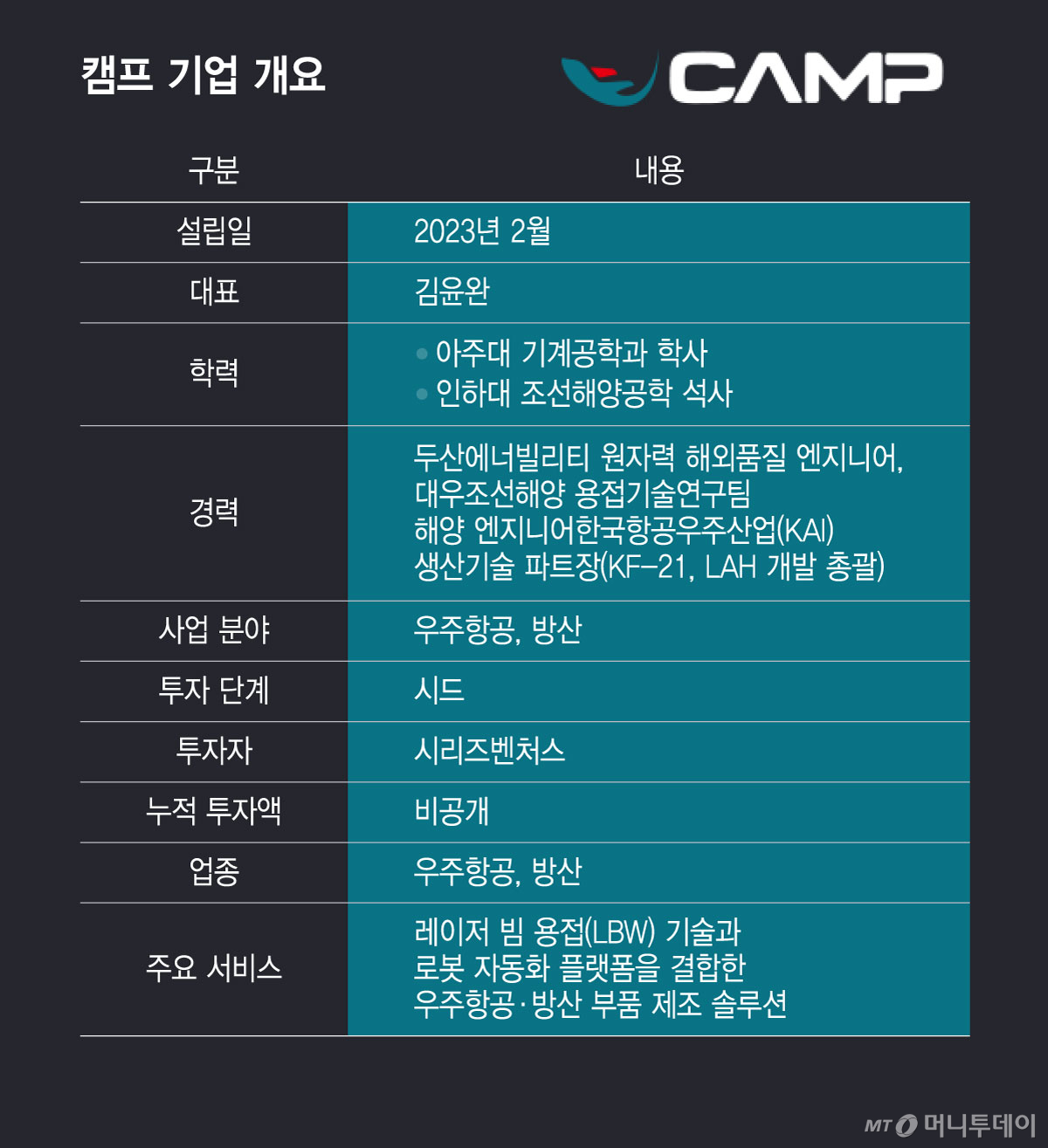
Established in 2023, the camp develops precision joining technologies based on laser beam welding (LBW), enhancing the reliability of domestic aerospace. Last March, it became the only facility in Korea to obtain NADCAP, a global aerospace special process certification, through its LBW process. This marks the third such achievement in Asia.
Kim (CEO) stated, "Many people consider bonding merely a technique of attaching steel plates, but in reality, it is a highly difficult technology where results vary significantly depending on the type of material, working conditions, and temperature environments." He added, "Since physical properties change with environmental shifts ranging from room temperature to dozens of degrees below zero and even extreme low temperatures, appropriate techniques and conditions must be precisely designed."
He added, "We must properly control these variables to build structures that reduce costs while preventing damage in actual operating environments," noting that "joining remains an industry with endless room for improvement and research."
The Limits of Joints Revealed Below 0.7mm... The Challenges Posed by the Site
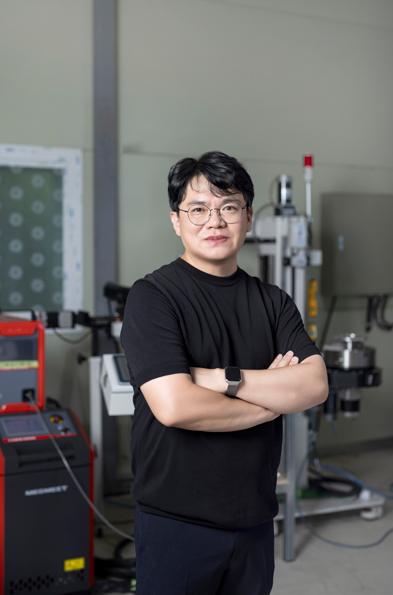
Kim (CEO), originally from Haenam in South Jeolla Province, has harbored a dream since childhood to build a massive ship. Inspired by Hyundai Heavy Industries, which was an object of admiration in his hometown, he naturally developed an interest in shipyards and noted that most core operations in shipbuilding and plant construction revolve around welding.
Later, he worked at Doosan Enerbility's nuclear quality division and Daewoo Shipbuilding & Marine Engineering's welding technology research center before joining Korea Aerospace Industries (KAI), where he was in charge of developing the KF-21 Boramae fighter jet and the Light Armed Helicopter (LAH), gaining experience across multiple industrial sectors. Through this process, he realized that the welding processes required vary significantly depending on the industry sector.
Kim (CEO) learned that while shipyards bond and stack materials ranging from as thin as 5mm to as thick as 20–300mm, the aerospace industry typically uses materials with a thickness of only 0.7–1mm. The materials themselves also differ. He explained, "Shipyards mainly use stainless steel and similar materials, whereas space and aerospace sectors utilize special materials such as Inconel, aluminum, and titanium." He added that components used in fighter jets and small armed helicopters must be thin and lightweight to ensure stable flight.
The problem arises when the thickness is less than 0.7mm. Kim (CEO) stated, "Domestic companies can perform precision welding on thin plates with a thickness of 0.7mm, but for ultra-thin plates below that, there is a high risk of deformation and defects during the manufacturing process, leading to frequent reliance on overseas components." He added, "Even large corporations tend to opt for overseas outsourcing or expensive imported parts rather than taking on such risks."
Kim (CEO) became acutely aware of the need to localize aerospace components, and it was precisely from this awareness that the camp began.
A breakthrough found through LBW and automation... A declaration to the global market
At existing aerospace component manufacturing sites, electron beam welding has been primarily used for joining technologies. However, in ultra-thin plates of 0.7mm or less, deformation increases significantly, leading to higher defect rates and quality variations. To address this issue, Camp applied LBW technology.
This is because LBW concentrates energy into an extremely narrow area based on its high energy density, enabling it to rapidly join even thin metal plates while minimizing deformation or thermal damage. It particularly demonstrates strengths in precision joining of special materials for aerospace applications, such as titanium and aluminum.
Kim (CEO) stated, "It is possible to achieve high temperatures instantaneously, allowing for bonding even with minimal melting of the surface," and added, "Laser welding can control areas within approximately 1mm, or even smaller in some cases."
However, high energy density is both an advantage and a risk factor. If mishandled, it can lead to serious accidents during the process, such as severe burns to the hands. This has also been the reason why it has not yet become widespread. Camp addressed this by automating the process using robotic arms equipped with precision motors. At the same time, it reduced quality variations that previously depended on the skill level of workers in manual processes and boosted productivity.
Currently, the company is the only one in South Korea's aerospace sector to apply LBW technology. In March, it secured NADCAP certification, becoming the sole domestic entity to do so, thereby laying the foundation for Korean welding technology to enter the global market.
Kim (CEO) stated, "The aerospace industry is ultimately a field that must compete in the global market," and added, "We will build a platform encompassing design, manufacturing, and quality assurance to ensure Korean technology takes its place as a pillar of the global supply chain."
[Money Today Startup Media Platform Unicorn Factory]

 in FUTURE


