

[For more diverse corporate information on startups mentioned in this article, please visit the Unicorn Factory Big Data Platform 'DataLab'.]
Author Malcolm Gladwell introduced the concept of 'Thin-slicing' in 2005. It refers to making instant judgments based on minimal cues. Typical examples include an experienced tennis coach predicting a double fault just by observing a player's serve motion, or a firefighter intuitively sensing a building collapse at a fire scene for reasons difficult to explain and issuing evacuation orders. This is not mere intuition but reaching conclusions in an instant through accumulated experience and training. It is also called 'trained intuition'.
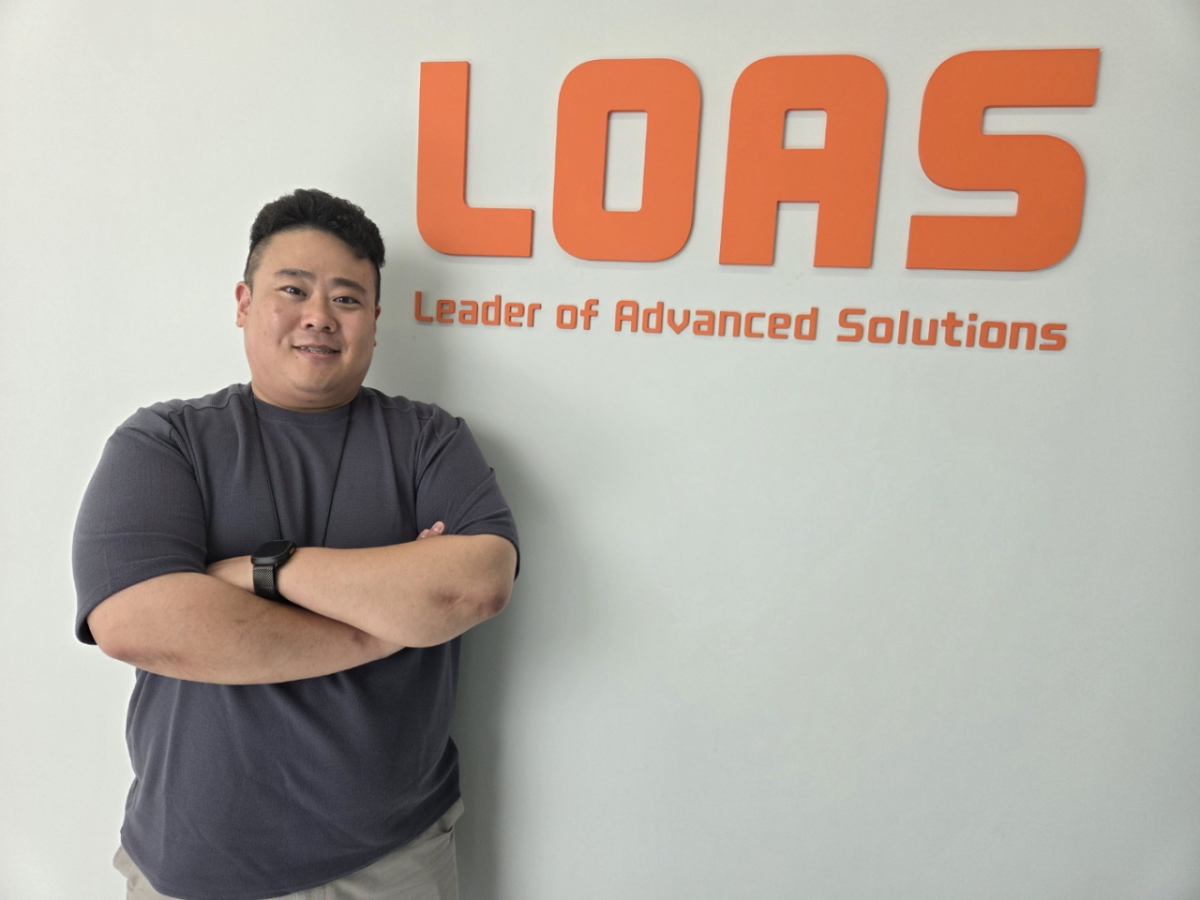
There are also groups of experts possessing such intuition in industrial settings. In manufacturing plants, 5 to 10 people per factory listen to equipment operating sounds to identify defects or abnormalities. Lee Jae-hyun, CEO of Loas, worked as an engineer visiting numerous domestic and international sites and wondered, "Is it right for humans to do this directly even in the 21st century?" Thus, he created an algorithm called 'AI Square' that listens to sounds instead of people and predicts risks in advance.
Foundational Technology That Extracts Only Necessary Sounds from Noise
Acoustic inspections in traditional industrial settings relied on skilled personnel, making it difficult to eliminate subjective judgment. Although some sites began introducing specialized equipment, there was a limitation: inspections required halting most production facilities. Stopping a factory itself caused cost losses of hundreds of millions of won.
Lee Jae-hyeon (CEO) stated, "Even in an era where automation has advanced so much, the sight of humans listening intently to filter out noise on the production line is quite absurd." He added, "There has always been demand to quantify such noise diagnostics, but most attempts failed because they could not distinguish between the general noise circulating within factories and actual fault sounds that are truly needed."
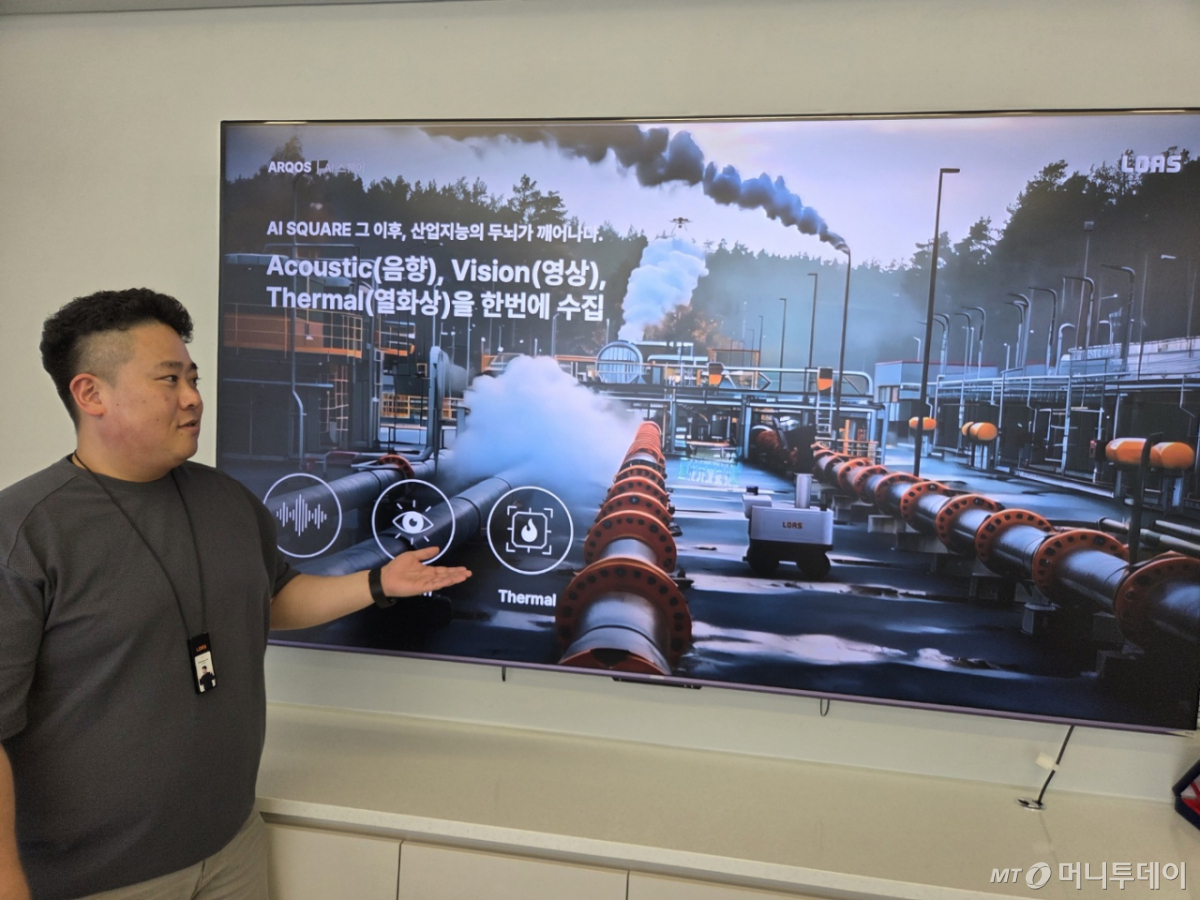
Loas's core algorithm 'AI Square' focuses on selecting only desired sounds. It is similar to how parents can remarkably capture a baby calling "Mom" amidst a noisy crowd. First, multiple multi-channel microphone sensors are deployed to divide the space into zones. After collecting all sounds within each zone, if a sound is judged as noise, it is intentionally lowered and collected again. This functions as a kind of software-based acoustic filter. Simultaneously, cameras capture target objects via video and then concentrate on collecting surrounding sounds. For example, if a pipe inside a factory is the target, the algorithm amplifies sounds along the corresponding contour area for AI to perform inspection.
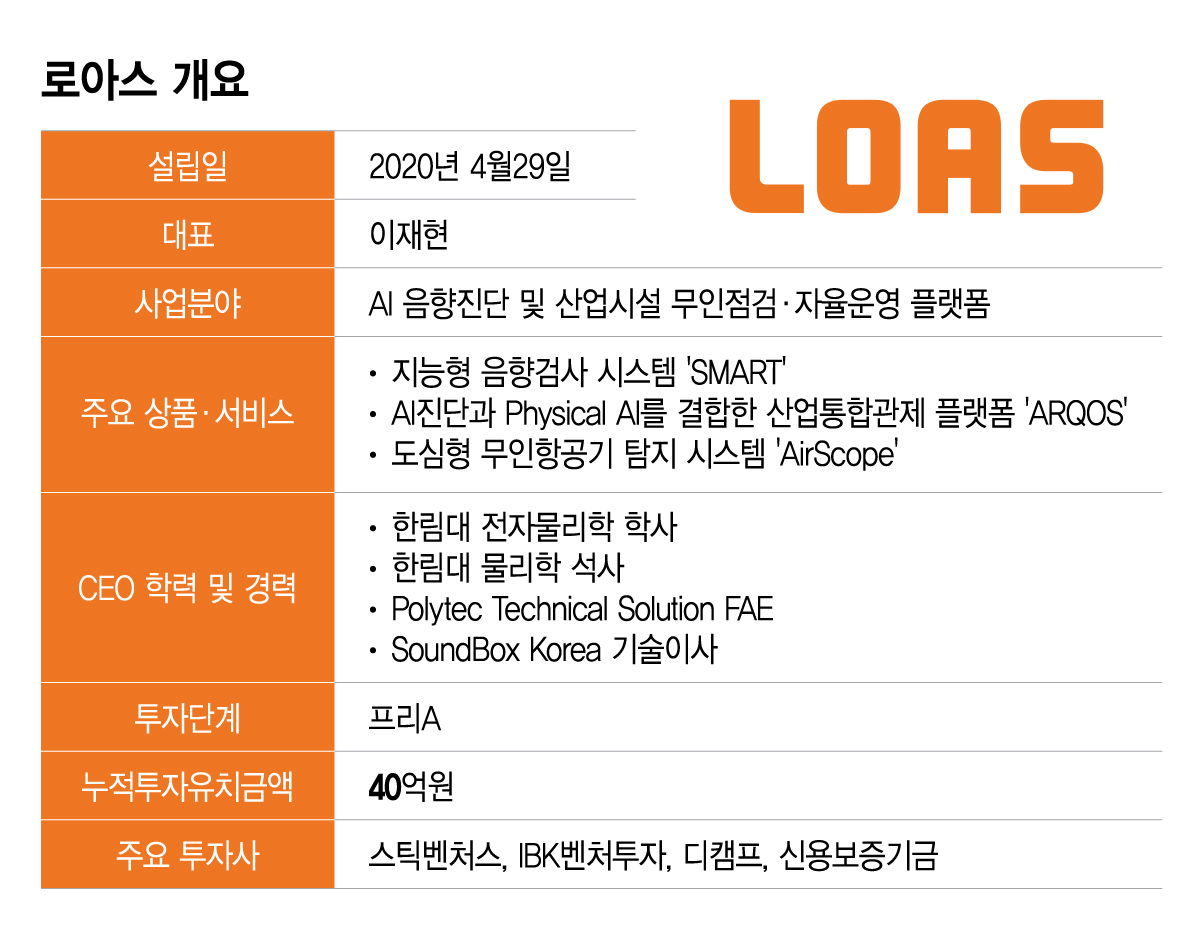
This 'AI Square' algorithm is installed in intelligent acoustic inspection systems like 'SMART', industrial integrated control platforms like 'ARQOS', and urban drone detection systems like 'AirScope', ensuring safety at industrial sites. All three products detect and analyze abnormal sound data amidst workplace noise, providing real-time location information.
Technology Validated by LG and Samsung: "Superior to Humans"
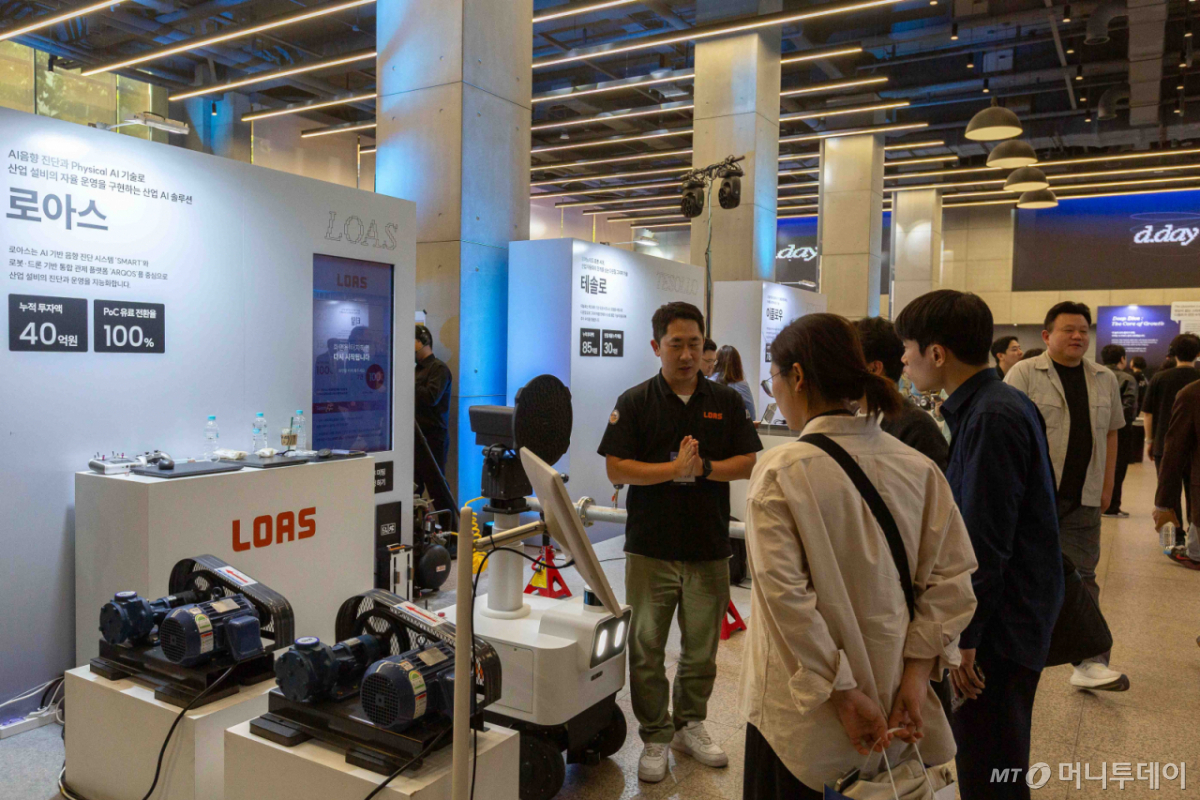
Loas's technology has already been validated in production facilities of major corporations such as Samsung and LG. Currently, it is deployed on LG Electronics' home appliance lines instead of humans to detect equipment defects. By relearning over 60,000 data points daily, accuracy continues to improve. Thanks to accumulating data, Loas's algorithm has evolved beyond real-time diagnosis to predicting when and how equipment will fail in the future.
Lee Jae-hyeon (CEO) reported, "Technical research departments at companies like LG directly compared and evaluated the detection capabilities of humans versus AI Square. The Navy Headquarters results concluded that AI Square was superior." He added, "By immediately deploying Loas products on-site, diagnostic personnel can be reduced by 5 to 10 per production facility."
The drone system 'AirScope' is already operating at Samsung Electronics' Giheung and Hwaseong sites and will expand to the Pyeongtaek site in June this year. Korea Western Power Development also uses Loas products. Western Power Development collaborated by providing critical on-site data that was essential for Loas's technological growth.
Lee (CEO) expressed gratitude, stating, "We were selected as a public data utilization project, allowing us to receive data from Western Power Development's plant sites and advance our technology. Since power plants are national critical infrastructure, procedures were complicated, including control by the National Intelligence Service. However, without Western Power Development, validating Loas's technology would have been difficult."
Targeting Middle East and West Asia Markets: "Goal of a Factory Without Humans"
Loas's customer base is growing rapidly. It has begun supplying Yangsan-type products to EcoPro's cathode material factory. A new project has also started with Dongseo Power Development, and automotive seat manufacturers such as Hyundai Transys, a subsidiary of Hyundai Motor Group, are increasingly adopting Loas's solutions. Leveraging this momentum, the company has set its sales target for this year at a minimum of 5.5 billion won or more.
In addition to various production facilities and power plants, Loas is preparing to enter the urban security market in the future. This involves 'Patrol Robots' that accurately recognize the direction and location when someone screams on the street, allowing robots to autonomously drive to the scene. Technology honed at industrial sites is expanding into urban safety.
Furthermore, Loas aims for global expansion toward the Middle East and West Asia, where the plant market is large. It is also considering leveraging the foundation of overseas plant projects undertaken by energy public corporations. Through joint acoustic diagnosis research with Germany's Fraunhofer Institute, it plans to further advance its acoustic diagnostic technology.
Lee Jae-hyeon (CEO) stated, "Safety diagnostics can be performed without deploying personnel to hazardous sites, improving production quality and enhancing manufacturing cost competitiveness." He added, "Our goal is to enable customer factories to operate with no humans present and lights off, achieving a 'Dark Plant'."
[MoneyToday startup media platform Unicorn Factory]

 in FUTURE


